The layout of your living room will change how guests and residents experience both the space and each other. The same square footage can feel expansive or cramped, formal or relaxed, depending on where the seating sits, what the furniture faces, and how people move through the room.
Some homes need furniture arranged around a fireplace. Others want to preserve long sightlines toward windows, art collections, or outdoor spaces. Open-concept homes often require the furniture itself to define the living area because the architecture simply doesn’t exist to do so. In larger homes especially, one seating group is rarely enough.
Designers solve these problems differently depending on the architecture and the people living there. Below are seven living room layouts we use frequently in luxury residential projects, along with examples from the Laura U Design Collective portfolio.
Seven Living Room Furniture Layouts to Capture Views and Support Conversation
#1 The Symmetrical Conversation Layout
Formal living rooms often use symmetry because it creates a strong sense of structure. The furniture is arranged in pairs, usually with two sofas facing one another across a centered coffee table. Matching chairs, lighting, or architectural details support the arrangement, though the room doesn’t necessarily need to feel overly formal. Upholstery, texture, and scale determine whether the space feels formal or casual.
This type of layout works especially well in traditional and transitional homes where the architecture already has a clear center point. Fireplaces, large windows, ceiling treatments, and chandeliers naturally lend themselves to balanced furniture placement. Instead of competing with those features, the seating arrangement helps organize the room around them.
Symmetrical layouts also work well for entertaining because the seating faces inward toward conversation. Guests can speak comfortably across the room without one side of the furniture arrangement feeling disconnected from the other. People can actually see one another without twisting awkwardly toward a sectional corner or craning around oversized chairs.
Garnet Residence
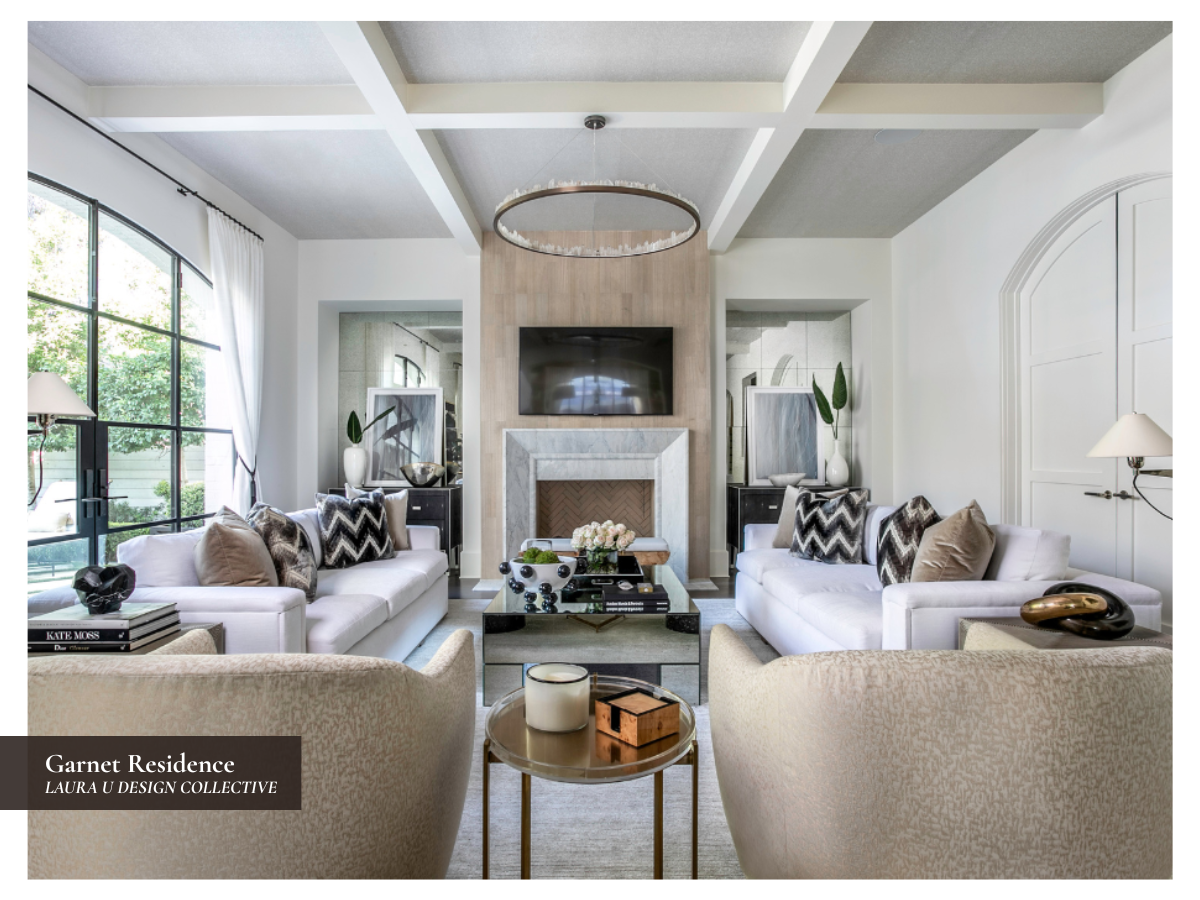
Our Garnet living room is a strong example of a symmetrical conversation layout because the entire furniture plan is organized around balance and visual alignment. The matching sofas face one another directly across the coffee table, while the paired lounge chairs reinforce the room’s central axis and create a formal but welcoming conversational arrangement.
This type of layout works especially well in transitional and traditionally-inspired homes because symmetry naturally creates a sense of calm, order, and refinement. In Garnet, the fireplace, ceiling detail, and centered chandelier all strengthen that feeling of balance, making the room feel intentional from every angle. While the layout is visually structured, the layered textures and soft upholstery keep the space from feeling overly formal or rigid.
#2 The Asymmetrical Conversation Layout
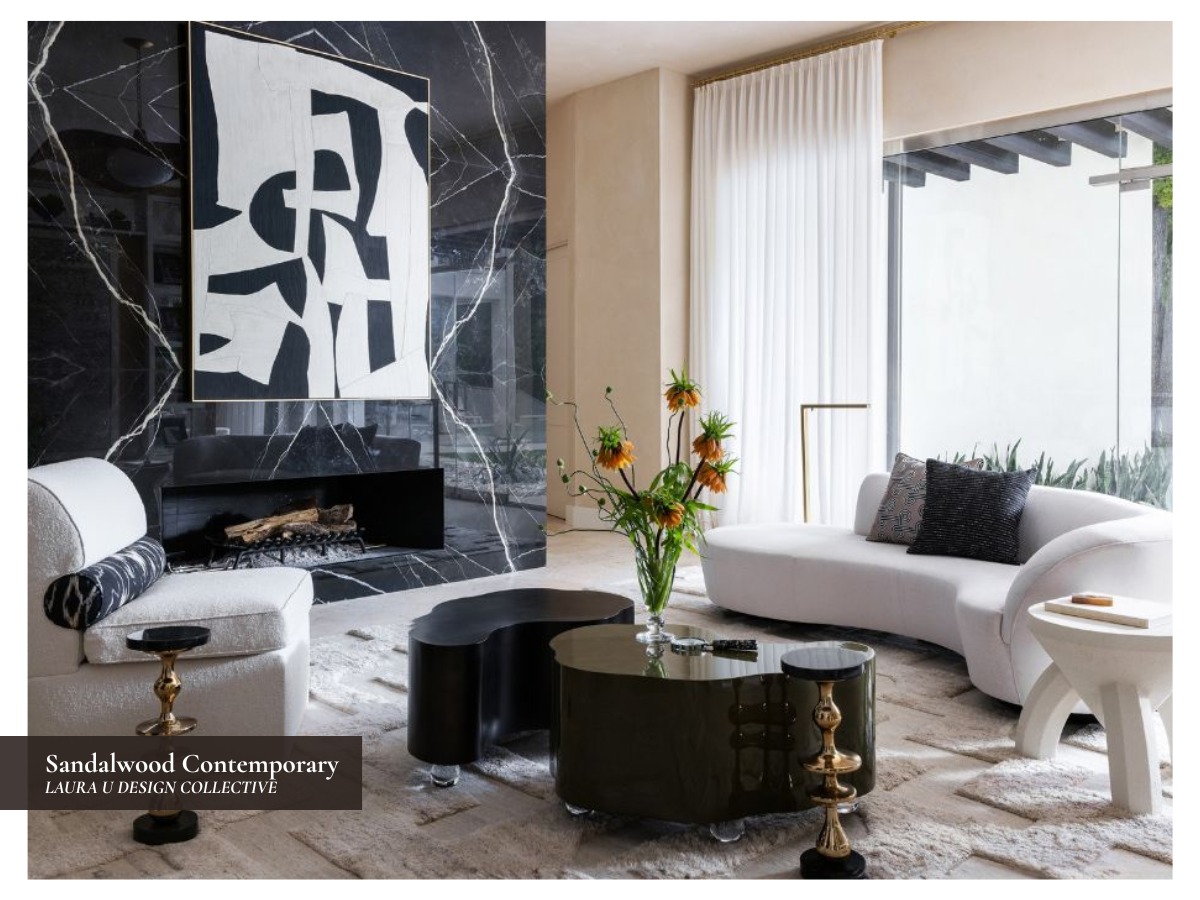
Some living room layout ideas rely on perfect balance, but asymmetrical layouts take a different approach. Instead of matching sofas or mirrored chairs, this type of living room layout mixes different furniture shapes and sizes to create a seating area that feels more relaxed and collected over time.
You might see one sofa paired with two chairs, or a curved couch balanced by sculptural side tables and a large coffee table. The room still supports conversation, but the arrangement feels softer and less formal than a symmetrical floor plan. This is a great option for contemporary homes.
Asymmetrical layouts also work particularly well in a narrow living room or long living room layout because they prevent the entire room from feeling too rigid or overly planned. Designers can create zones more naturally by varying the seating arrangement instead of forcing every piece into strict alignment. Area rugs, lighting, and a console table often help organize the space without making it feel overly structured.

Sandalwood
Our Sandalwood lounge fits the asymmetrical conversation layout because the seating arrangement avoids a matched furniture plan. The curved sofa, sculptural chair, rounded tables, and black marble fireplace all have different shapes and visual weights, but they still work together to create a room designed for conversation.
This layout works especially well in modern homes where the furniture needs to feel collected rather than perfectly paired. In Sandalwood, the asymmetry allows the fireplace, artwork, and furnishings to each have their own presence without making the room feel too formal. The space still has a clear center, but the mix of silhouettes gives it a more expressive and art-forward point of view.
#3 The Fireplace-Centered Layout
In a fireplace-centered layout, the seating arrangement is designed around the hearth first, with the rest of the space following suit. This type of room layout is especially common in older homes, mountain houses, and cozy family room spaces where the fireplace already acts as the architectural center of the room. Sofas, chairs, and tables are usually arranged nearby to encourage sitting, conversation, and entertaining. If there is a television, it is more discreetly integrated into the wall or placed on a media console away from the fireplace itself.
Fireplace-centered layouts also help large spaces feel more intimate. In homes with tall ceilings, expansive windows, or a long living room, gathering the furniture closer to the hearth gives the seating area a stronger sense of togetherness.
Hedwig Village Hunting Lodge
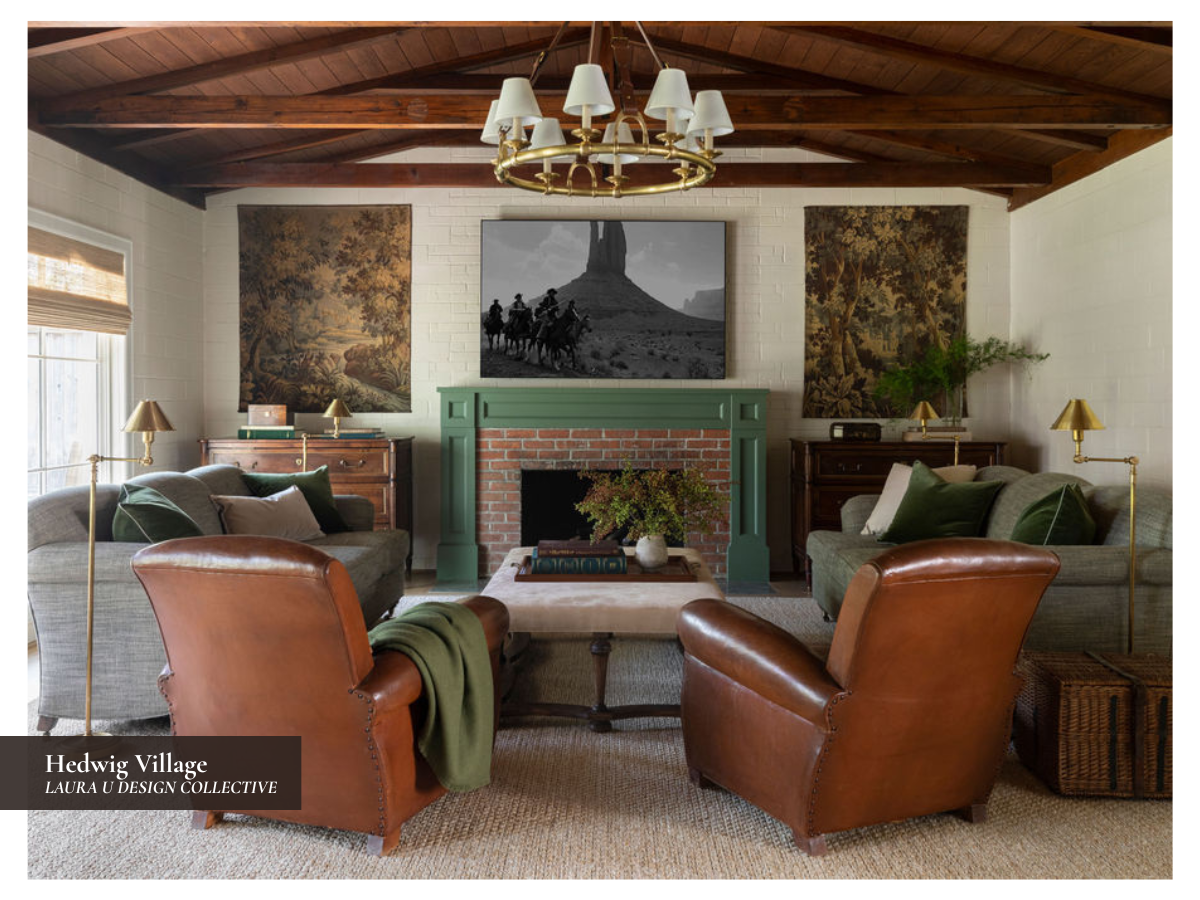
Our Hedwig Village Hunting Lodge is a strong example of a fireplace-centered layout because the entire seating arrangement is oriented around the hearth. The sofas, leather chairs, and coffee table all work together to reinforce the fireplace as the visual and emotional focus of the room.
Because this lodge dates back to the 1920s, preserving its historic character was incredibly important during the renovation process. We retained the original beams and reworked the fireplace with a mantel inspired by the Arts-and-Crafts era to ensure that the renovated space feels both timeless, historically-inspired, and functional for modern family life.
This type of layout works especially well in secondary living spaces like lodges, libraries, or dens because it naturally encourages conversation and slower moments of gathering. Instead of orienting the room around a television or expansive views, the furniture arrangement creates warmth and intimacy through proximity to the fireplace itself.
Huntwick Forest
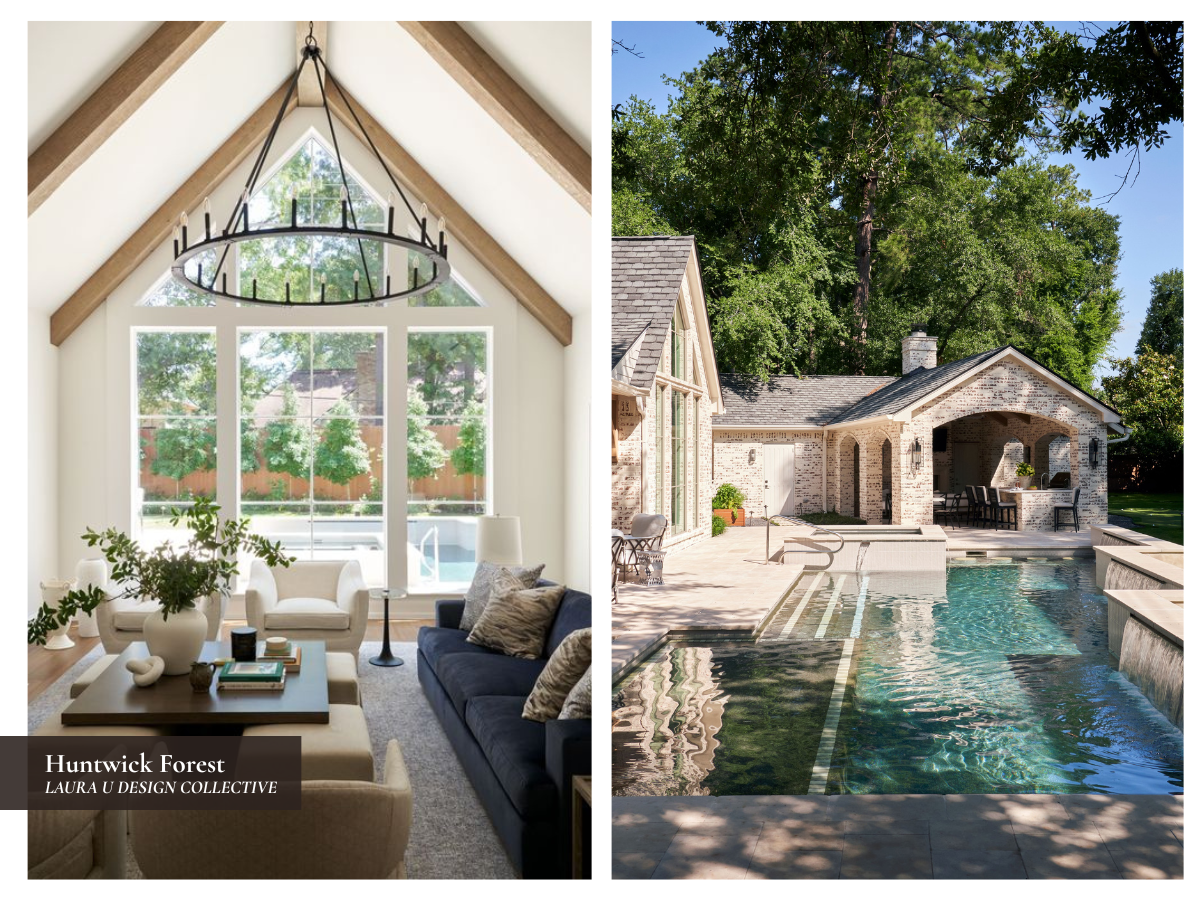
Our Huntwick Forest living room blends several layout principles, but the space ultimately functions as a fireplace-centered layout because the seating arrangement organizes itself around the hearth rather than the exterior views. The sofa, lounge chairs, and central coffee table all reinforce the fireplace as the room’s primary anchor. In doing so, our designers crafted a comfortable conversational arrangement that feels intimate and family-focused despite the soaring ceilings and expansive glass.
At the same time, the architecture introduces qualities often associated with indoor-outdoor resort layouts. The dramatic wall of windows floods the room with natural light and visually connects the seating area to the pool and landscape beyond. Rather than competing with the fireplace, however, those views act as a backdrop to the room’s more traditional conversational structure.
#4 The Open Concept Floating Layout
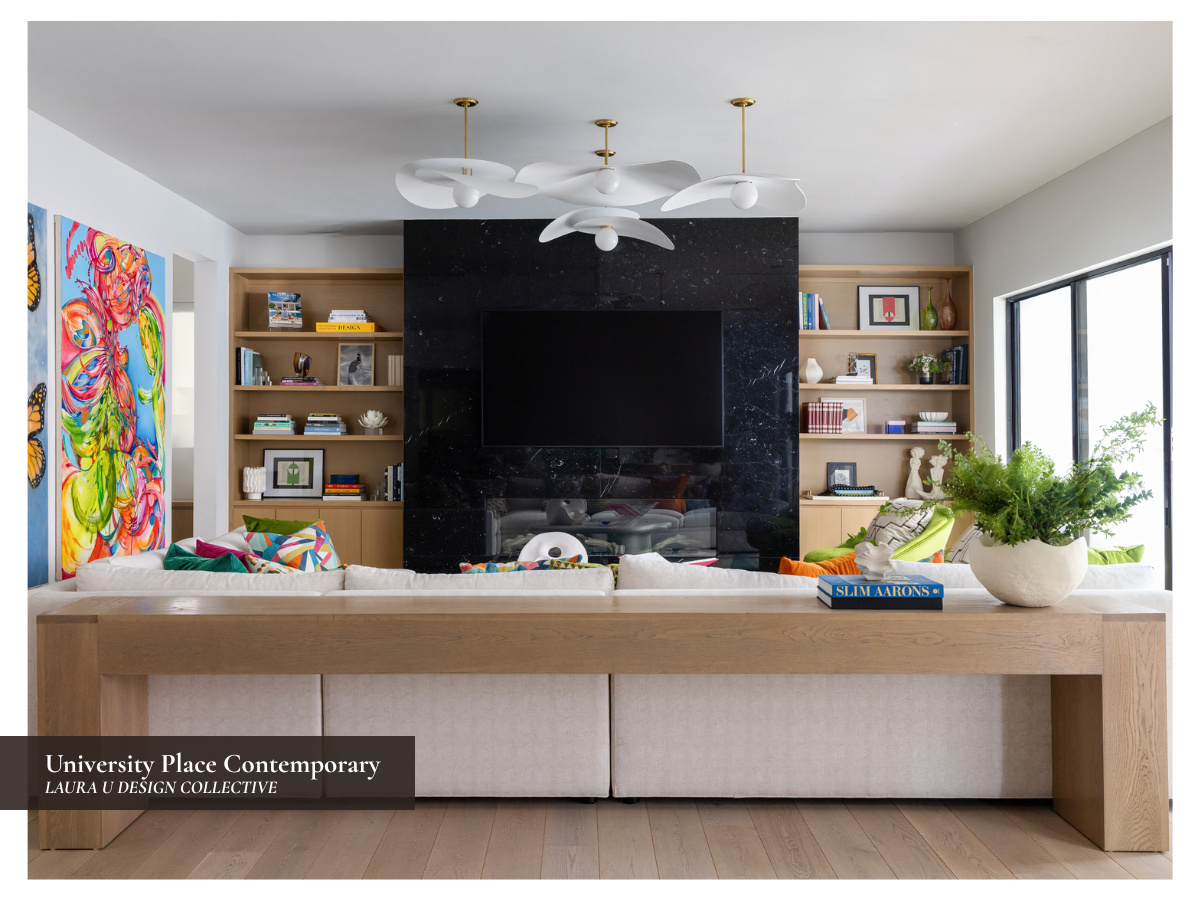
Open concept homes typically require a very different living room layout because the furniture has to define the room instead of the architecture doing so itself. In these spaces, the seating floats within the center of the floor plan rather than sitting directly against the side or back wall.
This layout is especially common in contemporary homes where the living room connects openly to the dining room, kitchen, office, or other shared spaces. A sectional or one sofa may anchor the middle of the room while chairs, side tables, and area rugs help create boundaries around the seating area. A console table placed behind the sofa can also help subtly separate the living space from nearby circulation paths.
Floating layouts work particularly well when a home has enough space for wide walkways and long sightlines. Instead of breaking the room into smaller separated sections, the arrangement preserves flow between different zones while still giving the living area a clear identity. This is one reason floating layouts remain such a popular choice in modern luxury homes.
University Place Contemporary
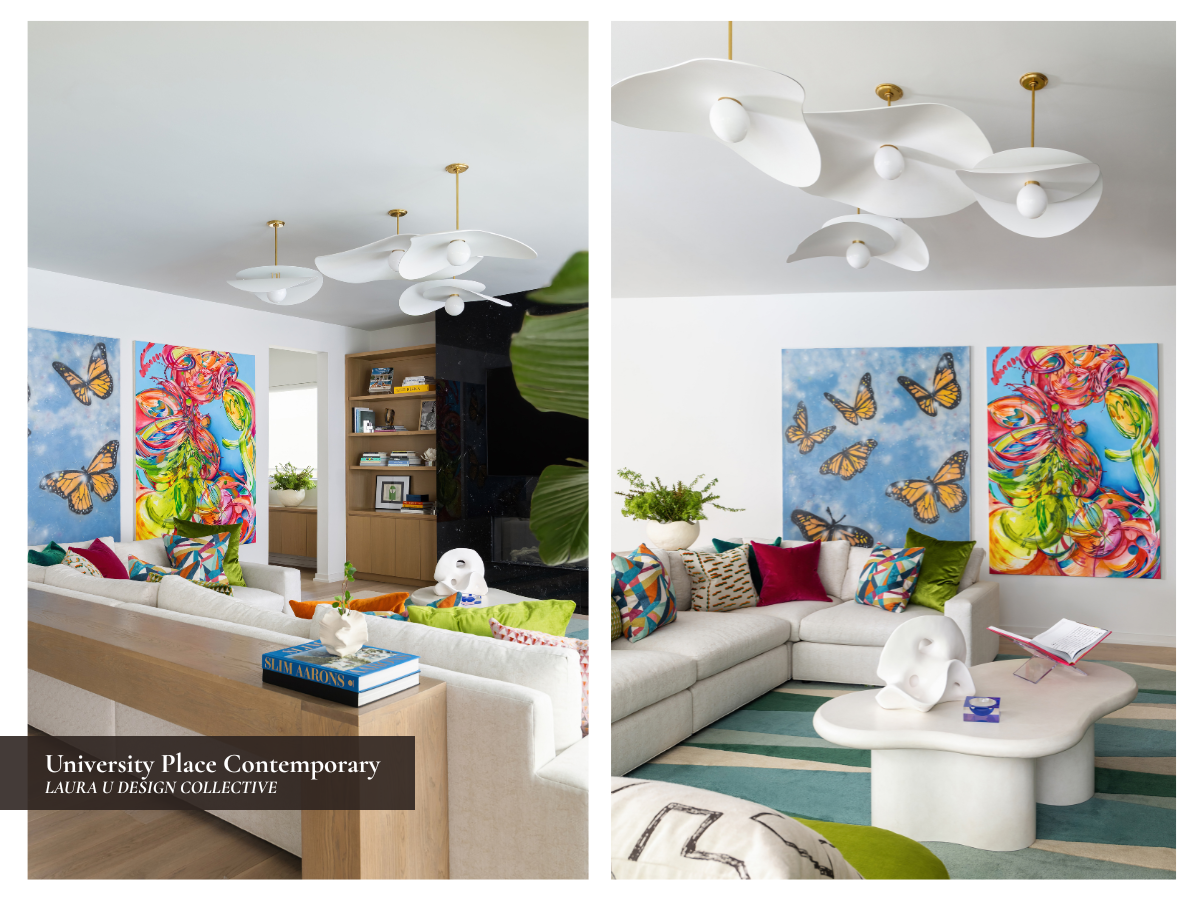
Our University Place Contemporary living room is a strong example of an open concept floating layout because the furniture sits inside the room instead of being pushed up against the walls. The sectional defines the center of the room while maintaining open circulation around the seating area, which makes the space feel expansive and intentional.
This type of layout works especially well in contemporary homes because it preserves sightlines toward windows, artwork, and architectural focal points instead of blocking them. The long console behind the sofa also helps subtly define the living area without visually closing it off, which is one of the reasons floating layouts feel so polished in larger homes and open floor plans.
River Oaks Modern
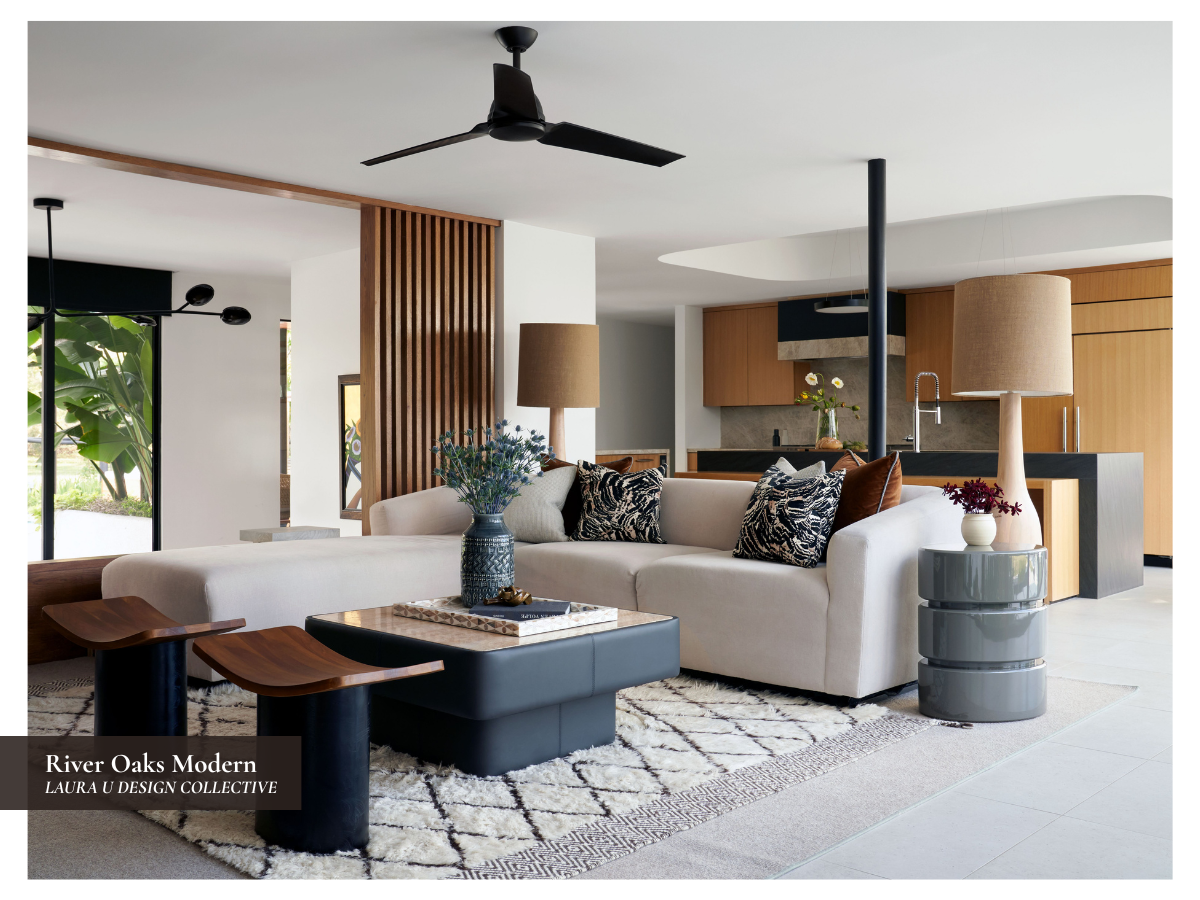
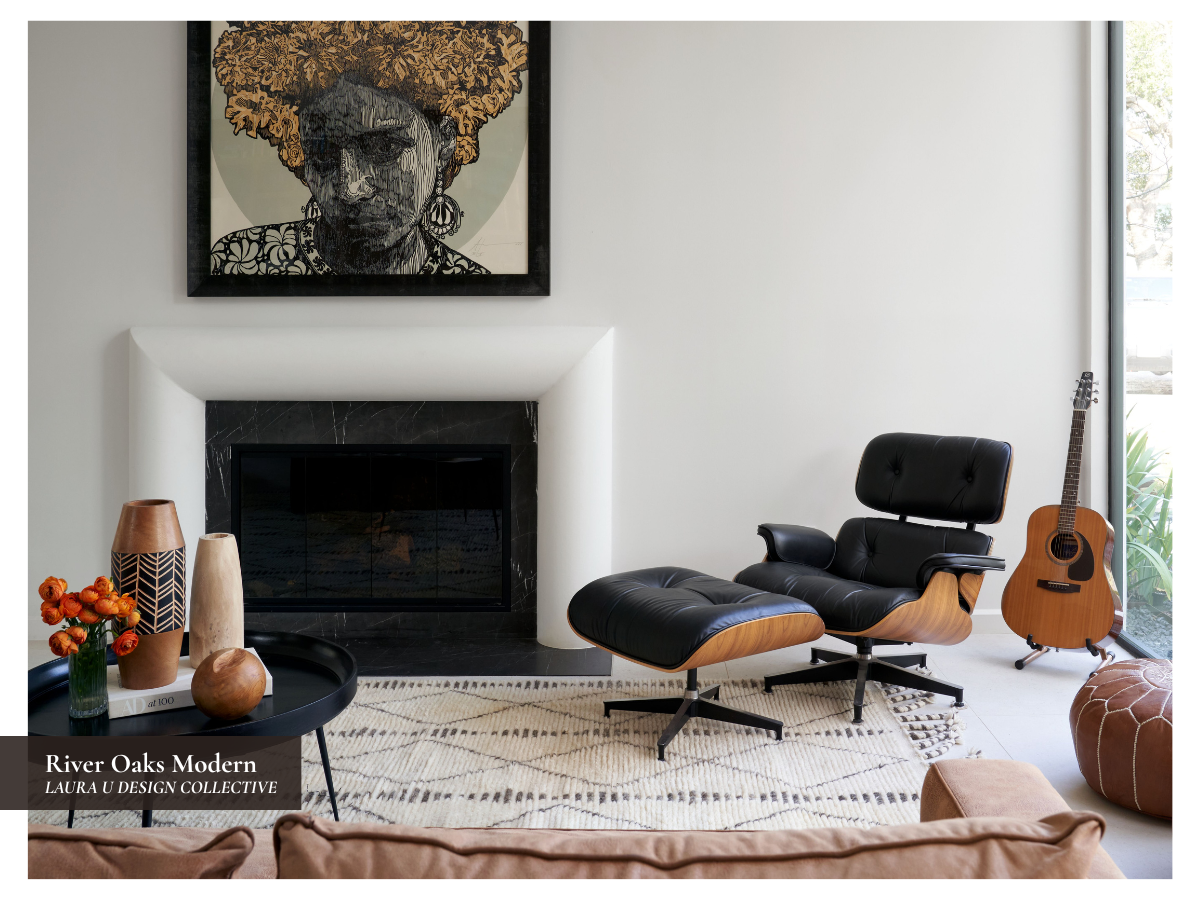
Our River Oaks Modern living room is another strong example of an open concept floating layout, although this version is a bit softer and more relaxed than the University Place Contemporary project. The seating arrangement, again, is situated fully within the architecture of the room instead of relying on walls for definition, which helps the living area, kitchen, breakfast nook, and circulation paths flow together naturally.
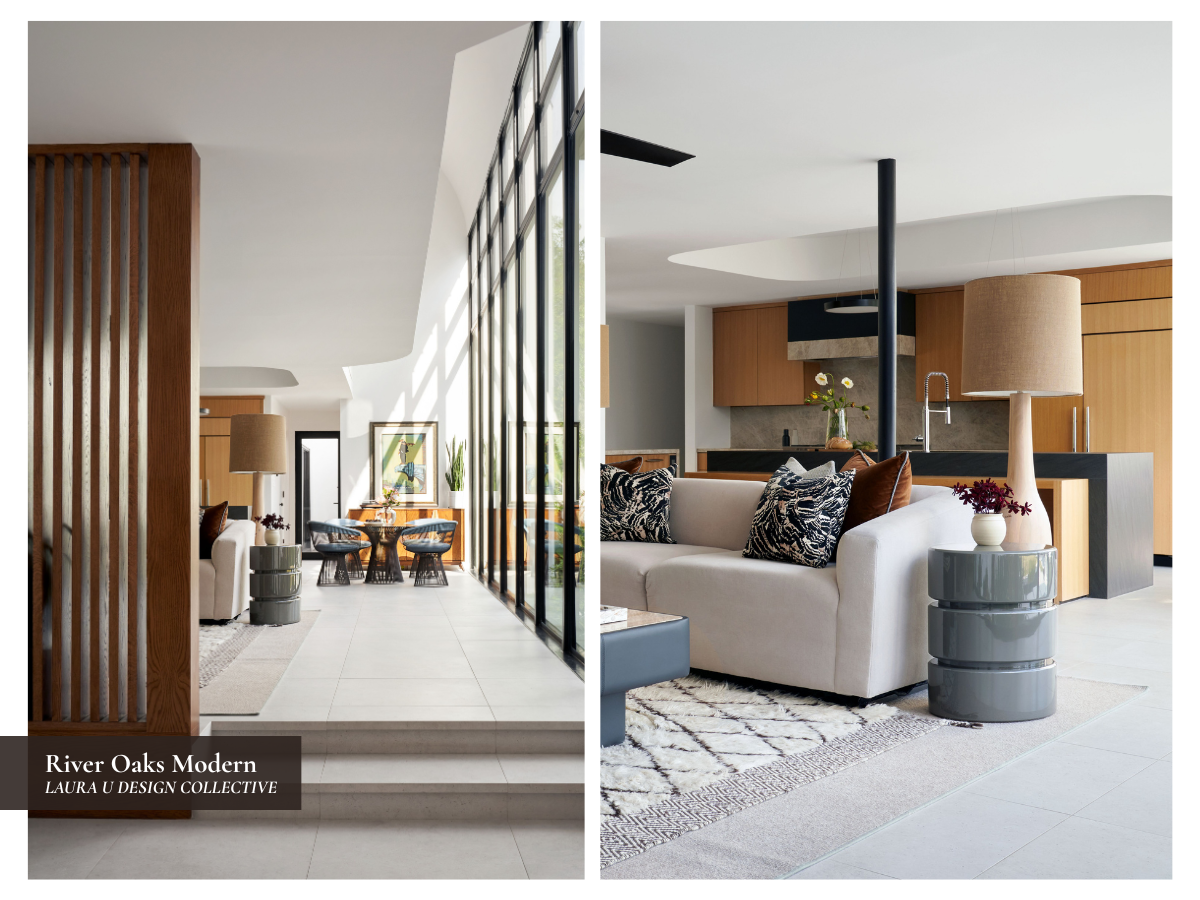
You’ll notice that the chaise portion of the sofa does abut the slatted wall. Floating layouts don’t necessarily require every piece to sit completely away from the walls. In many open-concept homes, one portion of the sectional may lightly rest against the architecture while the rest of the arrangement projects into the room to define the living area.
This type of layout works especially well in homes with long sightlines and expansive glass (like River Oaks Modern) because it keeps one’s focus on the architecture instead of visually interrupted by furniture. The sectional and rug establish the living zone without closing it off, while the surrounding walkways make movement through the home feel effortless.
#5 The Layered Lounge Layout
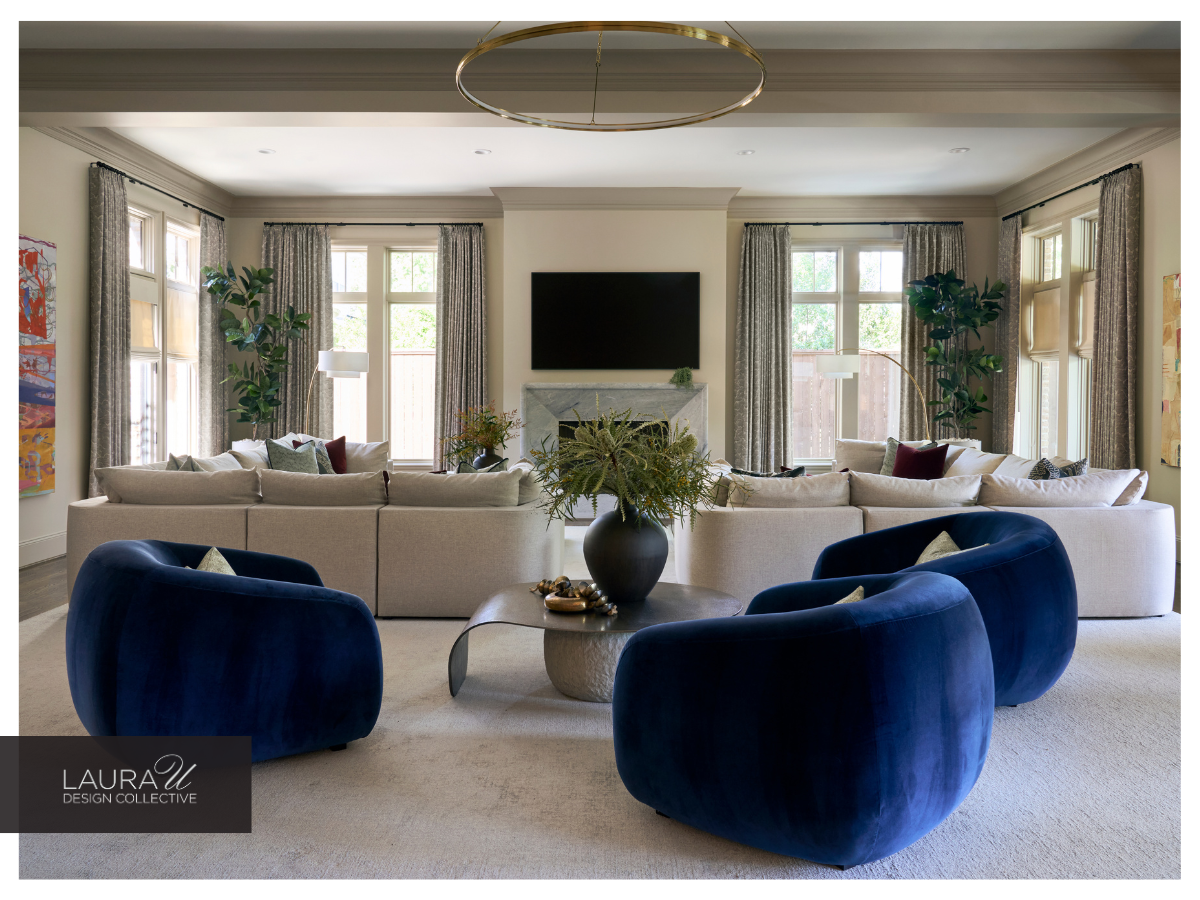
Some homes need more than one conversation area within the same space. Instead of relying on a single seating arrangement, a layered lounge layout unfolds into multiple sitting areas that serve many purposes throughout the day (and night).
One group of furniture may center around the fireplace while another sits toward the far end of the room near a window, cocktail table, or reading area. In larger homes, these layouts often help break up the length of a long living room without fully separating the space. The different zones still feel connected, but each one supports a slightly different use.

Layered layouts are especially effective for entertaining because guests can move naturally between seating groups instead of gathering in only one place. They also allow the room to feel more flexible for family life. Children might use one area more casually while adults gather in another, all while remaining visually connected across the space.
Pebble Beach
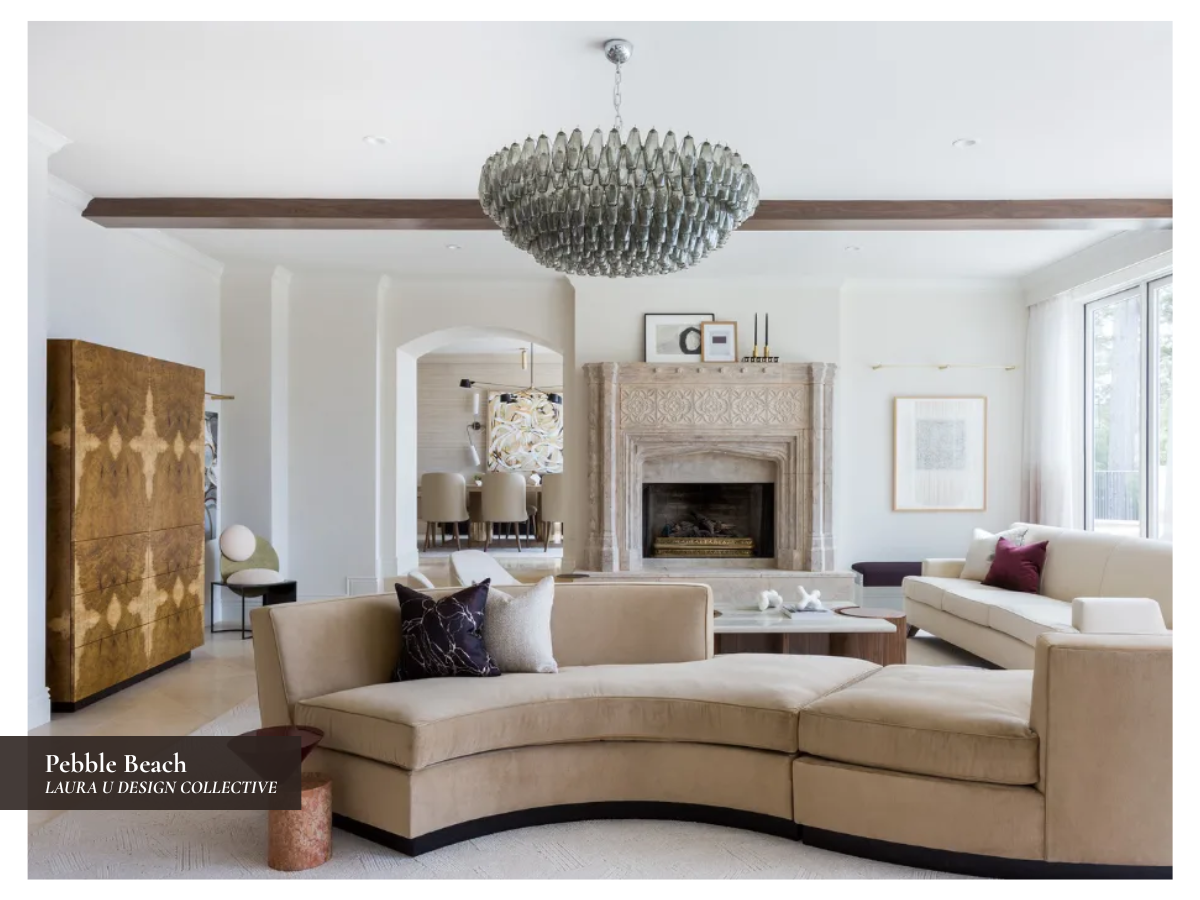
Our Pebble Beach formal living room is a strong example of a layered lounge layout because the furniture plan creates several places to gather within one large space. The curved sectional defines the main seating area, while the surrounding sofas, lounge chairs, cocktail tables, and sculptural pieces create smaller conversation zones around it.
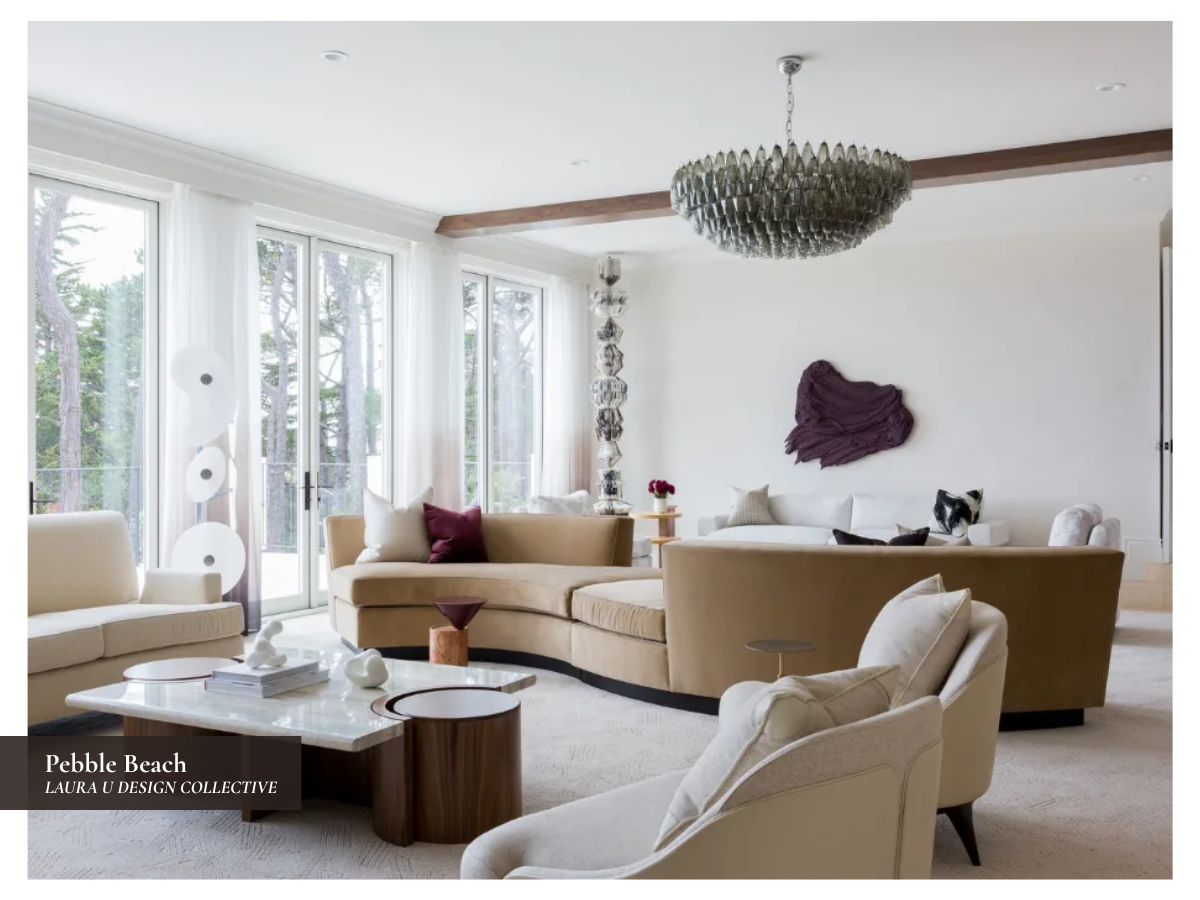
This type of layout works especially well in homes designed for entertaining because guests can gather in different parts of the room without feeling separated from the larger conversation. In Pebble Beach, the layout also makes room for the homeowners’ art collection, the Poliedri Murano chandelier, and the mix of rare pieces that give the space its unique personality. This space feels elevated and flexible, which is exactly what a layered lounge layout should do.
#6 The Indoor-Outdoor Resort Layout
Indoor-outdoor layouts are designed to preserve connection between the living room and the exterior of the house. Instead of turning all of the furniture inward, the seating arrangement allows people to move easily between interior and outdoor spaces.
This type of layout works particularly well in warm climates where large doors can remain open for much of the year. Furniture is often kept lower in shape and scale so it does not interrupt views toward terraces, pools, or landscaping. Wide circulation paths also help maintain flow between inside and outside entertaining areas. Natural materials, layered textures, and comfortable seating usually play an important role here as well.
Houston Oaks
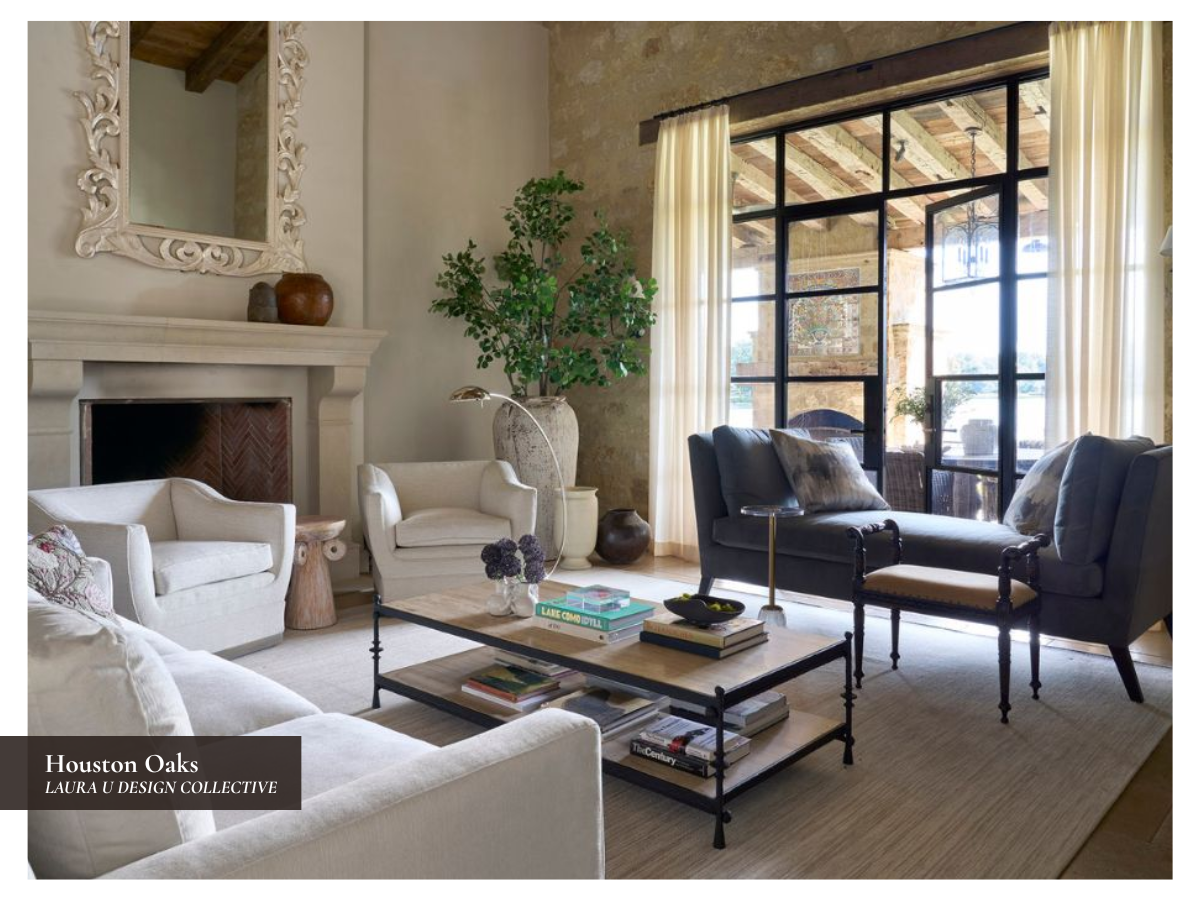
While Houston Oaks does organize seating around the fireplace, the home ultimately functions more like an indoor-outdoor resort layout because the architecture continuously pulls your attention toward the exterior living spaces. Large metal-framed doors connect the living room directly to the covered terrace and outdoor fireplace, making the outdoors feel like a true extension of the interior rather than a separate entertaining area.
This type of layout works especially well in warm climates like Houston because it allows circulation, natural light, and views to design the room just as much as the furniture placement itself. Instead of creating a closed seating arrangement, the layout encourages guests and residents to move between spaces. This gives the home its relaxed and intimate atmosphere.
#7 The Architectural Divider Layout
Some homes use architecture itself to organize the room layout. Instead of fully separating spaces with solid walls, partial dividers create distinct zones while ensuring the floor plan stays open.
These dividers might take the form of shelving, millwork, fireplaces, aquariums, or partial walls positioned in the middle of the space. They help create different zones within the home without completely interrupting visibility, light, or traffic flow. In larger homes especially, this approach can make open-concept layouts feel more intentional and functional.
Architectural divider layouts also work well when a living room needs to serve many purposes at once. One side of the room may function more like a formal sitting area while another becomes a quieter lounge, reading space, or family gathering area. The divider creates a natural break between those experiences while still keeping the entire room visually connected.
Braeswood Place
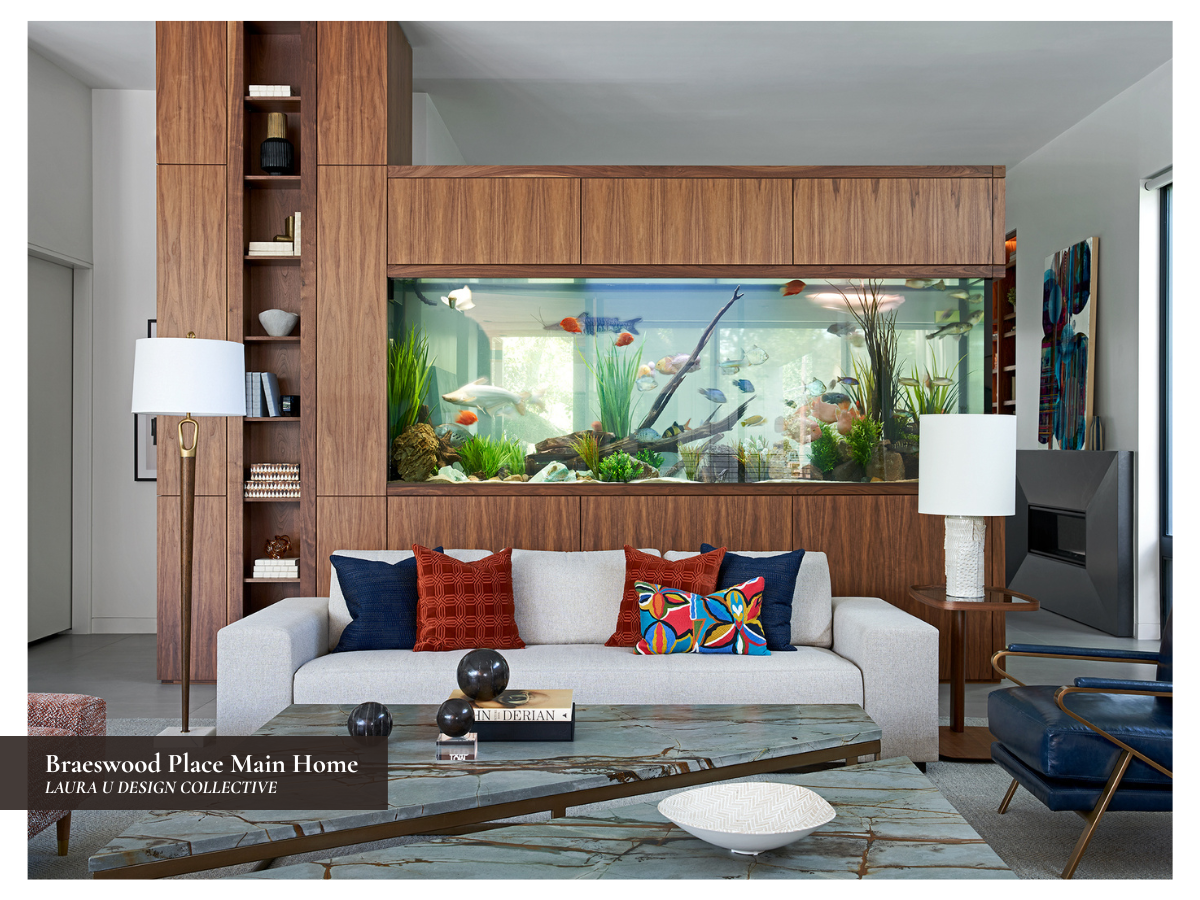
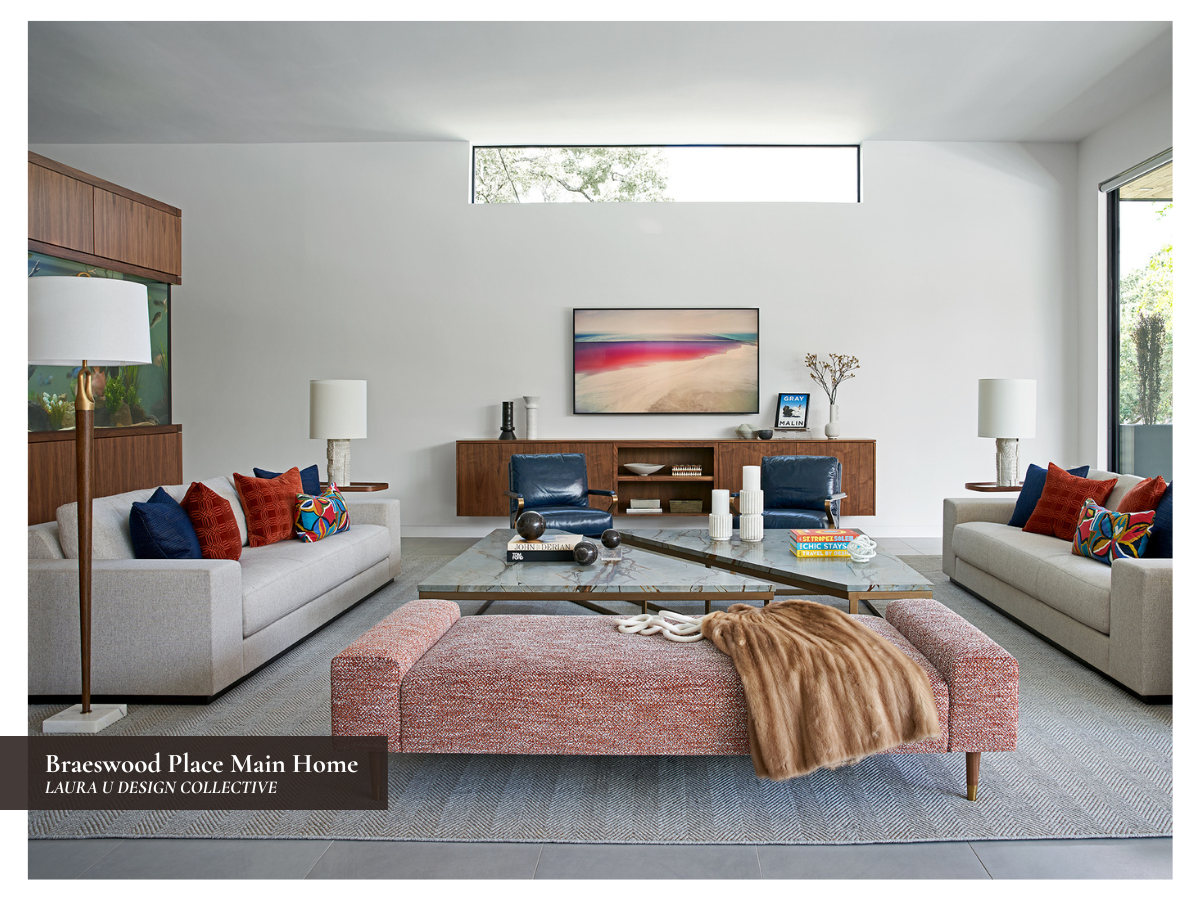
Our Braeswood Place living room is a strong example of an architectural divider layout because the fish tank separates the living room from the library without fully closing either space off. The aquarium functions almost like a transparent wall, giving each zone its own purpose while still allowing light, color, and activity to pass between them.
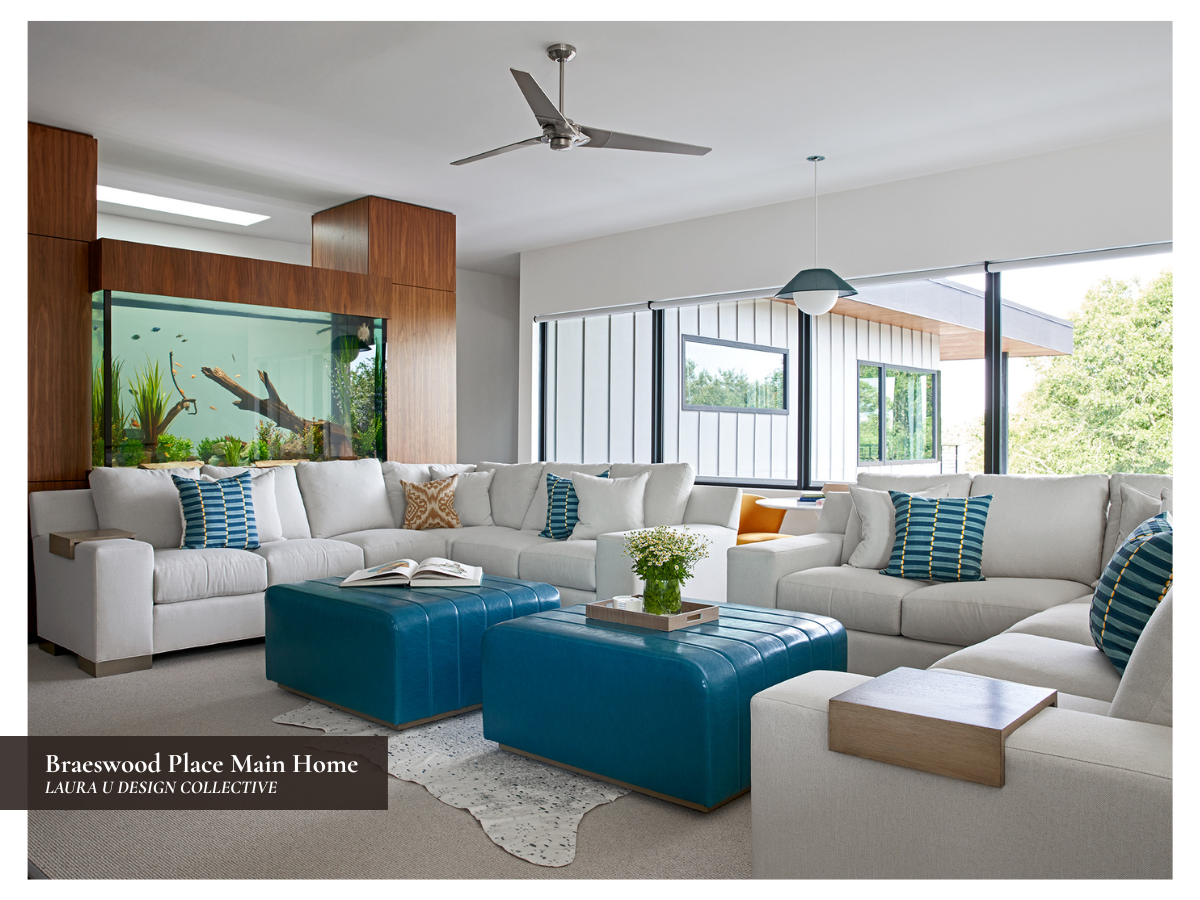
This approach works especially well in large homes designed for both family life and entertaining. At Braeswood Place, the clients wanted spaces where their children could gather, where guests could move easily during events, and where the family’s love of nature and diving could become part of the architecture. The fish tank does all of that at once. It divides public and more private areas, adds movement and color, and gives the living room a focal point that feels personal to the homeowners.
Sandalwood
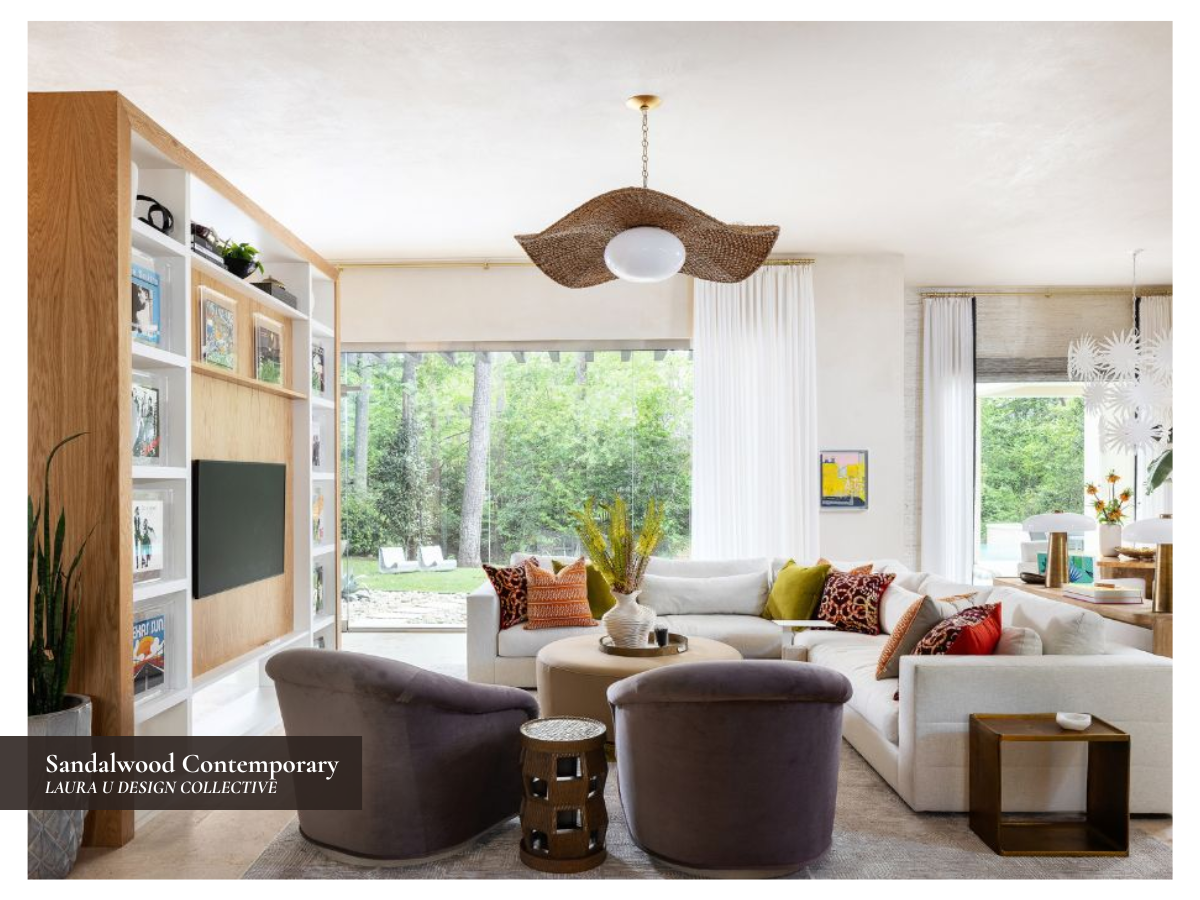
Our Sandalwood living spaces also use an architectural divider layout, though the effect is more sculptural and gallery-like. A partial wall separates the living area from the adjacent lounge, allowing the two spaces to feel distinct without disconnecting them from one another. You can still move around the divider, see through the larger plan, and experience both rooms as part of one continuous environment.
This type of layout works well when a home needs multiple living moments without adding full walls. In Sandalwood, one side feels more relaxed and family-oriented, while the black-and-white lounge has a more dramatic, art-forward personality. The divider gives each space enough separation to support a different mood, but the overall floor plan still feels open, intentional, and connected.
Designing the Ideal Living Room Layout for Your Home
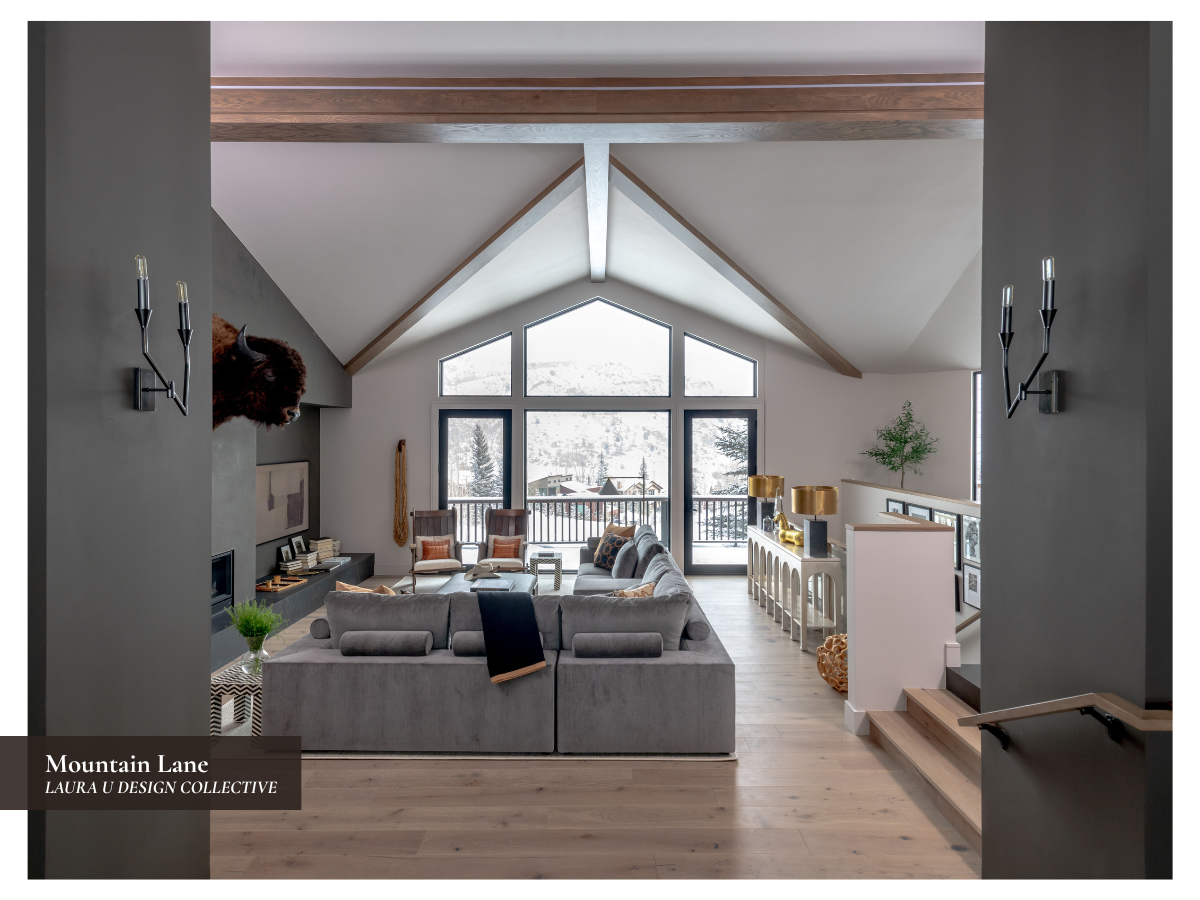
The best-designed living room layouts respond to both the architecture of the home and the people living inside it. Ceiling height, windows, traffic flow, entertaining style, television placement, and even how a family spends time together all influence the furniture plan.
Some living rooms benefit from symmetry and structure, while others feel better with more flexible seating arrangements, layered conversation areas, or stronger connections to the outdoors. Well-crafted living spaces will feel effortless, but that ease comes from careful planning. When the layout is correct, the architecture, furniture, and daily life of the homeowners all work together naturally.
If you are planning a renovation, furnishing a new home, or rethinking your current space, the Laura U Design Collective team would love to help.