


As designers, we adore high-gloss finishes, but clients can be on the fence because they perceive shiny surfaces as high-maintenance. Thankfully, that’s not always the case! As Hadley Mendelsohn and Meghan Shouse write in an article published by Yahoo!Life, a high-gloss finish “does show imperfections, but it’s also extremely easy to clean.”
Better yet, high-gloss finishes are high-drama and surprisingly versatile, whether used in a space as lacquered cabinetry, painted millwork, polished marble, reflective tile, burnished metal, or a piano-finish dining table. Whatever the material, glossy surfaces interact with light differently than matte ones. They reflect, amplify, and draw attention in ways that completely change how you experience the space.
That incomparable visual impact is exactly why designers love high-gloss finishes. A lacquered ceiling can brighten a dining room without adding another light fixture. Polished stone gives a bathroom a completely different character than honed marble. Glossy cabinetry catches light throughout the day, while matte cabinetry absorbs it. Even when the color stays exactly the same, the finish can produce a very different result.
Of course, high-gloss isn’t appropriate everywhere. Reflective finishes highlight craftsmanship just as readily as they highlight imperfections. Surface preparation is especially important and lighting requires more consideration. The surrounding materials matter, too. A room with thoughtful architectural details (like the study in our Colonial Drive project) gives high-gloss something to work with, while a room without those details might benefit from additional decorative elements.
The conversation, then, isn’t really about whether high-gloss is “in style” but whether we understand where reflective finishes belong, what they contribute to a space, and how designers use them thoughtfully across everything from painted millwork to polished stone and metal accents.
Why Finish Matters Just as Much as Color (If Not More)

When clients select paint colors, stone slabs, or tile, they’re usually focused on the color itself. The finish often comes later, almost as an afterthought. Designers tend to approach the decision differently because finish influences how a material will behave and be experienced.
A glossy surface reflects light, while a matte finish diffuses it. As daylight changes throughout the day, those reflective qualities change, too. A lacquered ceiling might bounce afternoon sunlight around a dining room before reflecting the warm glow of a chandelier that evening. Polished marble can reveal movement and veining that appears much softer in a honed finish. Even painted millwork behaves differently when given a high-gloss finish.
John B. Murray, founder of the New York–based firm John B. Murray Architect, described this beautifully in an interview with Homes & Gardens when he said, “The notion of reflectivity adds the depth… It’s not quite like looking in the mirror, but as you’re looking there, you see the space reflected.”
The amount of natural light matters, of course, but so does the direction from which it enters the space, the surrounding finishes, and even the time of day. A finish that feels understated on an overcast morning can become much more reflective once afternoon sun reaches the space. That’s one reason designers spend so much time evaluating samples within the room itself rather than relying solely on showroom or studio lighting.
High-Gloss Changes the Architecture

High-gloss also changes the way we notice architectural details. Crown molding, wall paneling, cabinetry, and built-ins all catch light differently once a reflective finish is introduced. Details that might blend quietly into the background with a flat or matte finish become much more noticeable simply because light is able to move across the surface.
This effect isn’t limited solely to darker colors, either. According to Sherwin-Williams, sheen changes the appearance of light colors just as dramatically. Their designers note that “Whites and soft colors look ethereal… Deep tones and black have high drama and luxurious feel.” The paint color may stay exactly the same, but the finish changes how we perceive it. This is why we, as designers, evaluate color and sheen together rather than making those decisions independently. We assess the material of the underlying substrate, too, whether that be wooden built-ins, a metal front door, or primed walls.
High-Gloss Won’t Work in Every Space, and That’s Just Fine
Spaces designed for entertaining often benefit from reflective surfaces because they’re typically experienced under changing lighting conditions. Natural light fills the room during the day before giving way to lamps, sconces, pendants, or candlelight in the evening. Throughout those transitions, a glossy finish responds differently than a matte one. High-shine finishes reveal movement and depth as the light changes.
John B. Murray touched on this idea when discussing glossy ceilings with Homes & Gardens, noting that “…in a room where you’re entertaining… it adds a level of glamour.” That observation extends beyond ceilings alone, though we love the lacquered ceiling in our Highland Village Contemporary dining room! Dining rooms, libraries, entryways, powder baths, and even kitchens often have enough architectural detail and layered lighting to support a reflective finish.

Other spaces will call for a very different approach. Primary bedrooms, for example, are frequently designed to feel quieter, calmer, and more restorative. A soft matte finish or natural texture can contribute to that atmosphere in a way high-gloss may not. Similarly, rooms with limited natural light or little architectural detail sometimes benefit more from texture, layered materials, or thoughtful lighting than from additional reflectivity.
As with most design decisions, context matters. High-gloss isn’t inherently suited to one room type over another. The surrounding architecture, available light, intended mood, and daily use all influence whether a reflective finish feels appropriate.
Sometimes One Surface Is Enough
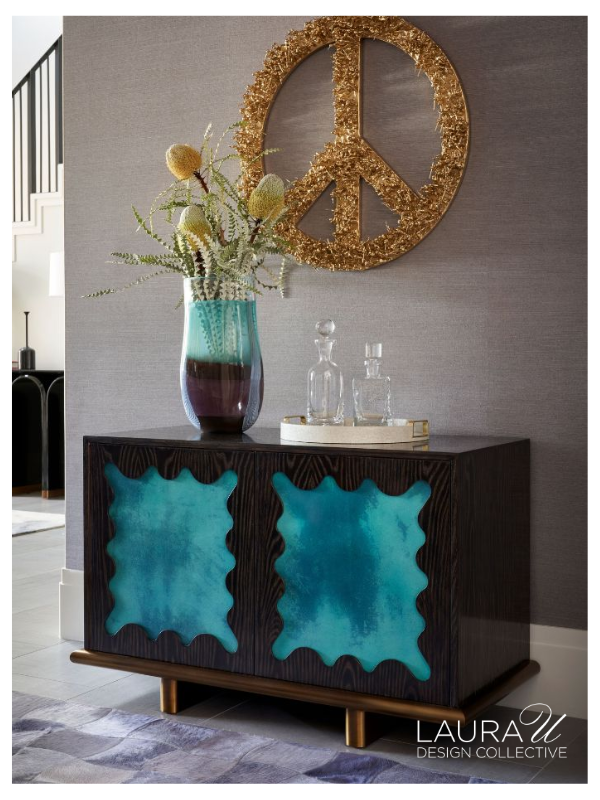
Opting for high-gloss doesn’t necessarily mean committing to an entire lacquered room. In many cases, a single reflective surface provides all the contrast a space needs. A painted front door, built-in cabinetry, dining room ceiling, or statement piece of furniture can introduce gloss without competing with every other finish in the room. That single surface will be a focal point simply because it catches light differently than everything around it.
This layered approach also creates opportunities to work with sheen rather than introducing additional colors. Andrea Magno, color marketing and development director at Benjamin Moore, has recommended varying sheen instead of changing paint colors altogether, using the same color on walls and trim with different finishes to create subtle contrast. Detailed in an interview with Elle Decor’s Monique C. Valeris, Magno’s approach is more restrained than introducing another paint color, while still allowing moldings, paneling, and architectural details to stand apart.
High-gloss doesn’t need to dominate the room to be effective. Sometimes, one carefully selected surface does all that must be done!
Where High-Gloss Looks Best
Not every surface benefits equally from a high-gloss finish. Some naturally catch light in interesting ways, while others are just made more difficult to maintain. This is just one reason we think about the application just as carefully as the finish itself. Over time, we’ve found that certain architectural elements consistently lend themselves to reflective finishes, particularly when they’re already playing an important role in the overall design.
Ceilings

Ceilings are one of the most unexpected places to introduce a high-gloss finish yet one of our very favorites. Because they reflect both natural and artificial light, glossy ceilings can subtly change the way a space feels throughout the day. In dining rooms and foyers, they catch the light from chandeliers and pendants to create a sense of movement overhead and a larger space without introducing another decorative element.
Of course, not every ceiling is a good candidate for high-gloss. Surface preparation is especially important because any imperfections are much more noticeable once the finish reflects light. We also consider ceiling height, existing millwork, and the room’s proportions before specifying a reflective finish overhead.
We’ve found that high-gloss ceilings work particularly well when the architecture commands attention already. Coffered ceilings, detailed crown molding, or beautifully proportioned rooms give the finish something to emphasize rather than something to simply reflect.
Cabinetry and Full Walls
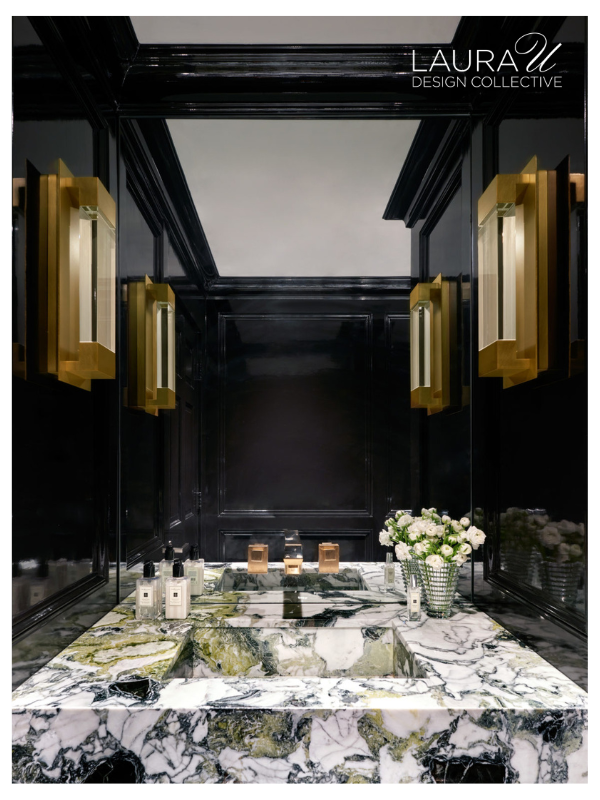
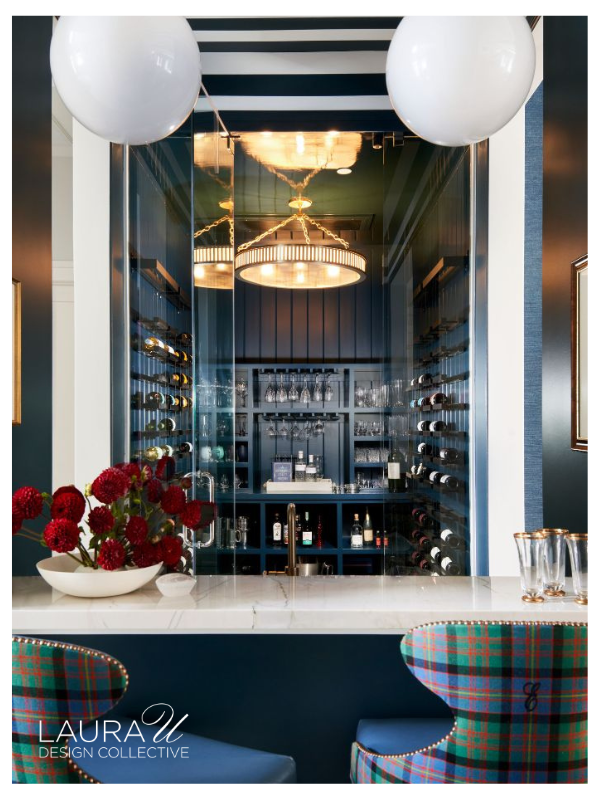
Cabinetry is another natural place for high-gloss, particularly in kitchens, bars, libraries, and built-ins. Unlike a full lacquered room, glossy cabinetry introduces reflectivity in a more controlled way while still becoming a focal point within the space.
Durability is another consideration. As House Beautiful’s Hadley Mendelsohn and Meghan Shouse note in this article, “High-gloss paint boasts unparalleled durability.” That’s one reason glossy finishes continue to appear in hardworking spaces that experience frequent use; you might think that mudrooms, home bars, and guest baths might be the worst spot for statement-making shine, but that’s not actually true. Clients are often surprised to learn that while glossy surfaces reveal fingerprints more readily, they’re also generally easier to wipe clean than flatter finishes.
Millwork and Trim
Millwork is another opportunity to use sheen strategically. Instead of introducing a completely different paint color, we can rely on finish alone to distinguish architectural details. Paneling, built-ins, crown molding, window casings, and doors can all be painted the same color as adjacent walls while using a different sheen. The contrast is subtle, yet the architectural detailing is that much more apparent as light moves across the room.
Accent Pieces

High-gloss doesn’t have to begin with the architecture at all. Sometimes the easiest introduction is through a single piece of furniture or a decorative object. A piano-finish dining table, lacquered console, reflective side table, or painted front door can all introduce the visual qualities of gloss without requiring a major commitment. These smaller applications also allow clients to experience how reflective finishes behave within their home before incorporating them on larger surfaces like cabinetry or ceilings.
Because gloss naturally attracts the eye, even a single accent piece can influence the way the entire room feels.
Remember, High-Gloss Only Looks Exquisite When It’s Executed Well
One reason we don’t opt for high-gloss indiscriminately is that reflective finishes are simply less forgiving than matte ones. They highlight craftsmanship, but they also highlight every flaw underneath them.
As Melinda Page points out in an article for Frederic, “While flat finishes hide imperfections, shiny surfaces magnify them.” That’s true whether you’re working with painted drywall, millwork, cabinetry, or even certain stone installations. Small dents, uneven joints, sanding marks, and surface irregularities that might disappear beneath an eggshell finish can suddenly become much more noticeable with a high-gloss finish.
This is why a designer’s eye is so valuable. Beautiful architecture can become even more beautiful with added reflectivity. Poor drywall, uneven millwork, or cabinetry that wasn’t carefully prepared often becomes more noticeable for the same reason. Preparation also influences where we specify high-gloss in the first place. Interiors with beautiful paneling, detailed millwork, or carefully proportioned ceilings naturally lend themselves to reflective finishes. Spaces without those architectural qualities sometimes benefit more from texture, layered materials, or another design element altogether.
High-Gloss Usually Isn’t a DIY Finish
Clients are sometimes surprised to learn that achieving a beautiful high-gloss finish often requires considerably more preparation than applying the finish itself. Depending on the substrate, surfaces might need additional sanding, skim coating, patching, priming, and multiple coats before they’re ready for the final application.
Professional application also makes an enormous difference. Many high-gloss finishes perform best when sprayed rather than brushed or rolled because spraying produces a more consistent surface with fewer visible brush marks. Equally important is allowing adequate curing time between coats so the finish reaches its intended appearance and durability.
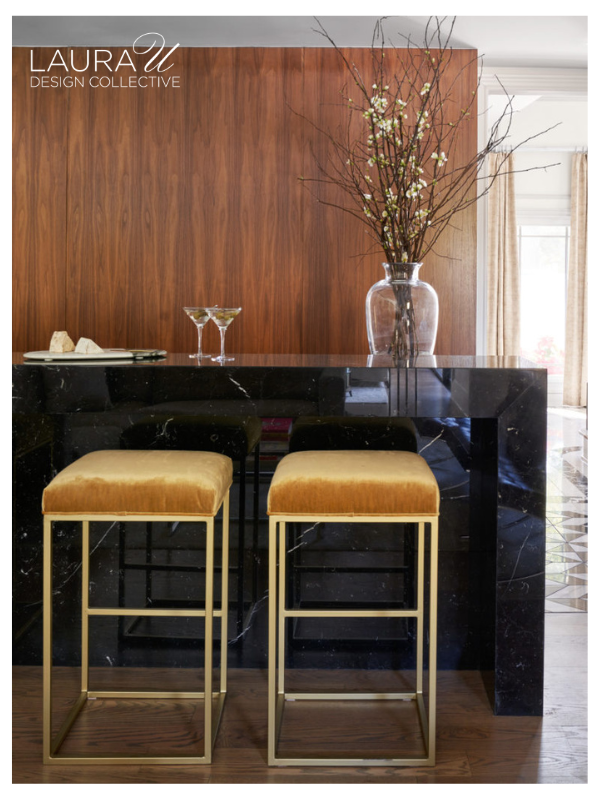
That doesn’t mean every glossy surface requires an extensive refinishing process. Factory-finished cabinetry, polished stone, glazed tile, and finished metals all arrive with their reflective qualities already built in. Painted architectural surfaces, however, take more preparation because they’re custom. Perhaps this is the biggest misconception surrounding high-gloss. People often focus on the finish itself when, in reality, the quality of the finished result is determined by the underlying substrate.
Mix and Match Finishes for a Layered Interior
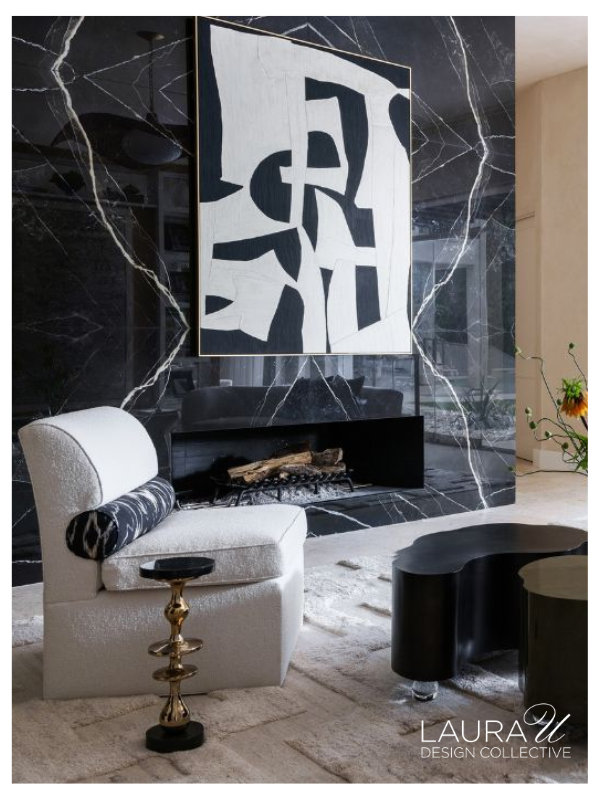
One way to make high-gloss feel intentional is to resist the temptation to use it everywhere. Reflective finishes are much more interesting when they’re paired with matte surfaces, natural textures, and materials that absorb light rather than reflect it.
A lacquered cabinet will feel far more dramatic next to honed marble. Glossy millwork stands out against matte walls. Burnished metals, textured linens, natural woods, and woven fibers all soften the visual impact of reflective surfaces for a luxurious yet lived-in space that actually looks like it belongs in a home.
Sherwin-Williams has observed this same shift in the way designers approach sheen, noting, “We’re seeing gloss and matte together for a really textured look.” That contrast prevents a space from feeling one-dimensional, even if it’s monochromatic or “color-drenched”. Rather than competing with one another, each finish empowers the others to stand out.
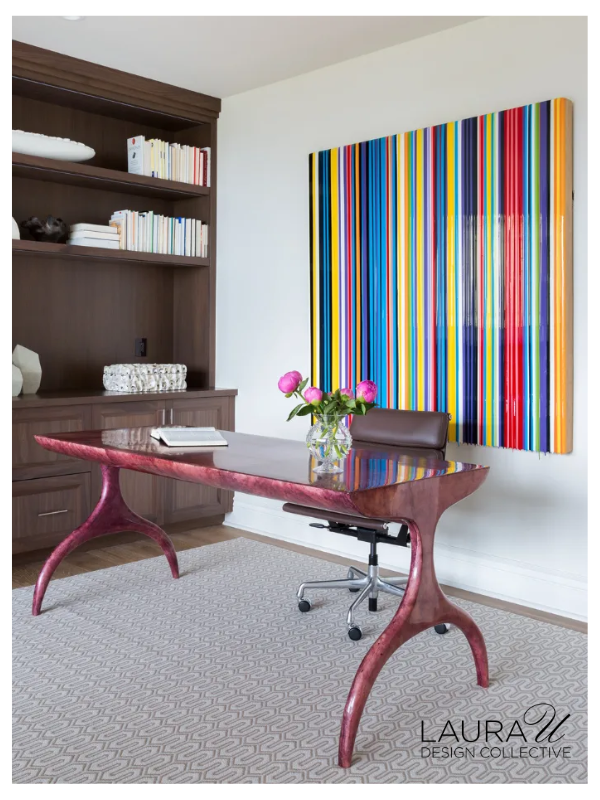
The same principle applies to color. High-gloss doesn’t have to be bold to make an impression. A soft white lacquer can be every bit as striking as a dramatic black finish when it’s paired with the right materials, lighting, and architectural details. As John B. Murray told Homes & Gardens, “When done right, it’s a paint trick that can instantly make any room look more expensive.” We’d argue that the operative phrase is “when done right.” Choosing where to introduce high-gloss, understanding how it interacts with the surrounding materials, and knowing when to incorporate other finishes is key. Working with a design team is the differentiator between elegant and elementary when incorporating high-gloss finishes into your interior.
If you’re considering lacquered millwork, polished stone, reflective metals, or another high-gloss finish in your own home, we’d love to help. At Laura U Design Collective, we believe that beautiful interiors are built around thoughtful, layered decisions that ensure every material, color, and texture contributes to the overall design.
