


While we love a traditional study with floor-to-ceiling bookshelves and handsome wood paneling, today’s home libraries can take many different forms. Some of our clients have extensive collections of books they’ve acquired through decades of travel, while others want a comfortable place to read, work from home, and display meaningful objects. Of course, many want all three!
Designing a home library requires us to think about how the space will be used, how many books must be accommodated, and whether the library should function as a private retreat or a shared workspace. We also have to consider the architecture of the home, the dimensions of the millwork, lighting, and furniture. Even the types of books you collect can influence the depth and height of your shelving. For example, are you a cookbook collector (most of those are quite large!) or do you adore Victorian miniatures?
At Laura U Design Collective, we’ve designed libraries and studies in everything from 1930s residences to Midcentury Modern homes. Below, we share eight considerations for designing a beautiful, functional home library, with examples from four of our projects.
Eight Things to Consider When Designing a Home Library
#1 Determine How You’ll Use the Space
Before you start selecting bookshelves, think about how you actually plan to use your library. Do you want somewhere to read in the evenings, or will the space also function as your primary home office? Will you be working independently, or should the layout accommodate two people? These questions influence everything from the furniture plan to the amount of storage and lighting required.
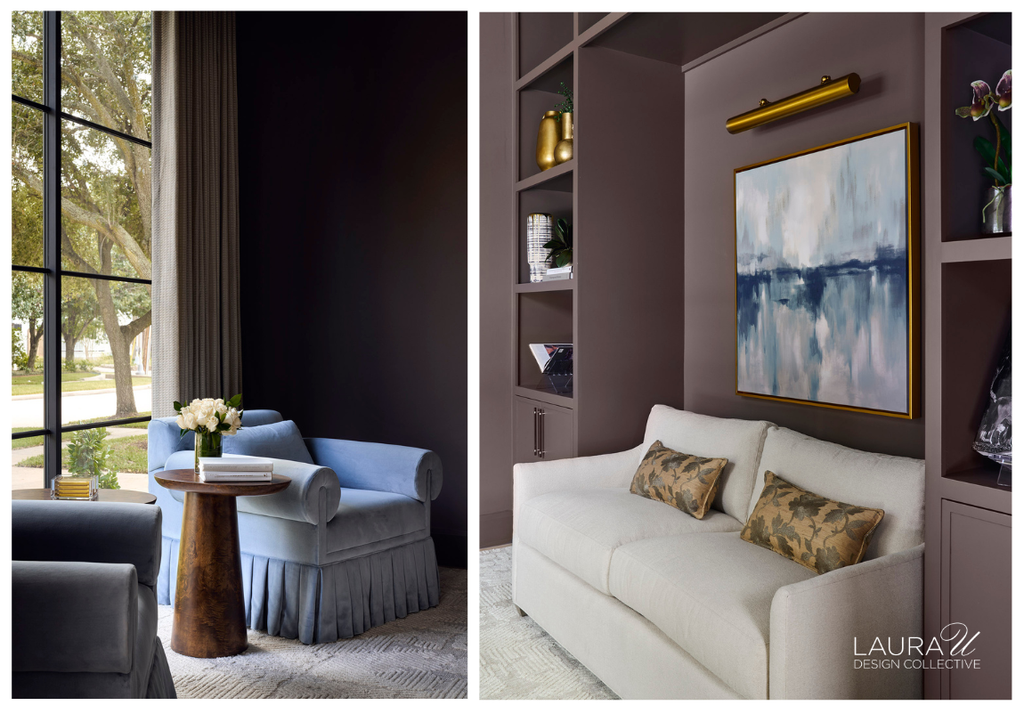
A dedicated reading library might include a substantial armchair, an ottoman, and a small table for books and beverages. If you’re working from home, you’ll probably need a proper desk, convenient outlets, and enough surface area for a computer and paperwork. A shared study introduces additional considerations. Two people may need separate work surfaces, accessible storage, and task lighting that can be controlled independently.
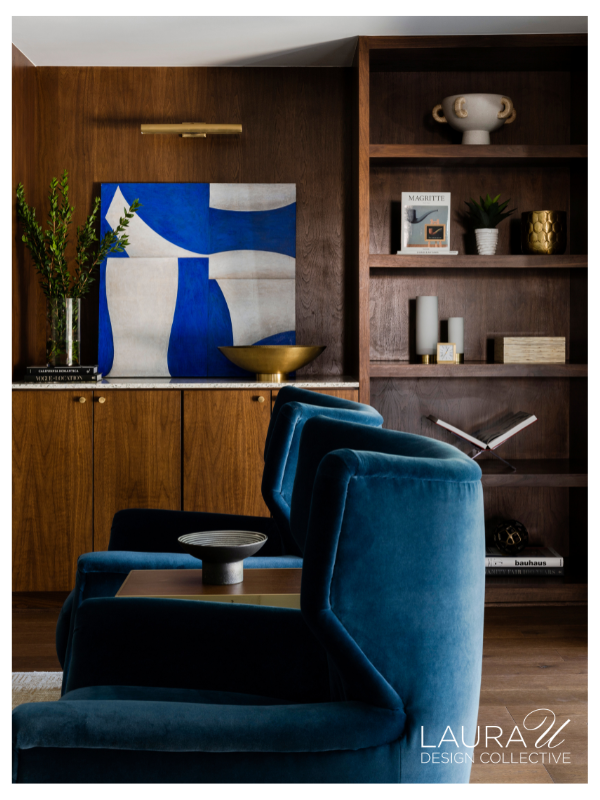
At Green Tree, our clients had an extensive personal book collection and wanted to incorporate a dedicated library into their 1957 Midcentury Modern home. Working with the project’s builders, Rod and Bob Jackson, we redesigned the millwork and incorporated two functional desks into the study. We also refinished and reupholstered some of the couple’s existing Midcentury furnishings, including an accent chair.
The resulting library accommodates their collection and provides a comfortable workspace for both homeowners. Because the clients already owned many of the books and furnishings, we were able to account for those pieces as we developed the design.
#2 Plan the Layout and Circulation
Once you know how you’ll use the library, consider where the furniture, bookshelves, and other architectural features should go. A desk positioned in front of a window might have lovely natural light, but you’ll also want to account for glare on your computer screen. If the library doubles as a reading space, you’ll need enough clearance around the desk and chairs to move comfortably.
Doors, windows, heating and cooling vents, and existing built-ins can all influence the furniture plan. We also consider how frequently homeowners will access particular shelves. Books used every day should be easy to reach, while decorative objects and less frequently accessed volumes can occupy higher shelves.
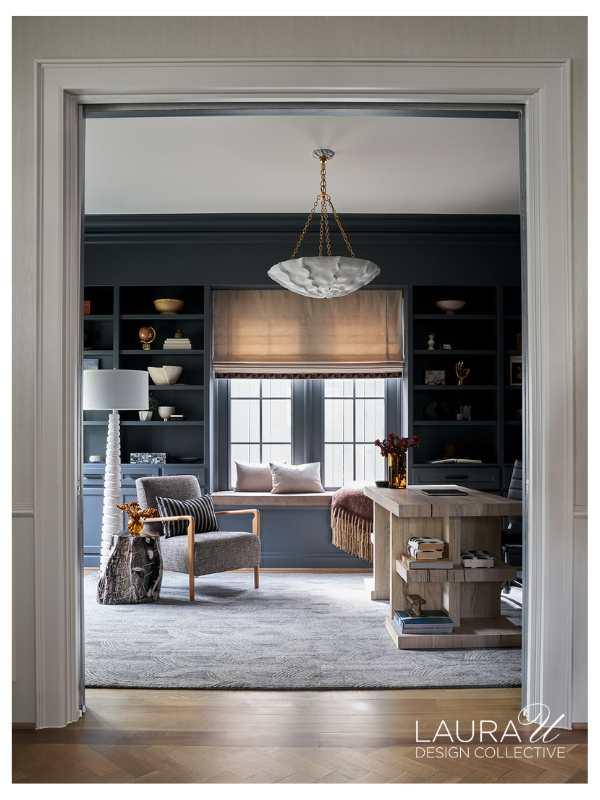
In our University Place project, the study is located just opposite the stairwell and front door. We retained the existing layout but completely redesigned the floor-to-ceiling bookcase, including its structure, finish, and hardware. Nearly all the furniture was replaced, although we kept the client’s original desk because its sculptural form worked beautifully with the updated interiors.
This project is a good example of why a renovation doesn’t always need a completely new floor plan to change your home in a meaningful way. Sometimes, the existing arrangement works perfectly well, and the more substantial changes involve millwork, furniture, lighting, and finishes.
At Huntwick Forest, we took a somewhat different approach. The study includes a redesigned window with one large pane of glass, custom cabinetry, and a hammered metal and walnut desk. The arrangement incorporates natural light and substantial storage while preserving the architectural character of the home’s transitional English manor design.
#3 Select the Right Shelving Dimensions
Don’t forget about your bookshelves, especially if investing in custom millwork. Shelf depth, height, width, and structural support should all relate to the books you intend to store. A collection of paperbacks will have very different needs than a library filled with oversized photography books, architectural monographs, and antique volumes.
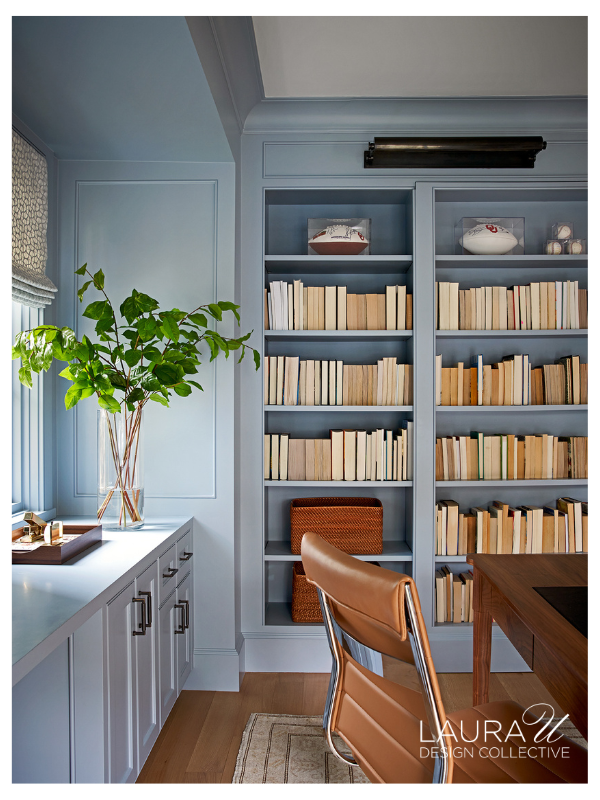
In an article for This Old House, editors explain that standard bookcase depths generally range from 10 to 12 inches, although larger books might need deeper shelving. We recommend measuring some of the largest books in your collection before finalizing the millwork drawings. You’ll want enough clearance to remove books comfortably, but excessively deep shelves can waste valuable storage space. Adjustable shelving can be especially helpful when your collection includes different formats or when you expect to add books over time.
Shelf thickness and support are important, too. Books are surprisingly heavy, and long shelves can bow under the weight of a substantial collection. The appropriate span depends on the shelving material, thickness, construction, and anticipated load. We coordinate these details with the millwork fabricator rather than assuming that every shelf can extend across the same distance.
At Green Tree, the custom millwork was developed around the homeowners’ existing collection and their need for two integrated desks. This allowed us to consider the book storage and working surfaces together, rather than treating the library as a series of independent shelving units.
#4 Consider Architectural Millwork and Detailing
The architectural style of your home should influence the design of your library, particularly if you’re incorporating extensive custom cabinetry or wall paneling. A traditional study might have framed cabinet doors, decorative molding, and detailed hardware, while a Midcentury Modern library may call for simpler profiles, substantial wood grain, and integrated furnishings.
Of course, there’s plenty of flexibility within both approaches. We don’t necessarily want to reproduce the exact interiors that would have existed when the home was built. Instead, we consider which architectural details are worth preserving or referencing and where contemporary materials and furnishings might make sense.
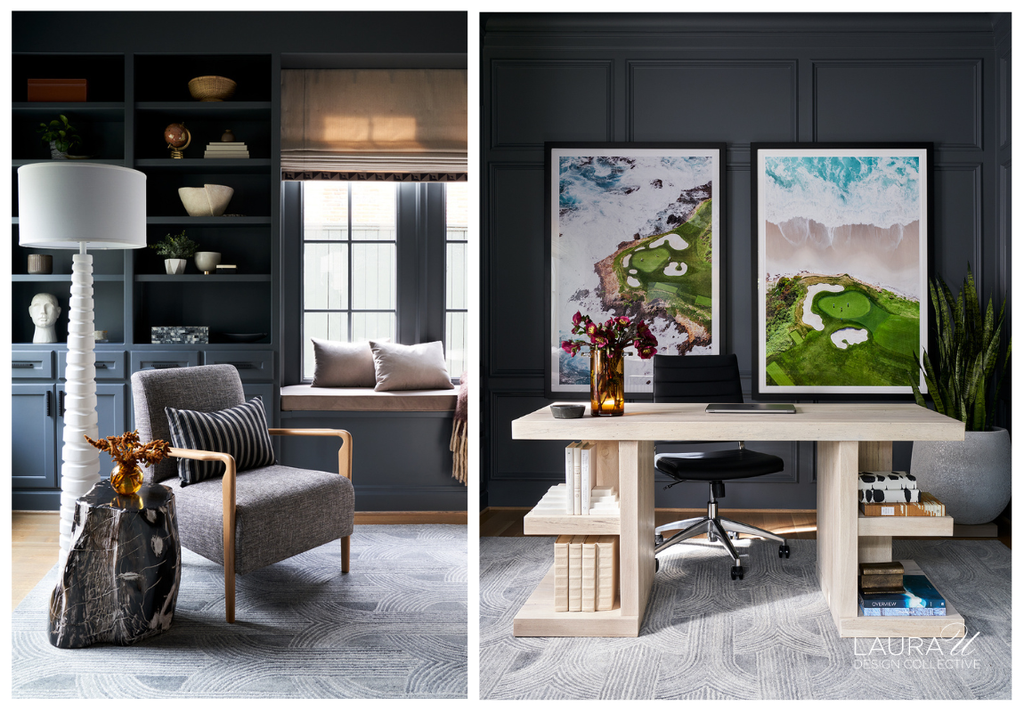
At University Place, we transformed an existing French Transitional interior into a more casual, California-inspired home. In the study, we redesigned the bookcase and selected bronze Helmsley pulls by Jonathan Browning from Restoration Hardware. The hardware references the geometric detailing associated with Art Deco design, which also influenced the lighting, rug, and other decorative elements throughout the space.
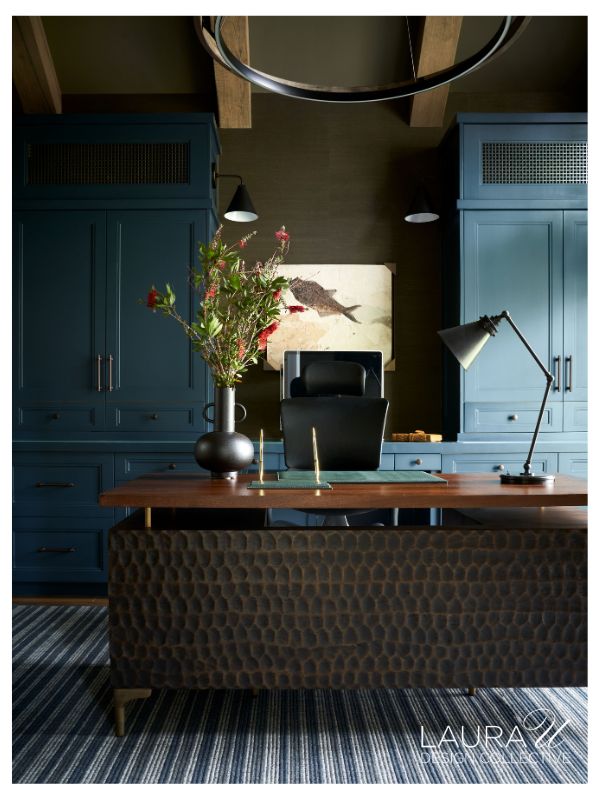
Our Huntwick Forest project is an entirely different interpretation. The study incorporates natural wood beams, custom millwork, black metal details, and brass hardware. We also integrated concealed speakers into the millwork and designed a door wrapped in Jerry Pair leather. A discreet safe was incorporated into the cabinetry.
The millwork accommodates those practical requirements without interrupting the architectural detailing. We also used grasscloth wallcovering behind the family’s artwork, with cabinetry on either side of the composition. It’s a lovely example of how a study can incorporate books, art, technology, and personal collections within the same architectural design.
#5 Account for Your Book Collection and Storage Needs
Before determining how many bookshelves you need, take an inventory of your collection. This doesn’t have to mean counting every book individually, but it’s worth estimating how much linear shelf space your existing collection occupies. You’ll also want to think about whether you’re likely to acquire additional books and which pieces deserve particularly prominent positions.
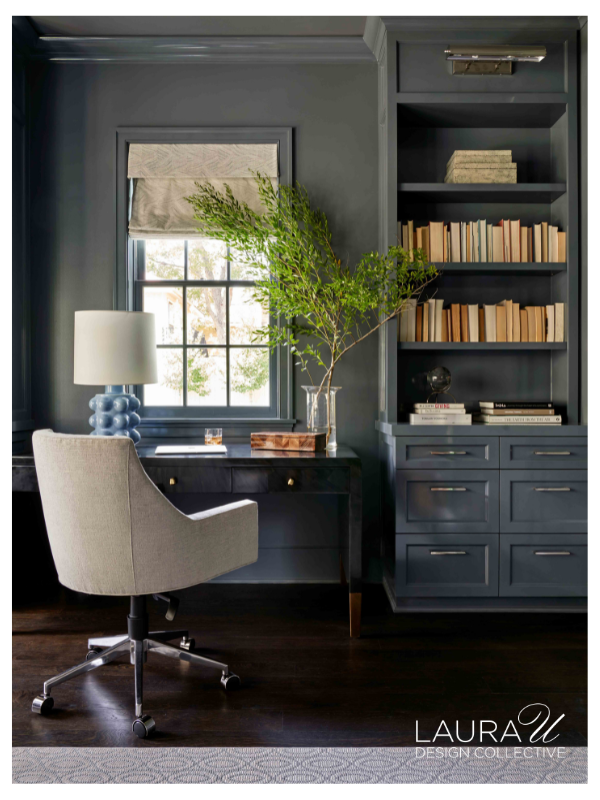
Some collections are primarily functional, with frequently consulted books arranged by subject or author. Others include antique volumes, first editions, family photographs, travel souvenirs, and sculptural objects. In these cases, we may incorporate open shelving alongside closed cabinetry, allowing certain pieces to be displayed while paperwork, office supplies, and less decorative items are stored out of view.
In an article for Architectural Digest, architects from Ike Kligerman Barkley discuss how libraries can accommodate different collections and architectural styles. The organization of the books themselves can influence the design, particularly when homeowners have strong interests in specific subjects or geographical regions.
Our Green Tree clients are avid travelers with extensive collections of art and furnishings acquired over the years. Their study was designed to accommodate their personal library while incorporating several existing Midcentury pieces. The books and furniture were already meaningful parts of their home, so we wanted the new millwork to accommodate them.
Huntwick Forest takes a different approach to personal collections. In the study, the homeowners display a fossil arrangement framed by their son-in-law using specimens collected during family travels. The piece is surrounded by grasscloth and custom cabinetry. Although this study does have a lot of storage, we also considered how to incorporate artwork and objects with personal significance.
#6 Plan Lighting for Reading and Display
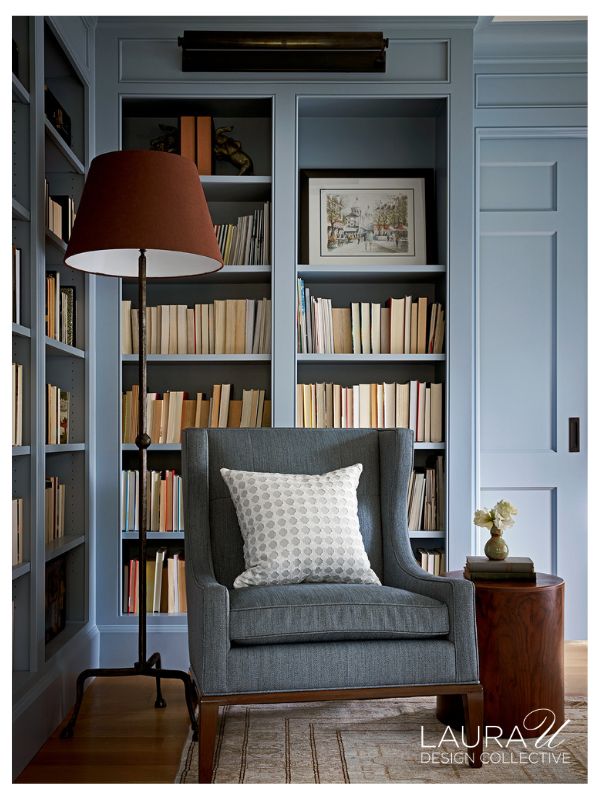
Lighting is especially important in a library because the space will likely be used for several different activities throughout the day. For reading, you’ll need comfortable, gentle illumination, while working at a desk calls for more focused task lighting. You might also want decorative lighting that highlights the millwork, artwork, or a collection of books.
We typically consider ambient lighting, task lighting, and decorative lighting together as a group because they all support each other. A ceiling fixture can illuminate the general space, while a table lamp or adjustable floor lamp provides more concentrated light for reading. Wall sconces can also be incorporated into a library, particularly when a desk, seating arrangement, or architectural feature provides a natural location for them.
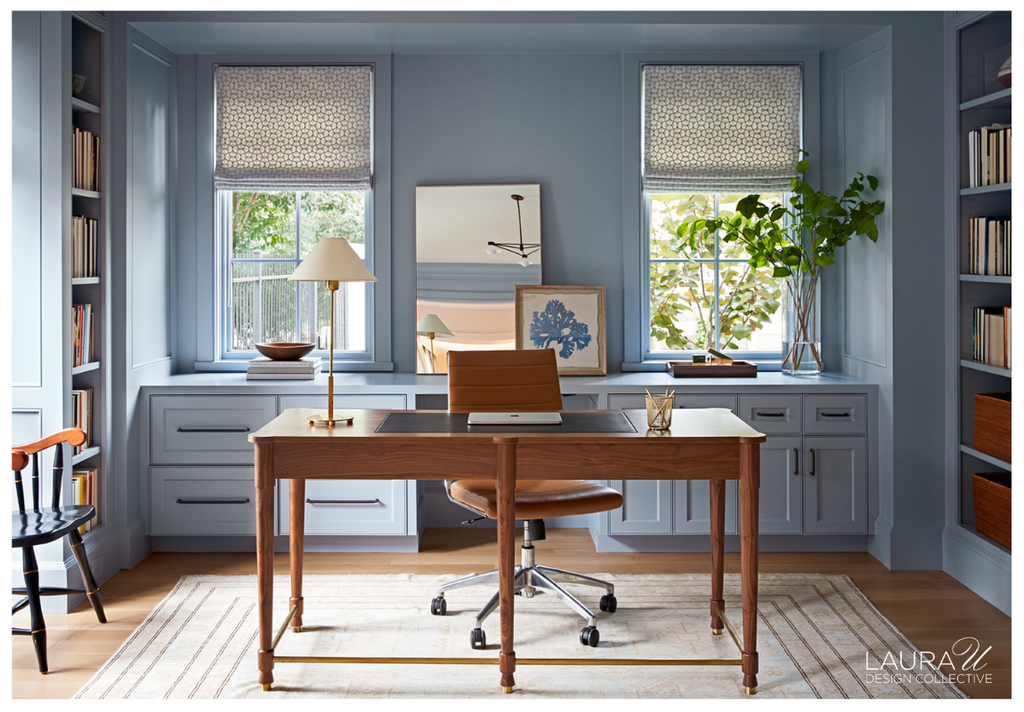
At our Rice Residence, a 1930s home near Rice University in Houston, we incorporated several different light sources into the blue-and-white study. These include an Archipelago 3 Surface Pendant in blackened brass from Allied Maker, sconces from Hudson Valley Lighting, a standing lamp from Rose Uniacke, and a table lamp from Circa Lighting.
The lighting reflects the early and Midcentury Modern influences found throughout the home, while accommodating different activities within the study. We paired the fixtures with natural walnut furniture, including a Lawson Fenning Niguel Desk, an A. Rudin lounge chair, and a Lawson Fenning side table.
Natural light is another important element here, both for your comfort and the protection of your collections. A library with wide windows can be beautiful during the day, but direct sunlight can create a lot of glare on screens and reading surfaces. Window treatments can help regulate that light while also contributing to the overall design. More on this in the eighth step on this list.
#7 Select Comfortable Seating and Furnishings
Your library furniture should relate to how much time you plan to spend in the space. If you’re using the library primarily for reading, you’ll probably want a comfortable chair with appropriate back support, a nearby table, and enough light to read without straining your eyes. If you’re working at a desk for several hours each day, the height of the work surface and the proportions of your desk chair are incredibly important. We have these excellent resources on selecting home office furniture if you need a little extra help: “13 Gorgeous Work-from-Home Desks for Small Spaces” and “10 Comfortable and Chic Home Office Chairs.” Of course, there are a few Eames chairs in the latter!
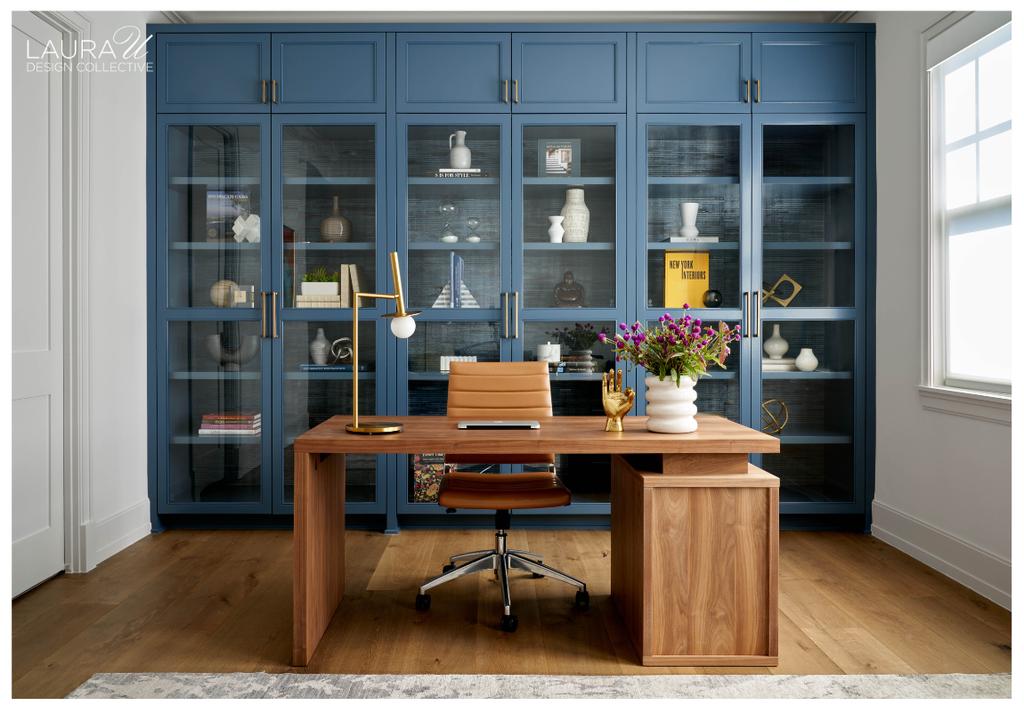
Consider whether you prefer a traditional upholstered armchair, a more architectural lounge chair, or a sofa that allows several people to use the library together. A window seat can also be wonderful, particularly when it’s deep enough to accommodate cushions and positioned near a convenient reading light.
At Rice Residence, we selected an A. Rudin lounge chair and natural walnut furnishings for the study. The furniture relates to the home’s 1930s architecture and its early Modernist influences, while the upholstered seating introduces a softer element alongside the wooden desk and cabinetry. A rug from Matt Cameron and patterned blue-and-white Roman shades complete the interior.
University Place incorporates a Lawson Fenning Nigel chair, a polished fossil stool from Noir, and a window seat with custom cushions. We also selected a sculptural floor lamp from Made Goods and a wool rug from Jaipur Living. These elements introduce a combination of textures and furniture forms alongside the redesigned bookcase.
There’s also no reason every home library needs to be furnished exclusively with traditional office furniture. A comfortable lounge chair, antique writing desk, sculptural side table, or favorite vintage piece might be a better fit for the homeowner and the architecture.
#8 Protect Books from Sunlight, Humidity, and Heat
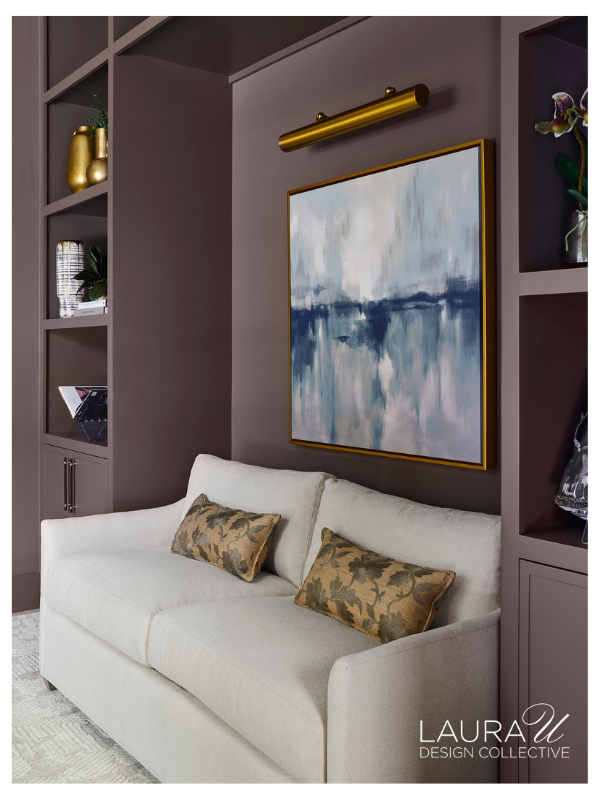
If you have an extensive collection, particularly one that includes antique books, rare editions, or works with sentimental value, you’ll want to consider the environmental conditions within your library. Books can be damaged by prolonged sunlight, excessive humidity, fluctuating temperatures, and improper storage.
The Library of Congress recommends storing books in a clean, relatively dry, stable environment, ideally with relative humidity around 35 to 50 percent. Excessive moisture can encourage mold growth, while very dry conditions may damage certain bindings and materials. The National Archives also recommends positioning bookcases away from direct sunlight to help protect collections from fading and deterioration.
Window treatments can help limit prolonged light exposure, especially in studies with large windows. At Rice Residence, we selected semi-sheer Roman shades in a geometric blue-and-white Fabricut fabric. The treatments filter daylight and contribute to the home’s overall palette. In University Place, we used a limestone linen Roman shade with geometric braid trim from Houlès.
For particularly valuable collections, we would also consider the placement of heating and cooling vents, fireplaces, and exterior walls. You generally don’t want antique books exposed to concentrated heat or significant fluctuations in temperature and humidity.
Designing a Home Library That Works for You
All the tips and tricks we’ve discussed above can help you plan a library that’s beautiful, comfortable, and appropriately designed for your collection, but there’s certainly no single formula for creating the perfect home library. You might want a dedicated space filled with thousands of books, or you might prefer a smaller study with a comfortable reading chair, a writing desk, and a few shelves for your favorite volumes.
We also consider the home’s architecture and the furnishings our clients already own. At Green Tree, the existing book collection and Midcentury furnishings informed the custom library design. At University Place, we retained the client’s desk while transforming the surrounding millwork. Huntwick Forest incorporates personal collections and concealed technology, while Rice Residence references its 1930s architecture through furnishings, finishes, and lighting.
When we design a home library, we want to understand how our clients will actually use the space and what they want to keep close at hand. The shelving, lighting, furniture, and architectural detailing can then be developed around those needs, whether we’re renovating an existing study or incorporating an entirely new library into the home.
Thank you for reading!