Homeowners considering renovations in 2026 are navigating a construction landscape that looks very different from just a few years ago. Material costs, interest rates, and global supply chains have all shifted since the pandemic-era building boom. While some categories have stabilized, others continue to fluctuate due to tariffs, labor shortages, and changes in financing conditions.
Understanding these forces can help homeowners approach remodeling projects with clearer expectations about both cost and timeline. In many cases, it also raises an important question early in the planning process, which is whether a home truly requires structural renovation, or whether custom furnishings and minor alterations might achieve many of the same goals with far less disruption.
Below, we examine the major factors influencing remodeling costs in 2026, why renovation activity continues to increase across the US, and when a furnishings-focused design project can offer a meaningful alternative to full-scale construction.
Contributing Factors to Remodeling Costs in 2026
Inflation and Construction Pricing
Construction costs have stabilized somewhat compared with the sharp increases experienced earlier in the decade, but pricing has not returned to pre-pandemic levels. Many materials rose dramatically between 2020 and 2022, and industry economists note that those increases tend to establish a new baseline rather than reverse completely once supply chains normalize.
Recent economic data suggests the pace of cost growth is slowing rather than disappearing. In an interview for Urban Land in January 2026, economists noted that national construction costs increased roughly 2.8 percent year over year, while materials inflation has cooled from the peaks seen earlier in the decade. Supply chains have also improved in many categories, providing more stability for commonly used materials like lumber and steel.
The cost and shrinking availability of labor, however, continues to affect renovation budgets even more than raw materials. Economists across the construction sector consistently point to skilled labor shortages and rising wage pressures as the most persistent factor affecting project pricing. As experienced tradespeople retire and demand for construction continues, contractors often face higher wage expectations in order to maintain their crews.
What This Means for Homeowners
Homeowners planning renovation projects may find that this combination of stabilizing materials and ongoing labor pressure means budgets feel slightly more predictable than they did several years ago, but they are unlikely to return to earlier cost levels and timelines might be more protracted for complex projects.
Interest Rates and the “Lock-In Effect”
Mortgage rates are another major force shaping the remodeling market. Even homeowners who are not actively buying or selling property feel the impact of interest rates through renovation financing and broader housing market behavior.
Many homeowners who secured historically low mortgage rates during the pandemic are reluctant to sell and take on a new mortgage at today’s higher rates. Housing economists often refer to this phenomenon as the “lock-in effect.” In an article for Forbes from March 2026, Jennifer Castenson writes that while remodeling costs might be higher than they have in years past, “there is the persistent lock-in effect of higher mortgage rates that are keeping homeowners in their homes. [which] means households will be incentivized to pursue remodeling projects first before considering a sale.”
This dynamic has helped sustain demand for renovation projects even during periods when housing sales slow. When moving becomes financially unattractive, many households choose to adapt their existing homes instead.
What This Means for Homeowners
Financing conditions still matter, however. Home equity loans and lines of credit generally follow broader interest rate movements, which means borrowing costs can influence the timing or scope of renovations. For some households, this leads to phased projects, in which improvements are completed over several stages rather than all at once.
Tariffs and Global Supply Chains
Global trade policy has also played a role in shaping renovation costs over the past several years. Tariffs on imported goods can create ripple effects throughout the construction supply chain, particularly for materials that rely on international manufacturing. Products that are usually used in renovation projects (e.g., lighting components, hardware, specialty tile, and certain stone materials) often pass through global production networks before reaching U.S. job sites. When tariffs change, suppliers typically adjust pricing structures to account for new import costs.

Economists observing the construction sector note that while overall materials inflation has slowed, certain inputs continue to experience more dramatic fluctuations. In the same Urban Land economist outlook, analysts pointed out that commodities like copper have increased more than 30 percent year over year, which has placed additional pressure on electrical and mechanical trades.
What This Means for Homeowners
For homeowners, the impact of tariffs often appears less as a single price spike and more as periodic adjustments across vendor pricing. This is especially true for specialty materials and imported finishes.
Remodeling Activity Continues to Grow
Despite economic crosscurrents, renovation activity is still one of the strongest segments of the housing market. Several long-term structural trends continue to drive demand for remodeling projects across the United States. One of the greatest contributing factors is the age of the country’s housing stock. According to National Association of Home Builders data cited by housing economist Eric Lynch, the average home in the United States increased from 31 years old in 2006 to 41 years old by 2023. As homes age, major systems like roofing, plumbing, and electrical infrastructure eventually require repair or replacement.
At the same time, homeowners are increasingly choosing to remain in their current homes longer (as opposed to buying a new home and moving). NAHB researchers note that remodeling has grown significantly as a share of housing activity; it has risen from 33 percent of housing investment in 2007 to roughly 44 percent by 2025.
Lifestyle factors also contribute to this growing trend. Aging-in-place renovations, which modify homes to support long-term accessibility, have become far more common in recent years. According to NAHB surveys, 73 percent of remodelers report an increase in requests for aging-in-place features over the past five years. Again, this reflects a broader shift toward adapting homes for long-term living rather than relocating.
How These Trends Affect Renovation Projects

Economic forces like inflation, labor shortages, tariffs, and financing conditions ultimately present themselves in renovation projects through changes in pricing, timelines, and project scope. While some homeowners expect a single factor to drive remodeling costs, the reality is usually a combination of influences that unfold throughout the planning and construction process.
Material selections, for example, can fluctuate in price as suppliers adjust to changes in tariffs or shipping costs. Labor availability may affect scheduling if specialized trades are booked months in advance. Financing conditions may shape whether homeowners complete a renovation all at once or phases over time.

For this reason, renovation budgets and timelines often evolve as projects move from early planning into detailed design and construction. Working with experienced design and construction professionals can help homeowners anticipate these adjustments and make informed decisions before work begins.
Understanding these dynamics also gives homeowners the information they need to answer the most important question: whether a project truly requires structural renovation, or whether thoughtful yet less interventive alterations could achieve many of the same goals with less disruption.
When Furnishings Can Transform a Home Without Renovation

Is construction truly necessary to achieve your desired transformation? While full remodels can dramatically reshape a home, many spaces benefit just as significantly from appropriately scaled and customized furnishings.
Interior design has the ability to change how a home looks, feels, and functions without altering the architecture itself. Through careful layout planning, bespoke furniture, lighting, window treatments, and materials, designers can reshape how a room is experienced and enjoyed. In many cases, spaces that feel awkward, dated, or underutilized can be completely reimagined without the cost, timeline, or disruption of construction.
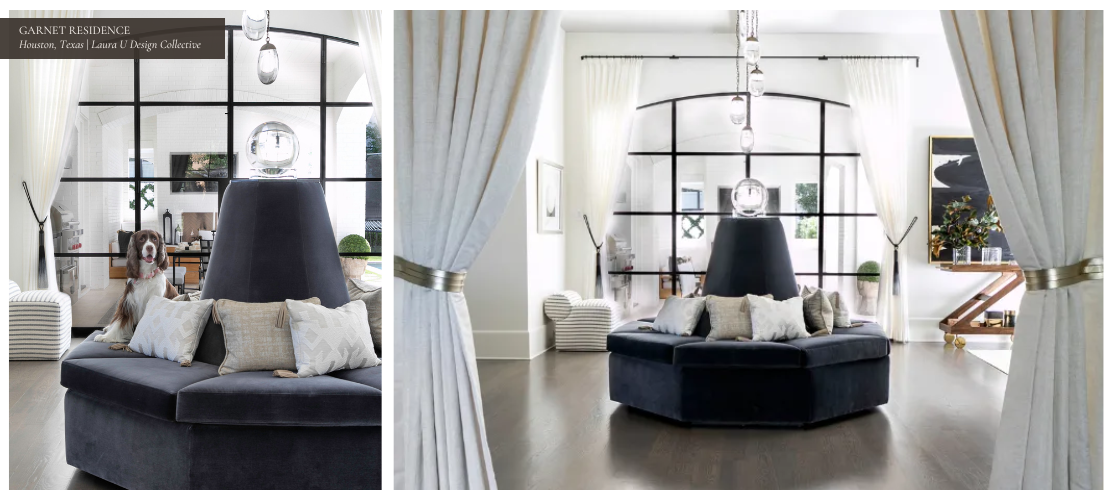
Custom furniture is especially essential. Unlike retail pieces designed for generalized spaces, custom furnishings are scaled to the architecture of the home and tailored to the way a family actually lives. A sectional can be designed to fit the proportions of a room perfectly, a dining table can accommodate large gatherings, or a seating arrangement can be configured to support conversation, entertaining, or everyday relaxation.
Layered elements such as lighting, rugs, upholstery, art, and window treatments further shape the atmosphere of a space. When coordinated thoughtfully, these elements create a sense of cohesion that can make a home feel entirely new, even without structural changes.
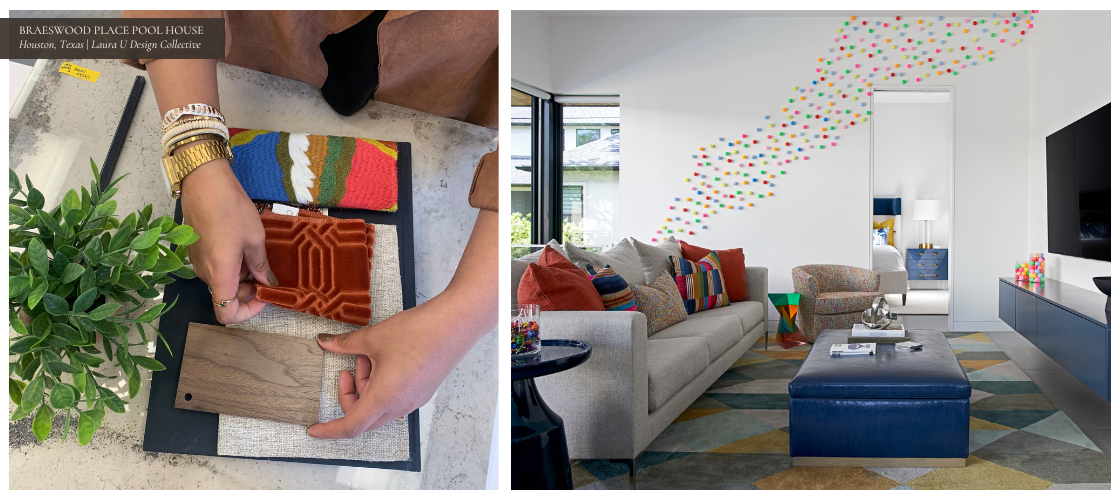
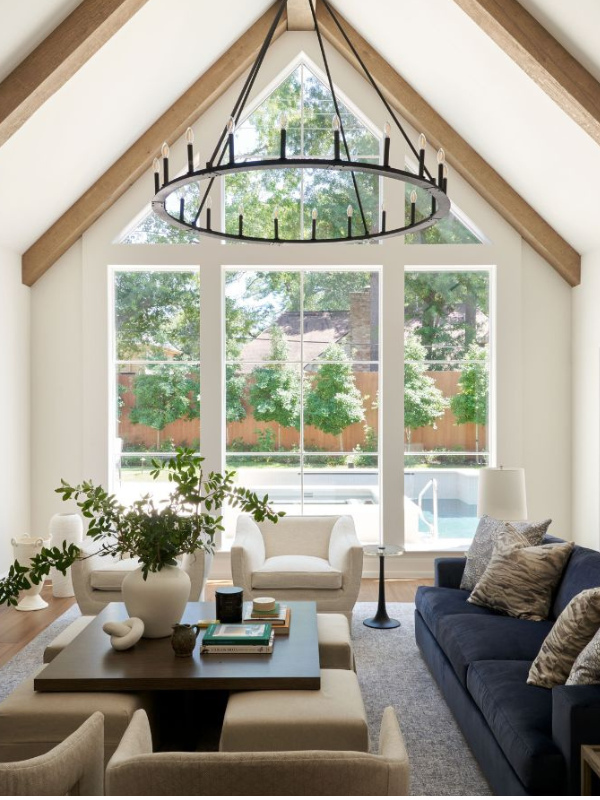
Caption: Designed for family-friendly living, this custom House + Town sofa was upholstered in a durable Pindler & Pindler fabric for our Braeswood Place pool house.
For many homeowners, a furnishings-focused project can be a meaningful middle ground between making solely cosmetic updates and undertaking a full-scale renovation. It allows the home to evolve aesthetically and functionally while avoiding the complexity, cost, and construction timelines associated with major remodeling.
When Remodeling Is Necessary
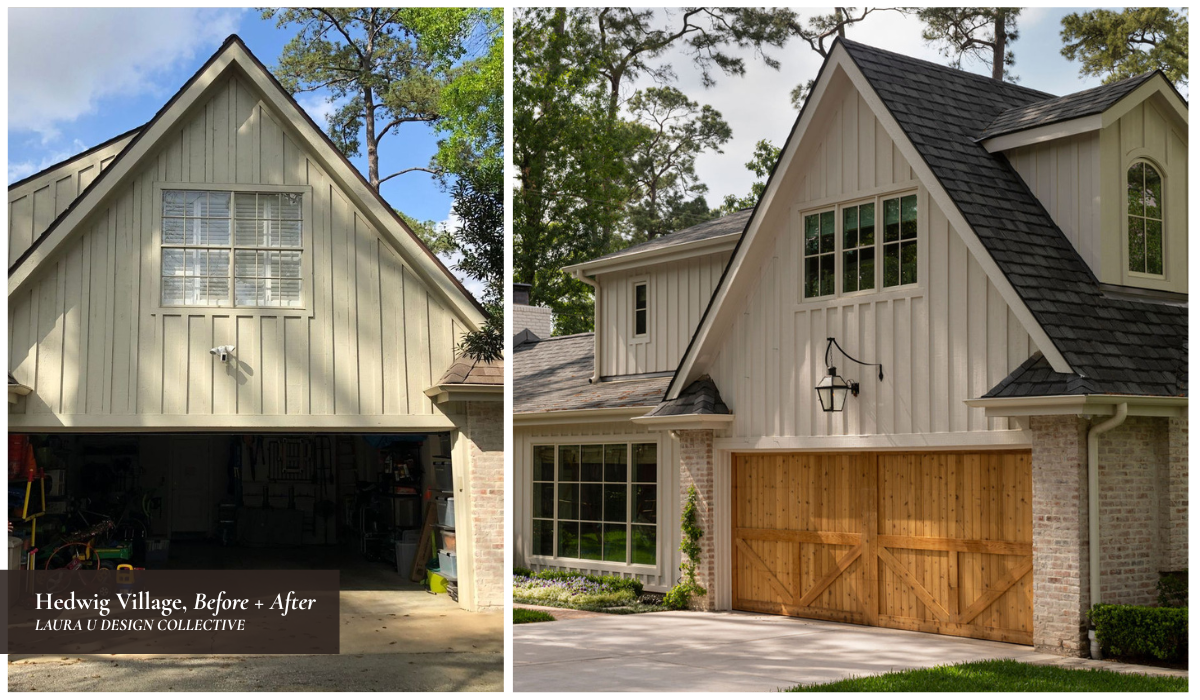
While a furnishings-focused design project can dramatically transform a home cosmetically, there are many situations in which renovation work is unavoidable. In older homes especially, remodeling often addresses structural, mechanical, or safety issues that cannot be solved through design alone.
The age of the American housing stock is one reason renovation activity continues to grow. As noted earlier, the average home in the United States increased from roughly 31 years old in 2006 to about 41 years old by 2023. As homes age, systems like roofing, plumbing, electrical infrastructure, and HVAC inevitably require replacement or modernization in order to function safely and efficiently.
Environmental factors are also contributing to increased renovation activity. In recent years, homeowners have faced more climate-related repairs following storms, flooding, and extreme weather events. Insurance-driven repairs, structural reinforcement, and resilience upgrades are becoming more common components of renovation projects.
There are also lifestyle considerations. Aging-in-place renovations, for example, are becoming more prevalent as homeowners adapt their homes for long-term accessibility. Industry surveys show a growing share of remodeling projects now involve features that allow residents to remain comfortably in their homes as they get older.
For these types of situations, remodeling is not simply an aesthetic upgrade but a necessary investment in safety, durability, and long-term livability. While cosmetic updates can dramatically improve how a home looks and feels, construction-based renovation plays an essential role in maintaining the performance and longevity of the home itself.
How Homeowners Can Approach Remodeling in 2026
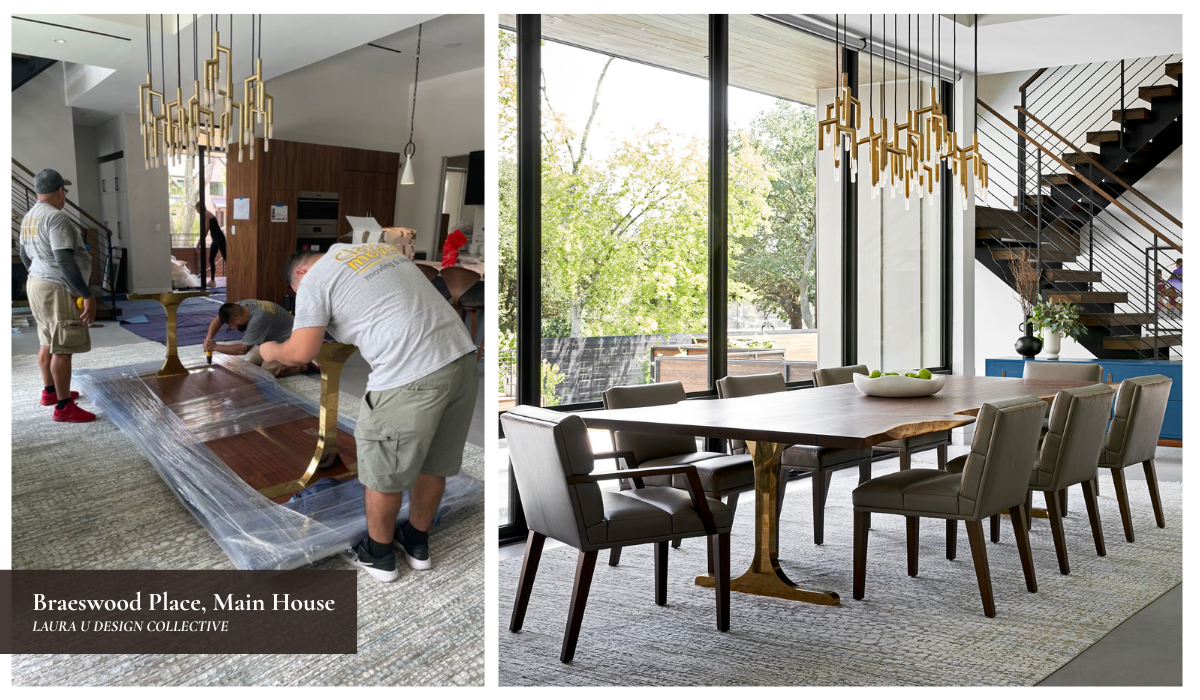
While the economic forces shaping the renovation market may seem complicated, homeowners need not navigate them alone. The most successful remodeling projects typically begin with thoughtful planning and a clear understanding of both goals and constraints.
Because costs and timelines can evolve during the course of a project, it’s often helpful to work with experienced designers and procurement professionals who can evaluate the home holistically and determine which improvements truly require construction and which might be accomplished through design interventions alone. This level of strategic planning can help homeowners prioritize investments that will have the greatest impact on how a home looks, functions, and ages over time.
In some cases, the right solution might involve a full renovation that addresses structural needs or modernizes aging systems. In others, a furnishings-focused design project can dramatically reshape the experience of a home without the disruption of construction. Understanding the difference between these paths is often the first step toward making informed and confident decisions about improving a home.