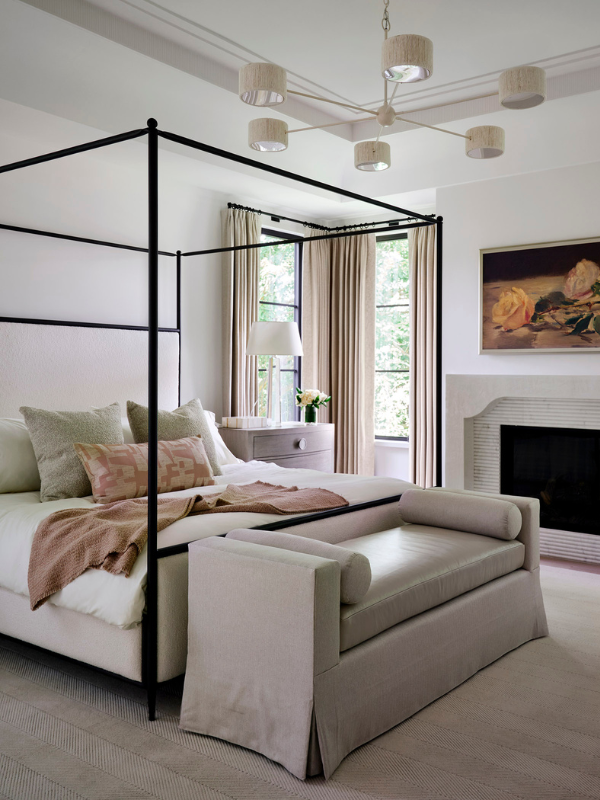
Although canopy beds have existed for centuries, many contemporary interpretations look very different from their historical predecessors. Architectural Digest recently noted that today’s canopy beds often emphasize the frame itself rather than heavy drapery. Designers tend to select slim metal profiles, substantial wood structures, upholstered frames, and simplified silhouettes that introduce architectural lines and weight without overwhelming the room.
That flexibility explains, at least in part, why canopy and four-poster beds continue to appear across such a wide range of projects. A single bed style can work inside a mountain retreat with exposed timber beams, a colorful family home, a contemporary new build, or a traditionally detailed primary suite. Materials, proportions, finishes, and surrounding furnishings ultimately determine how the bed contributes to the room.
Some homeowners assume a canopy bed requires soaring ceilings or an unusually large bedroom. Contemporary versions often rely on clean lines and open frames that preserve sightlines throughout the space. Others emphasize height and volume, drawing attention upward and reinforcing architectural features that already exist within the room.
Canopies aren’t just for little girls’ rooms, and four-poster beds aren’t relegated solely to historic homes. These design elements are dramatic, visually engaging, and surprisingly versatile. We’ve pulled a few four-poster beds from the Laura U Design Collective archives, along with one we love from another firm, to inspire your next bedroom remodel.
Why We Adore Canopy and Four-Poster Beds
Bedrooms contain relatively few major furniture pieces. Unlike a living room, where seating, tables, lighting, artwork, and accessories compete for attention, the bed almost always acts as the visual center of the space. Furniture designer Miles Redd discussed the role of the bed in an interview with Architectural Digest, saying, “Four-posters make a room exciting. You don’t have a lot to work with in bedrooms, so you might as well make the bed as dramatic as possible.”
A canopy or four-poster bed introduces vertical structure in a way few other furnishings can. The frame creates a defined volume within the room before a single pillow, throw, or nightstand is added. In rooms with tall ceilings, that framework can draw attention upward. In rooms with lower ceilings, a slimmer profile can create definition without adding visual clutter.

The versatility of contemporary canopy beds has also expanded considerably. Some of the projects featured below use dark stained wood with substantial posts and traditional detailing. Others rely on thin black metal frames or polished brass structures that feel distinctly contemporary. Several include drapery, while others use only the frame itself to create visual interest. Furniture designer Julian Chichester discussed this flexibility in that same interview with Architectural Digest, noting, “While it may seem as though they only look right in grand bedrooms and suites, the reality is they can work in any home.”
The Laura U Design Collective projects featured below illustrate that particularly well. Some use canopy beds to reinforce traditional architecture. Others introduce contrast within highly contemporary interiors. Several bedrooms use the bed frame to connect finishes throughout the room, while others allow the bed to function as a sculptural focal point against a simpler backdrop.
10 Bedrooms with Gorgeous Canopies and Four-Poster Beds
#1 This Primary Bedroom at West U Transitional
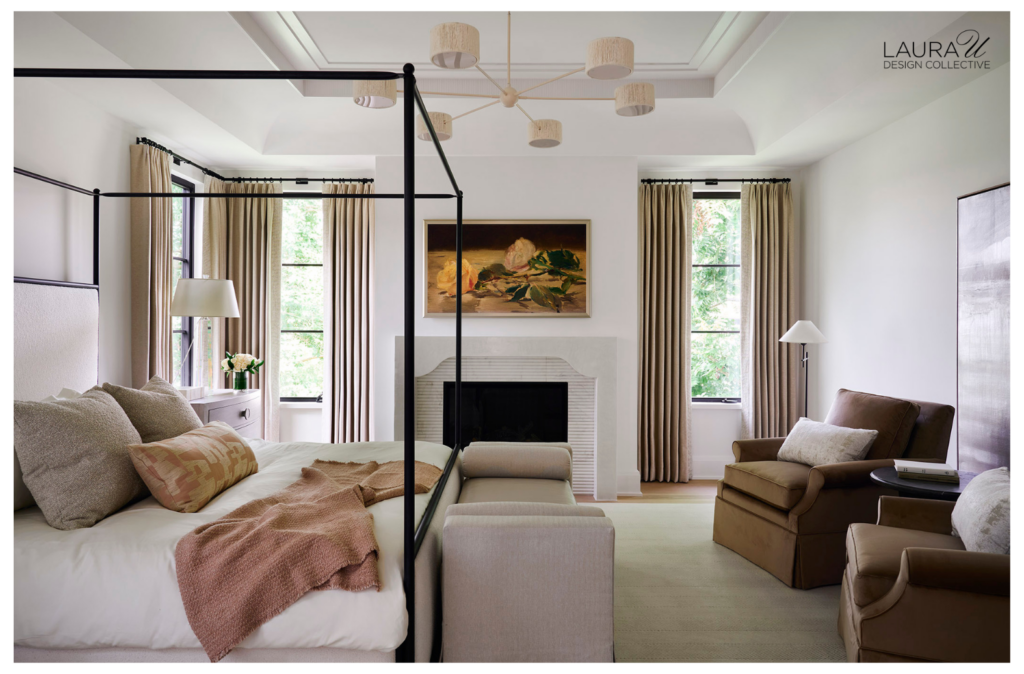
Located in Houston’s West University neighborhood, this West U Transitional project was designed as a serene retreat for a young family. The primary bedroom demonstrates how a canopy bed can establish architectural presence without dominating the room.
Instead of relying on drapery or ornate detailing, Laura U Design Collective selected a slim black metal canopy frame with clean lines and minimal ornamentation. The dark frame creates contrast against the room’s soft neutral palette while drawing attention upward toward the tray ceiling and statement chandelier. Because the frame is so visually open, it defines the bed without interrupting sightlines across the room.
The bed also helps balance the room’s proportions. Upholstered seating at the foot of the bed, tailored drapery, and layered textiles are soft and tactile, while the canopy frame contributes structure and definition.
#2 This Primary Bedroom at Braeswood Place
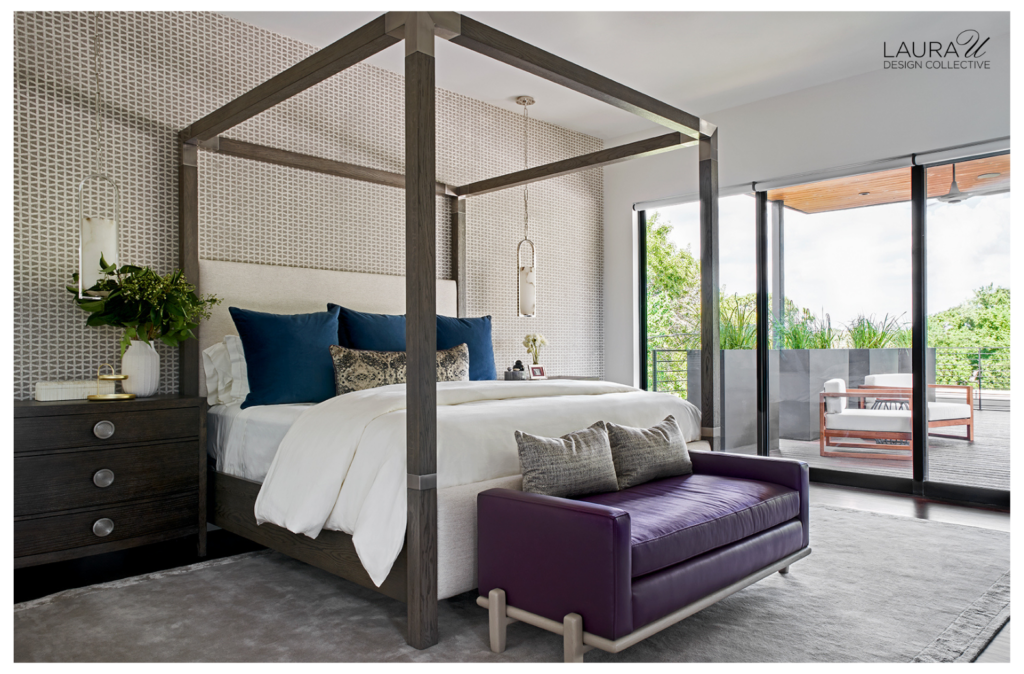
Braeswood Place blends mid-century influences with references to the homeowners’ travels and appreciation for the American Southwest. The primary bedroom demonstrates how a canopy bed can introduce substantial visual weight while still feeling open and contemporary.
Unlike the slimmer metal frame featured in the previous bedroom, this canopy bed relies on thick wood posts and broad horizontal rails to establish its presence. The darker wood frame creates a strong geometric outline around the bed, while the upholstered headboard softens the structure and prevents it from feeling heavy. Because the canopy is open rather than draped, natural light from the floor-to-ceiling windows continues to flow throughout the room.
The bed also creates an interesting contrast with the surrounding finishes. A wallcovering introduces subtle patterning behind the headboard, while saturated blue pillows and a plum-colored bench add color to an otherwise restrained palette. The canopy frame provides a sense of order amid those details to create a clear focal point that connects the room’s contemporary architecture with its warmer, more organic materials.
#3 This Primary Bedroom at Camino Haciendas
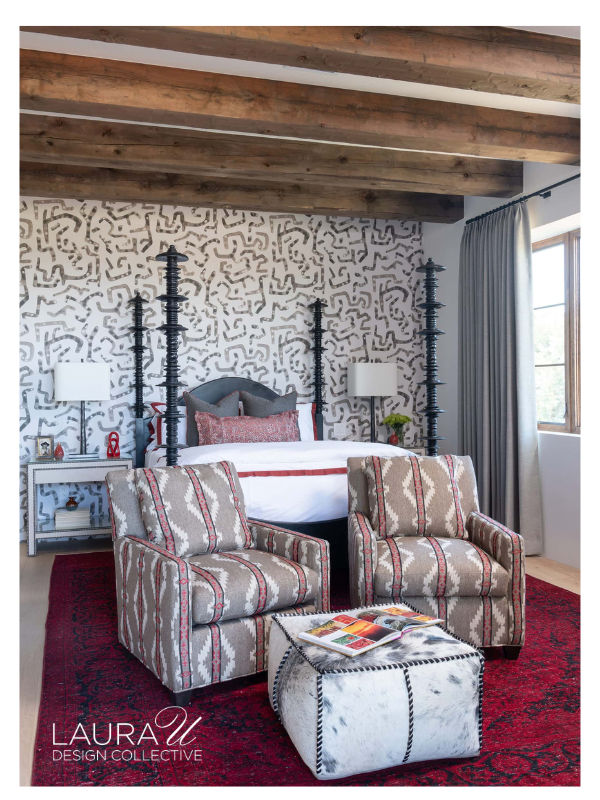
Designed as a Santa Fe retreat for longtime Laura U Design Collective clients, Camino Haciendas draws heavily from the region’s landscape, architecture, and cultural history. The primary bedroom demonstrates how a four-poster bed can contribute drama and ornament without relying on a large footprint or an elaborate canopy frame.
Unlike the more streamlined canopy beds featured earlier in this list, this bed uses turned posts with substantial detailing. The dark wood frame stands out against the lighter bedding and graphic wallcovering, while the height of the posts creates a strong vertical element beneath the exposed timber ceiling. The bed’s silhouette recalls traditional Spanish and Southwestern influences, which aligns naturally with the home’s broader design direction.
The four-poster bed also introduces structure within a room filled with pattern and texture. A bold wallcovering spans the entire bed wall, while patterned upholstery, layered textiles, rustic wood beams, and richly colored rugs contribute additional visual interest. The bed frame provides a clear focal point amid those details and helps organize the room’s many materials, finishes, and references to Southwestern design traditions.
#4 This Blue and Gold Bedroom Featured in Good Housekeeping
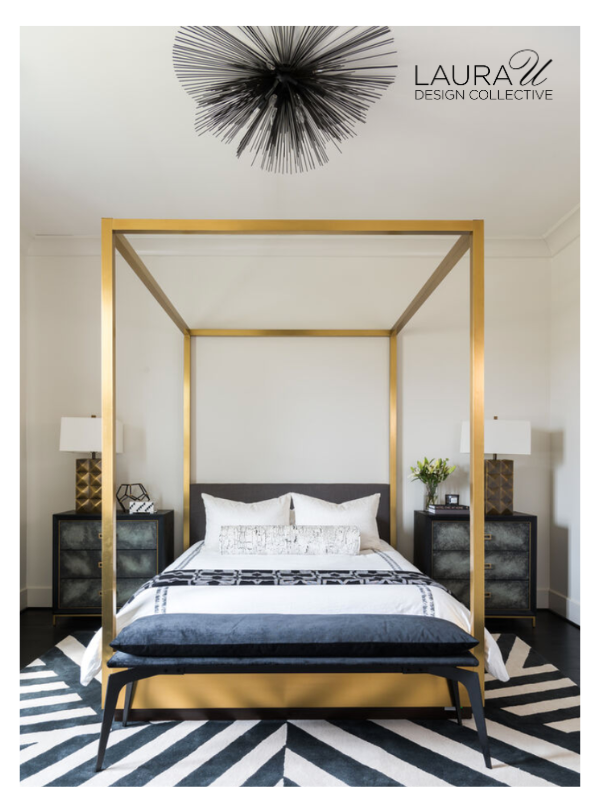
This bedroom demonstrates how a canopy bed can function almost as an architectural feature within the room. Rather than relying on dark wood or decorative detailing, the frame uses clean, geometric lines and a metallic gold finish that immediately draws attention to the bed’s silhouette.
The simplicity of the canopy frame works particularly well alongside the room’s bold black-and-white rug. Both elements emphasize strong geometry, while the gold finish introduces warmth and contrast against the otherwise restrained palette. Because the frame is so streamlined, it creates visual interest without competing with the sculptural ceiling fixture overhead.
The canopy bed also reinforces the room’s symmetry. Matching nightstands, lamps, and bedding arrangements create a balanced composition centered on the bed itself. The gold frame outlines that arrangement and gives the room a sense of structure that complements its contemporary aesthetic.
#5 This Pink Girls’ Bedroom at Mountain Lane Show House
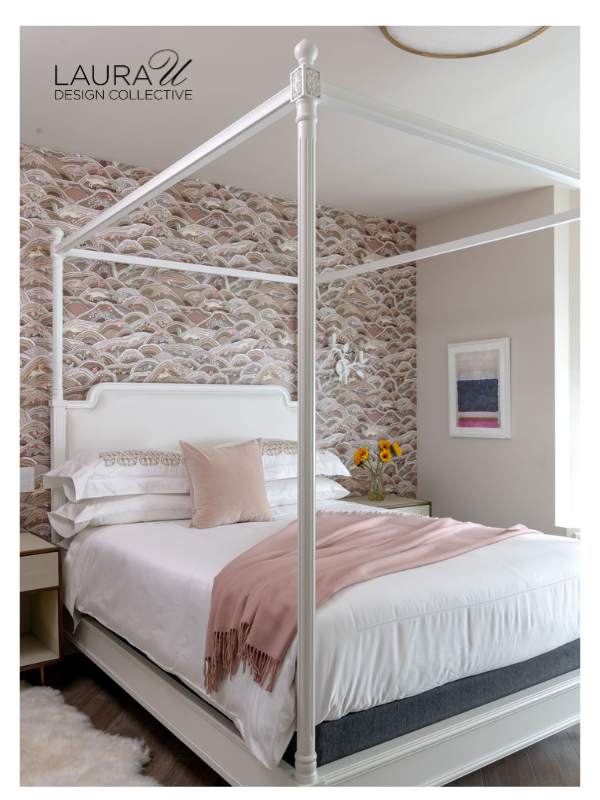
Our firms’ Mountain Lane Show House renovation transformed an Aspen Snowmass home into a more functional retreat for a family of four. Located within the home’s lower-level kid zone, this bedroom demonstrates how a canopy bed can contribute structure while supporting a softer, more playful design palette.
Unlike several of the darker canopy beds featured earlier in this list, this version uses a painted white frame that blends seamlessly with the surrounding architecture and furnishings. The streamlined posts and rails provide definition around the bed, while the lighter finish allows the colorful wallcovering to remain a prominent feature within the room. Because the canopy frame is open rather than draped, the bed retains an airy quality despite its substantial size.
The bed also creates a sense of order within a room filled with pattern and color. A large-scale floral wallcovering spans the bed wall, while blush textiles, pale wood furnishings, and layered bedding contribute additional visual interest. The canopy frame provides a clear focal point amid those details and helps organize the room’s softer palette and playful design elements.
#6 This Purple and Pink Bedroom Featured in Yahoo!Life
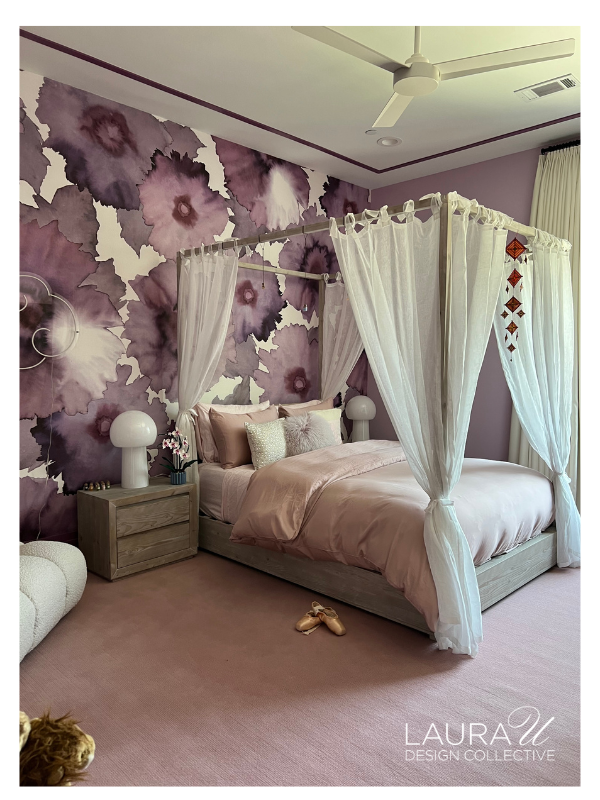
This children’s bedroom demonstrates a very different approach to the canopy bed. While several of the previous examples rely on the frame itself to create visual impact, this design pairs a simple canopy structure with flowing white drapery that softens the room and introduces an element of whimsy.
The canopy frame is intentionally understated. Light wood posts and rails blend into the room’s palette, allowing the sheer curtains to take center stage. The drapery creates a sense of enclosure around the bed without completely concealing it, while the open canopy structure preserves the room’s sightlines and natural light.
The bed also provides balance within a room defined by bold pattern and color. Large-scale floral wallpaper spans the walls, combining pink, lavender, and plum tones across an oversized watercolor-inspired design. As Laura Umansky noted in Yahoo! Life, “The slightly chalky, historic shade grounds the pink in the wallpaper and makes it less girlish.”
#7 This Sapphire, Teal, and Citrine Bedroom
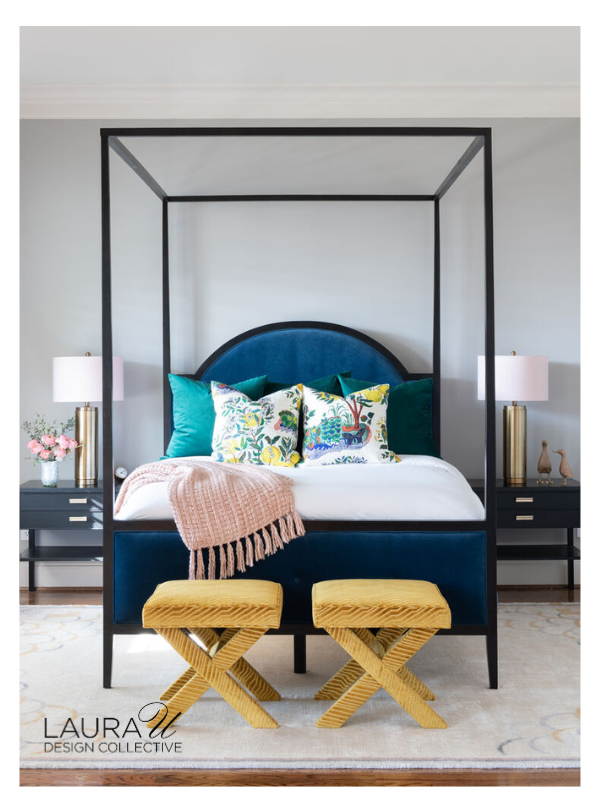
This Laura U Design Collective bedroom pairs a black metal canopy bed with a saturated blue upholstered headboard and footboard. The canopy frame is thin and graphic, which lets the stronger colors shine!
The bed here combines several bold colors without making the room look overwhelmed, and the simplicity of the four-poster is partially responsible for that cohesion. Sapphire upholstery covers the bed, teal pillows sit against the curved headboard, and citrine benches bring a warmer color to the foot of the bed. The patterned pillows pull those colors closer together without matching them exactly.
#8 This Gold Four-Poster Bed in a Sedona-Inspired Home
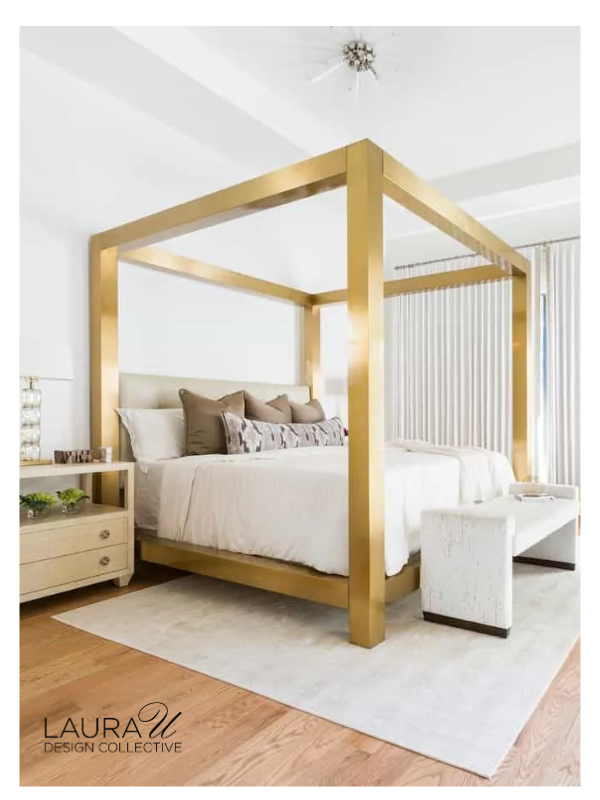
This bedroom takes a very different approach from the darker wood and black metal canopy beds featured earlier in this list. Here, the four-poster frame is finished in a warm brass tone that immediately establishes the bed as the room’s focal point.
The scale of the frame contributes to that effect. Thick rectangular posts and broad horizontal rails give the bed a substantial presence, while the metallic finish prevents it from feeling heavy. Laura Umansky described the bed as “the star of the master bedroom,” noting that the design team selected it to create a space that balanced masculine and feminine influences rather than leaning too heavily in either direction.
The brass frame also connects naturally to the home’s broader design story. Inspired by the warm hues of Sedona, the interior combines natural materials, organic textures, and earthy tones throughout. Against a backdrop of soft neutrals, light wood finishes, and layered textiles, the metallic canopy introduces contrast without disrupting the room’s calm atmosphere, which is quite the feat for such a bold statement.
#9 This Nina Farmer Bedroom in Martha’s Vineyard
Nina Farmer Interiors selected a wooden four-poster bed for the primary bedroom of this Edgartown, Martha’s Vineyard family compound. The bed occupies the center of the room beneath a vaulted wood ceiling, where it creates a strong visual connection between the furniture and the architecture surrounding it.
Unlike several of the canopy beds featured earlier in this list, this frame relies on dark stained wood and substantial posts rather than metal or painted finishes. The wood tone echoes the ceiling beams overhead and helps draw attention upward to one of the room’s most distinctive architectural features. The canopy itself is simple, with clean horizontal rails that allow the ceiling and oversized paper lantern fixture to remain prominent.
The room’s palette is similarly restrained. Roman shades filter natural light at each window, while layered textiles introduce subtle patterning through the bedding and pillows. According to Nina Farmer, the rug was selected to pull together the Farrow & Ball Matchstick and Benjamin Moore Mystic Gold finishes used throughout the room.
#10 This Pink Moroccan-Inspired Bedroom
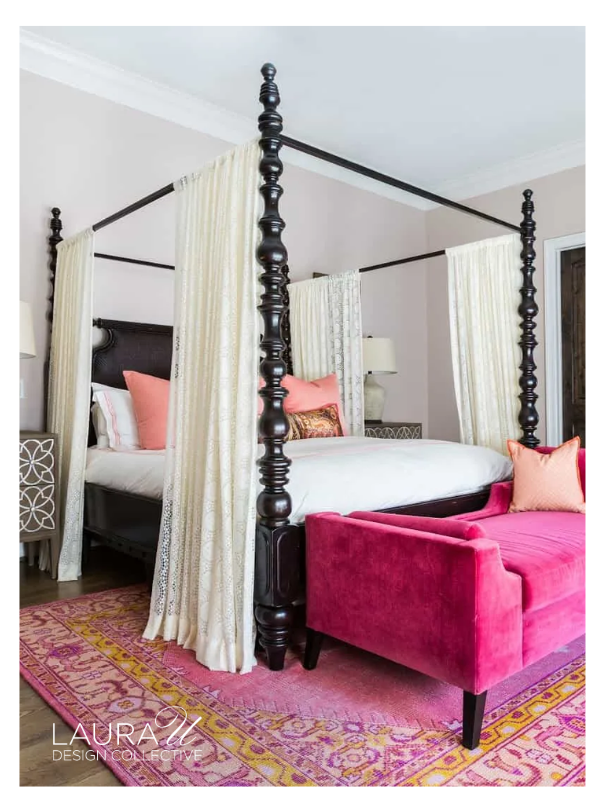
This bedroom uses a canopy bed in a more traditional way than many of the examples featured earlier in this list. Full-length drapery hangs from all four sides of the frame, adding another layer of texture around the bed while creating a greater sense of separation within the room.
The bed itself is substantial. Dark turned posts draw the eye upward and introduce ornament that contrasts with the simpler canopy frames featured elsewhere in this roundup. The ivory curtains soften that structure and prevent the darker wood from dominating the space. Together, the frame and drapery create a stronger sense of enclosure than an open canopy alone.
Color also plays an important role here. A vivid pink bench sits at the foot of the bed, while the patterned rug introduces additional shades of coral, rose, and gold beneath it. Those brighter elements bring energy to the room, while the dark wood frame provides contrast against the lighter walls, bedding, and curtains. The combination of carved wood, layered textiles, and saturated color gives this bedroom a very different personality than the more streamlined contemporary spaces featured earlier in the list.