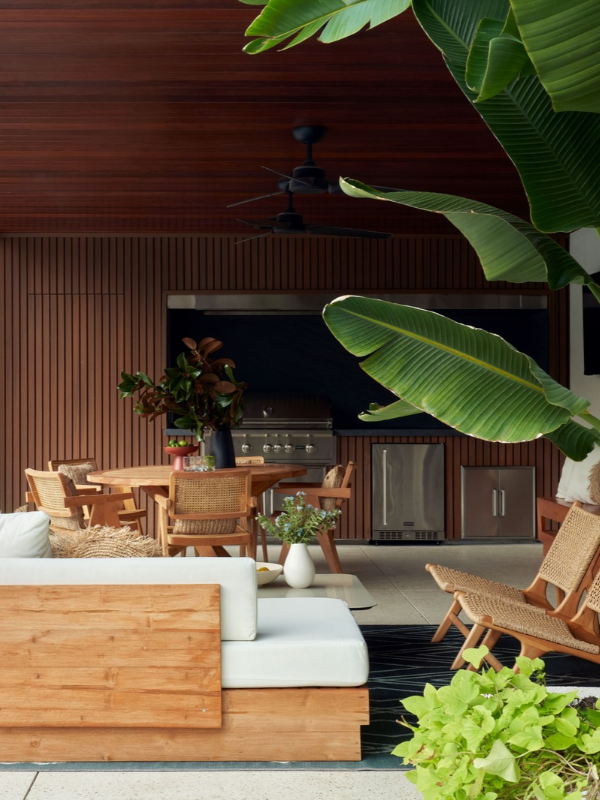
A covered patio or loggia can look just like an interior space after you’ve added a ceiling, lighting, a fireplace, rugs, and upholstered seating. Given these many apparent similarities, can you furnish a loggia with the same pieces you’d use inside? Sometimes, but the answer to that question depends on how much protection the architecture provides, what kinds of challenges your environment poses, and which materials you prefer.
For example, a roof blocks direct rain from above, but an open-air space (like a loggia) is still exposed to humidity, wind-driven rain, sunlight, temperature changes, pollen, and moisture from nearby pools or landscaping. The depth of the roof, number of open sides, orientation of the room, and distance between the furniture and the perimeter all change how much exposure each piece will be subjected to.
As designers, we consider those conditions before selecting upholstery, wood, metal, rugs, or cushions for any covered outdoor room. Below are six considerations that can help you decide when indoor furniture is appropriate, when outdoor-rated pieces are the safer choice, and how to create an exterior space that relates naturally to the interiors beyond it.
Six Ways to Determine Whether Indoor Furniture Works for Your Outdoor Space
Start by Considering How Protected the Space Actually Is
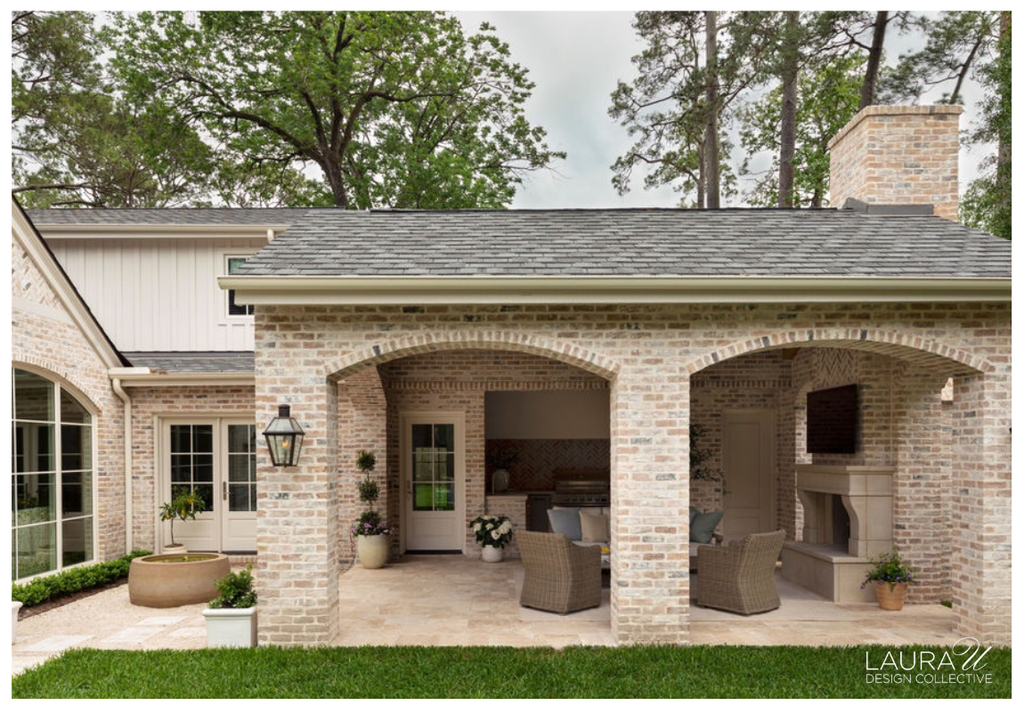
“Covered” can describe several very different outdoor space configurations. A shallow roof extension over a patio provides some protection from direct rain and midday sun. A deep loggia with a roof, masonry walls, and only one or two open sides provides a lot more. So before deciding whether a piece of furniture can safely live its life outside, take a close look at the architecture surrounding it.
Pay particular attention to the depth of the roof and the direction the space faces. A sofa several feet beneath a roofline might receive very little direct rain, while a chair close to the open edge could get soaked. Western exposure can also introduce strong afternoon sunlight even when the roof provides shade earlier in the day, which will fade delicate upholstery and even some wood finishes.
In an April 2023 article for Homes & Gardens, Sarah Warwick makes a similar point. As Warwick writes, “Outdoor furniture, like that for your interiors, needs to be the right size and style as well as provide comfort…but it also has to stand up to the climate where you live and be suitable for its particular exterior location.” Furniture kept in the open generally needs more fade-resistant, durable materials than furniture kept beneath a covered area. She also recommends considering what’s underneath the furniture because moisture from lawns and other surfaces can damage certain woods and corrode certain metals.
Example from the LUDC Archives: Hedwig Village
We considered many of these factors while designing the new loggia at Hedwig Village. One of our goals for the renovation was to improve the connection between the clients’ 1920s home and the backyard, where the family regularly entertains. We added a substantial covered space with an outdoor kitchen, fireplace, seating area, pool washroom, and outdoor shower.
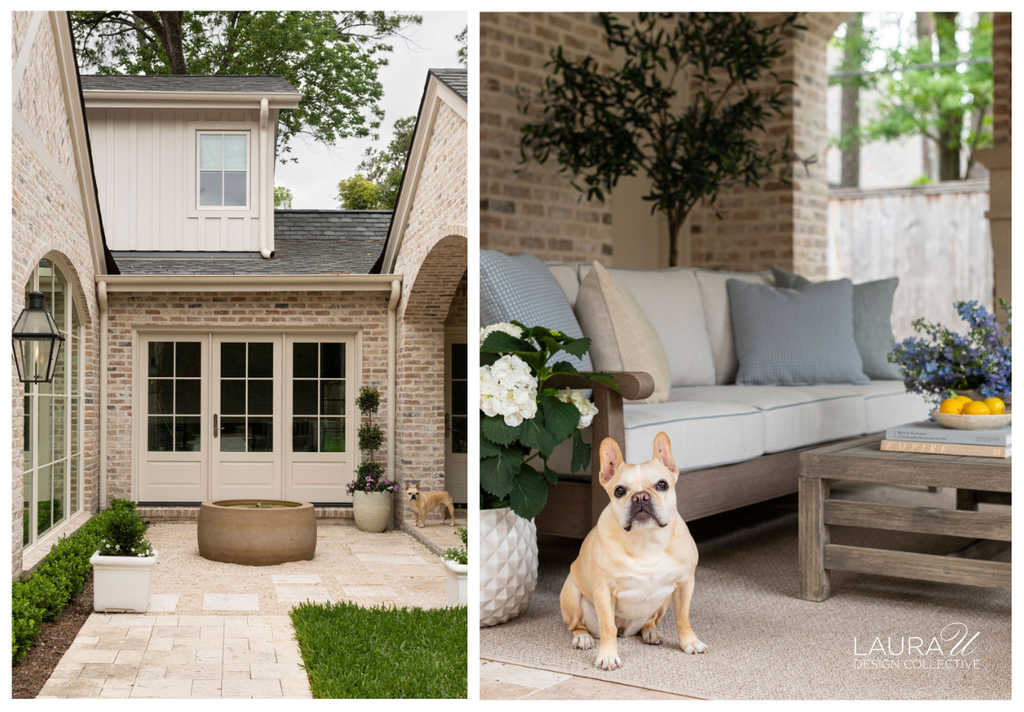
The architecture itself can indeed protect the furnishings. The loggia extends well beyond a typical patio cover, and the surrounding masonry shields portions of the room from direct sun and rain. We also aligned the arches with the kitchen and repeated the wood beams used inside the house, which helped connect the new outdoor space to the original architecture.
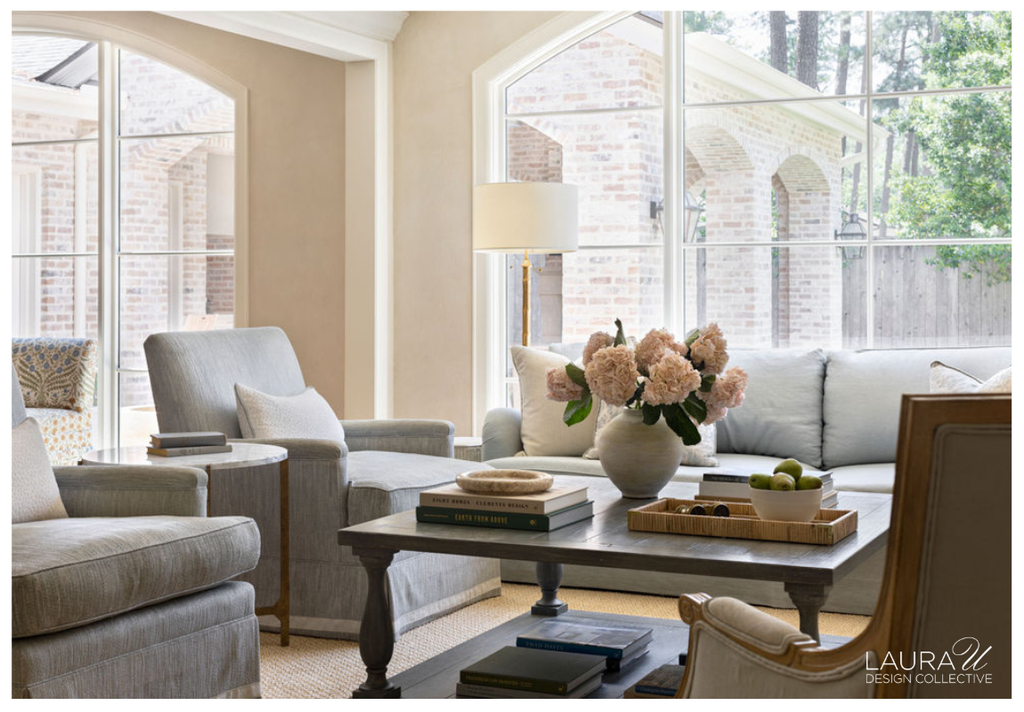
Even with that degree of coverage, we would still treat the loggia as an exterior environment when selecting furniture. Houston humidity reaches the space regardless of how deep the roof is, and wind-driven rain can enter through the open sides. Furniture placed several feet beneath the roofline will experience different conditions from a chair near one of the arches, so we consider placement along with material when deciding what belongs there.
Know the Difference Between Performance Fabric and Outdoor Fabric
One of the first things to understand is the difference between a performance fabric and a fabric designed specifically for outdoor use. Performance textiles are excellent choices for family rooms, dining chairs, banquettes, and other heavily used interiors because many resist stains, abrasion, and repeated cleaning. But those qualities don’t necessarily mean the fabric was developed for prolonged sunlight, rain, or high humidity.
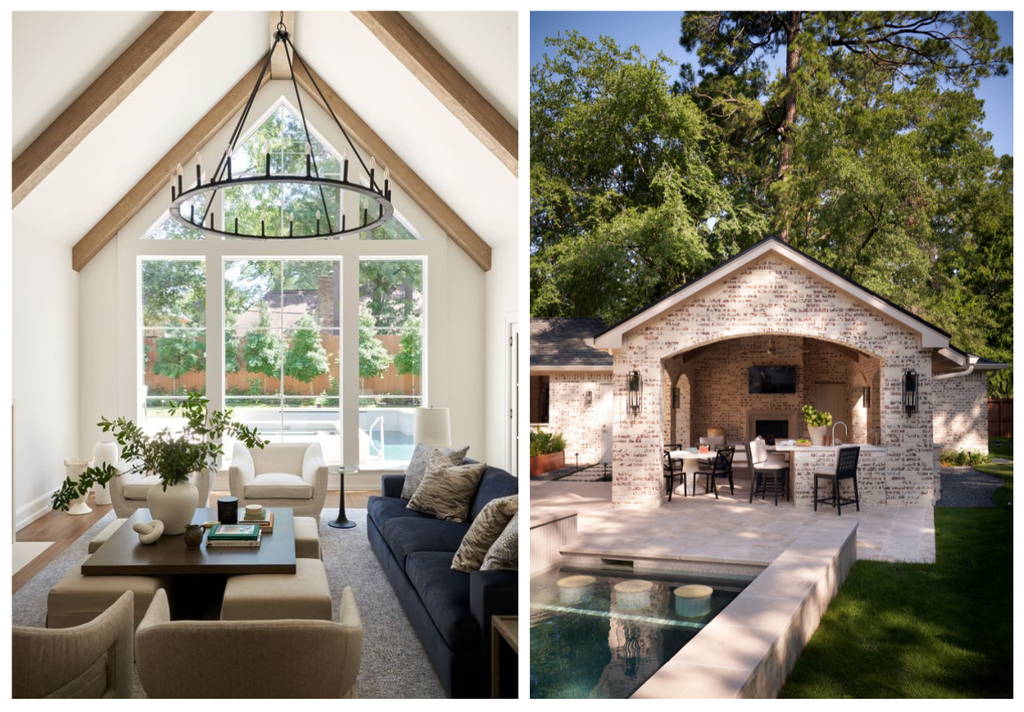
Outdoor textiles are generally manufactured with those conditions in mind. Depending on the product, they might resist fading, mildew, moisture, and repeated exposure to water. You should also look at what’s underneath the fabric. For example, a gorgeous outdoor fabric might not work if the cushion itself absorbs water and dries slowly.
In a 2024 article for ELLE Decor, Stacia Datskovska spoke with designer Laura Sockrider of O’Hara Interiors about this. As Sockrider explains, “Performance fabrics and outdoor fabrics can overlap a bit in their properties. Both might have a high rub count or be stain-resistant, but a performance fabric might not be able to withstand sun or water the way outdoor fabrics can.” The article also recommends comparing fade resistance, water repellency, and breathability before selecting exterior upholstery.
Example from the LUDC Archives: Huntwick Forest
At Huntwick Forest, we designed a new loggia with Shelton Builders as part of a greater renovation of the property. The space now includes a fireplace, summer kitchen, pool bath, dining area, and upholstered seating beside the redesigned pool. We selected Bernhardt furniture for the loggia and reupholstered the outdoor pieces as part of the project.
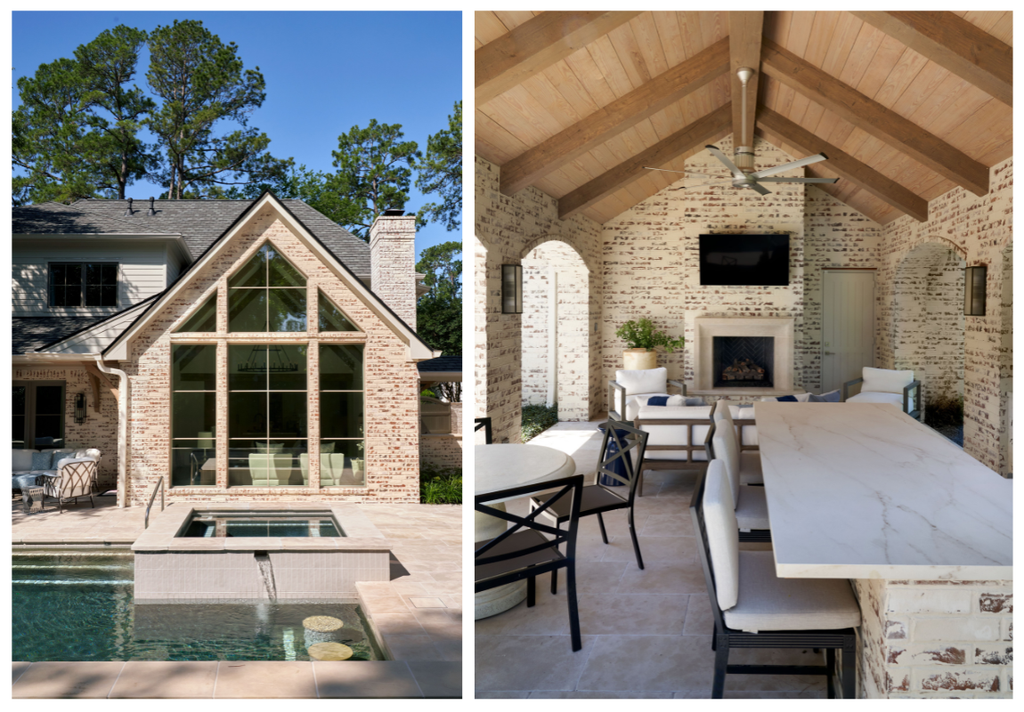
The finished space includes many of the same elements we might use indoors: upholstered furniture, rugs, decorative lighting, a fireplace, and several distinct areas for gathering. The difference is in the specification of these pieces. The furniture and fabrics were selected with the pool, Houston weather, and the open sides of the loggia in mind.
If you love the shape and proportions of an indoor sofa, look for an exterior version before placing the original outside. Outdoor collections now include tailored upholstery, woven textures, deep lounge seating, and fabrics in a much wider range of patterns and colors. You can create a polished outdoor room without relying on conventional indoor upholstery.
Reserve True Indoor Furniture for the Most Protected Areas
However, there are circumstances in which conventional indoor furniture can work near an exterior living space. An enclosed and conditioned pool house gives you much more freedom than an open patio. A screened porch with extensive protection might also accommodate materials that would be difficult to maintain beside an uncovered pool.
A deeply covered loggia might be more of a gray area. You might reasonably use a more delicate occasional table or decorative object several feet beneath the roofline, particularly if you understand how the material will age. But give careful consideration to delicate upholstery because moisture can affect the textile, cushion fill, interior frame, adhesives, and decorative trim.
And don’t neglect checking manufacturer instructions. A sofa might be marketed as having excellent stain resistance and durable upholstery, but an indoor-only warranty might not apply anymore once the piece is placed outside. If you’re considering an expensive or antique piece, we would review both its construction and its care requirements before making that decision.
Example from the LUDC Archives: Braeswood Place
Braeswood Place is a perfect comparison because the property includes both a covered patio attached to the main residence and an enclosed pool house across the pool. Floor-to-ceiling sliders connect the living room to the patio, where we created separate dining and lounge areas.
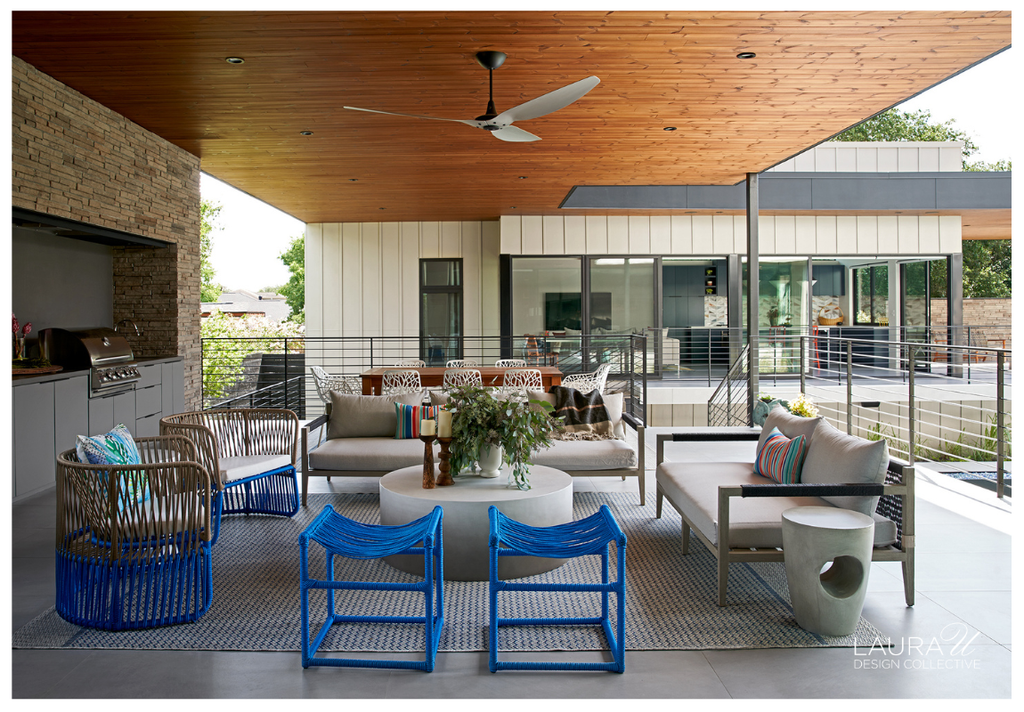
On the covered patio, we used powder-coated aluminum dining chairs from Janus et Cie along with other furnishings selected for exterior use. Inside the pool house, we had considerably more flexibility. We specified a custom House + Town sofa, an upholstered armchair, a storage ottoman, rugs, and other pieces that belong more naturally in an interior.
Durability was still important inside the pool house because swimmers and children regularly use the space. One storage ottoman, for example, was upholstered in a leatherette selected because it was more appropriate around the pool than the related material used in the main house.
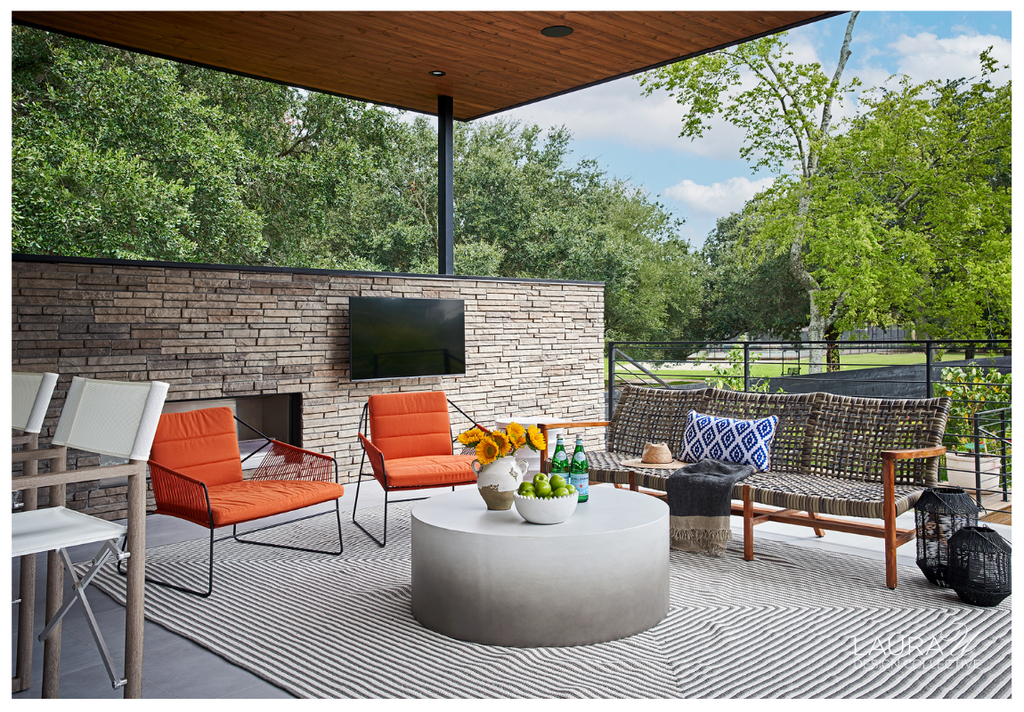
The living room, patio, and pool house relate to one another through color, material, and proportion rather than identical furniture. Our team’s approach in designing this home gives each space the degree of durability it needs while preserving a clear connection between indoors and out.
Consider the Architecture Before You Select the Furniture
If you’re planning a new loggia, pavilion, or covered patio, furniture decisions should be considered before you’ve finished the architectural designs. Roof depth, masonry walls, ceiling height, flooring, drainage, and the size of the openings can all affect what you will eventually place in the space.
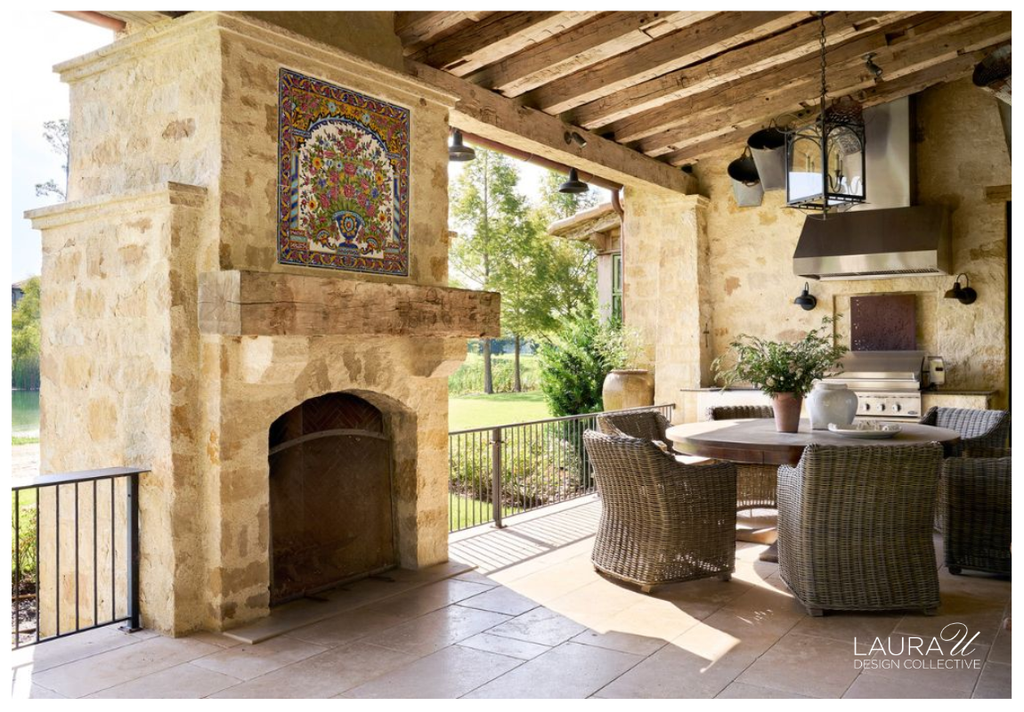
Think about where you expect to dine and where you want upholstered seating. A dining table near the open edge of a patio might need to tolerate more sun and moisture than a console placed against the house. A partial masonry wall can protect furniture from wind and rain on one side. Ceiling height also influences the scale of lighting, fans, and furnishings underneath it.
Circulation is another critical consideration, just as it is inside the home. If a covered outdoor space connects directly to a pool, people might pass through the seating area in wet swimsuits. If the outdoor kitchen is used frequently, the route between the grill, dining table, and house should be clear. Those architectural decisions affect both furniture placement and material selection.
Example from the LUDC Archives: Houston Oaks
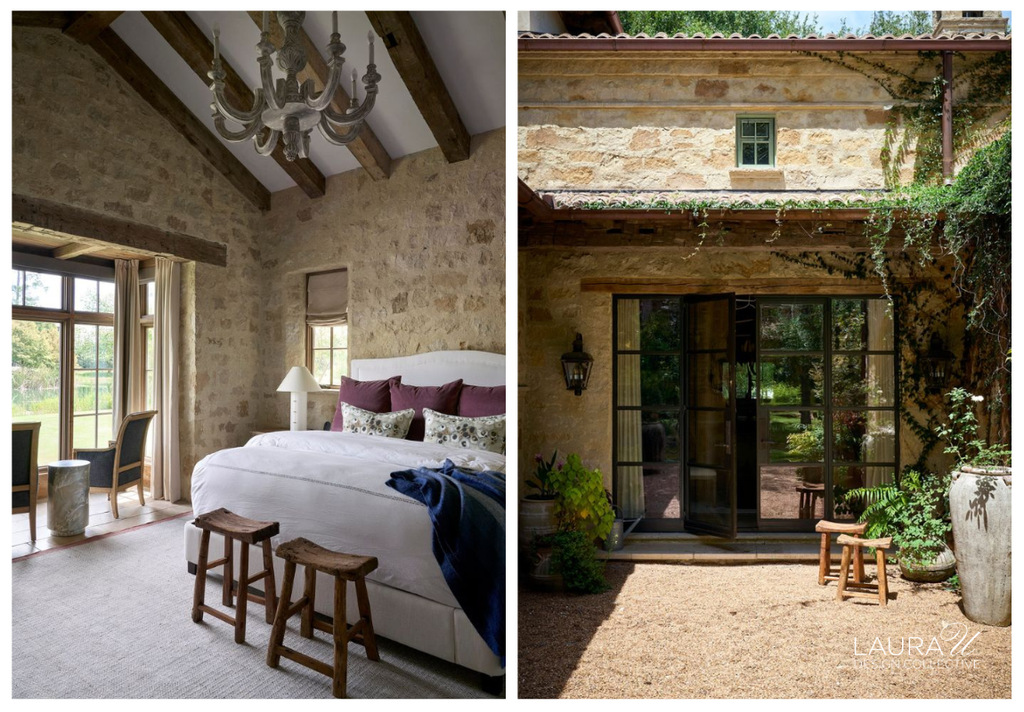
At Houston Oaks, our clients wanted their weekend home in Hockley to reference Tuscany. The outdoor kitchen and loggia include masonry walls, substantial wood beams, a monumental mosaic fireplace, and wicker dining furniture. The same stone, plaster, wood, and aged materials used elsewhere on the property continue into this outdoor space.
The depth and construction of the loggia provide greater protection than an uncovered terrace. Even so, a chair near one of the open arches encounters different conditions from furniture positioned closer to an interior wall. Sunlight, rain, and humidity can reach the room from the sides, so the exact location of each piece still had to be thought through.
This is one reason we like to discuss furniture early when designing an outdoor addition. A deeper roof or strategically placed masonry wall can reduce exposure before you select a sofa or dining chair. Those architectural decisions can give you more freedom with furniture later, particularly if you know from the beginning that you want upholstered seating and decorative accessories outside.
Account for Humidity, Sunlight, Pool Water, and Wind
Rain is the first thing that comes to mind when people think about outdoor furniture, but it’s only one source of exposure. In Houston, humidity can affect wood, metal, fabric, and cushion interiors even when a piece never suffers a direct downpour. Pool water introduces chlorine, damp towels, sunscreen, and wet clothing. Landscaping adds pollen, irrigation, and debris.
Sunlight and dryness can be equally difficult on furniture. A roof might shade a space at midday but allow lower afternoon sunlight to reach upholstery from the side. Some textiles fade quickly under repeated sunlight, and certain wood finishes can discolor or deteriorate with prolonged exposure. Worse yet is when they fade unevenly!
Try to mitigate this by bringing in your design team and examining the existing patio several times during the day before selecting furniture. Pay attention to where sunlight reaches the floor and upholstery, how far rain travels beneath the roof during a storm, and which areas dry quickly afterward. A chair that seems well protected in the morning might receive several hours of direct sun later in the day. In most cases, your team will be able to calculate all of this for you without directly observing the space over the course of several seasons.
Example from the LUDC Archives: River Oaks Modern
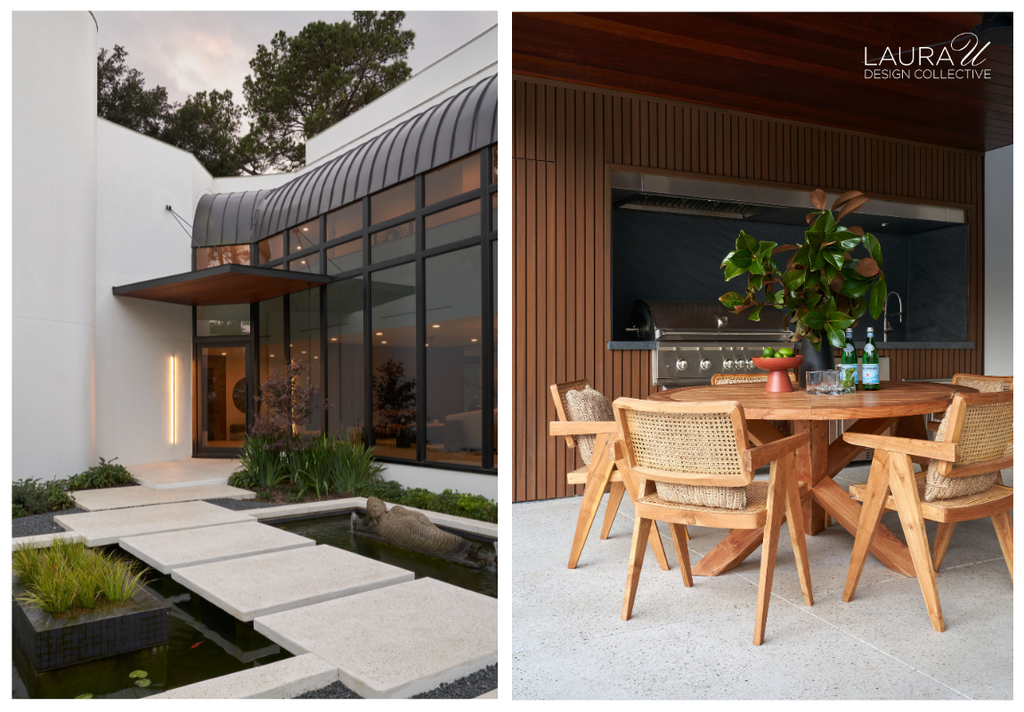
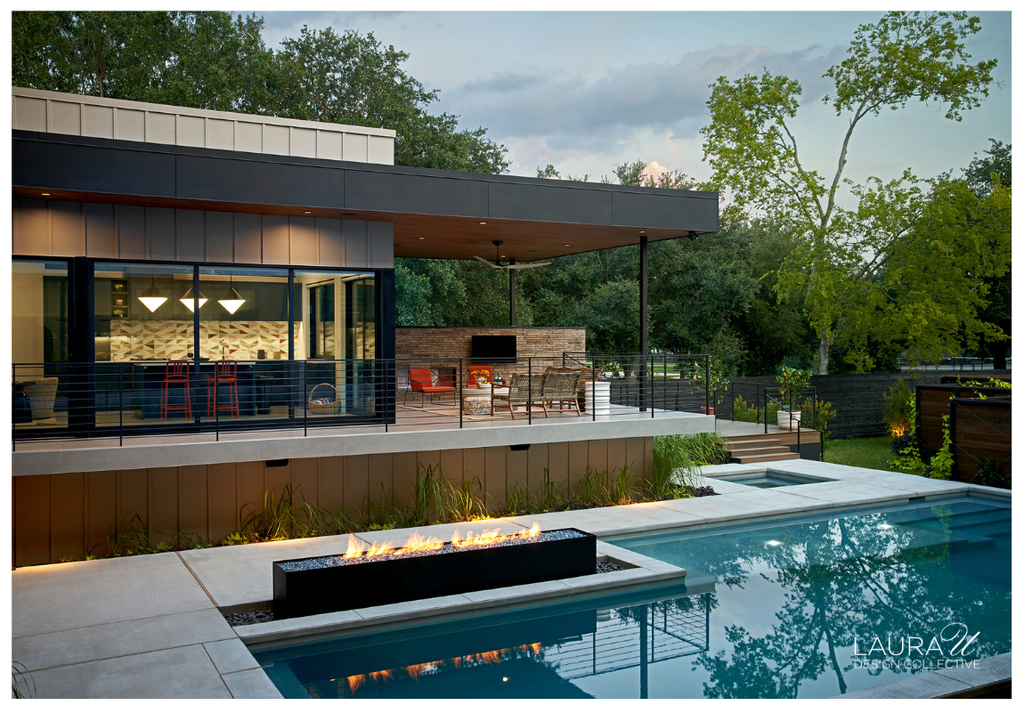
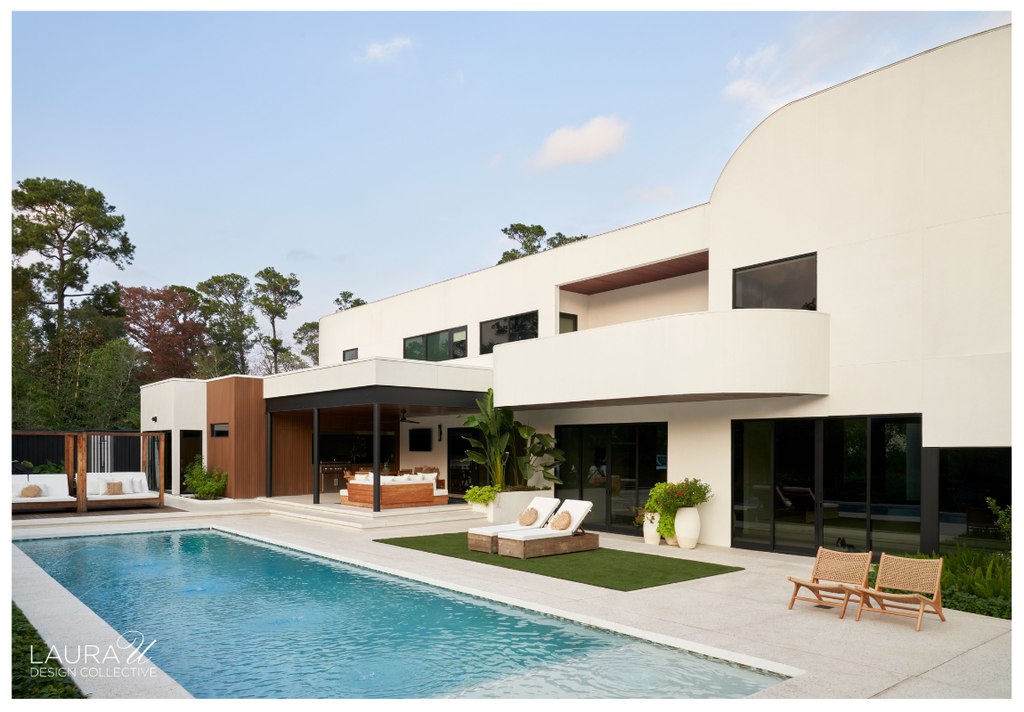
At River Oaks Modern, the outdoor addition needed to reference the architecture of this original 1974 Charles Tapley house. The property already had a patio that couldn’t be relocated, so we designed the new pool pavilion, exercise space, and outdoor kitchen around the existing structure.
We repeated architectural elements from Tapley’s original design, including the parapet system, clean geometry, and exposed steel. That gave the exterior spaces a clear relationship to the house without requiring conventional indoor furniture outdoors. The connection comes through architecture, scale, and material.
You can use the same approach when furnishing a covered outdoor room. Repeat a color, wood tone, metal finish, or general furniture proportion from the adjoining interior, then select an exterior piece constructed for humidity, pool water, and direct sunlight. The two spaces can relate closely without sharing the exact same furniture.
Think About What Will Happen Around the Pool
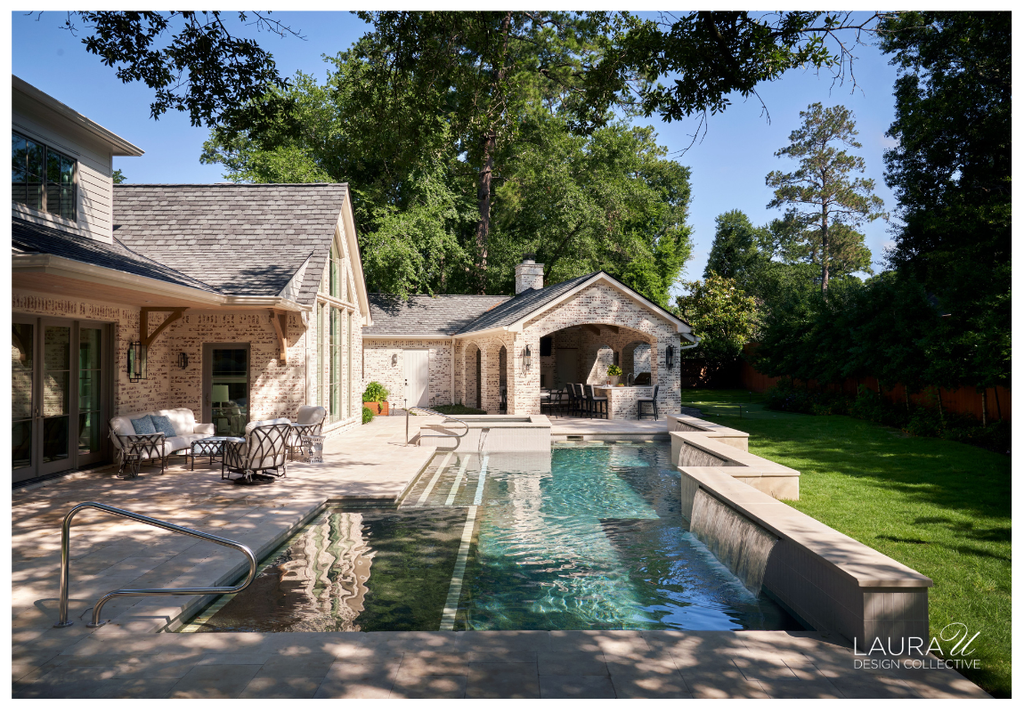
A pool is such an asset to any residential outdoor space, but it does complicate things somewhat. Wet swimsuits, towels, bare feet, chlorine, and sunscreen introduce conditions that you probably wouldn’t plan around in an ordinary living room (unless it connects directly to your mudroom!).
If family members will regularly walk from the pool directly into a lounge area, quick-drying cushions and exterior textiles make sense. The same applies to rugs. An outdoor rug should tolerate moisture beneath it and dry properly instead of trapping water against stone, tile, or concrete.
You might also want fewer loose decorative pieces around a heavily used pool. Throw pillows can add color and pattern, but a large collection also means more items to dry, clean, or store when storms roll in.
Examples from the LUDC Archives: Braeswood Place and Huntwick Forest Approach Poolside Living Differently
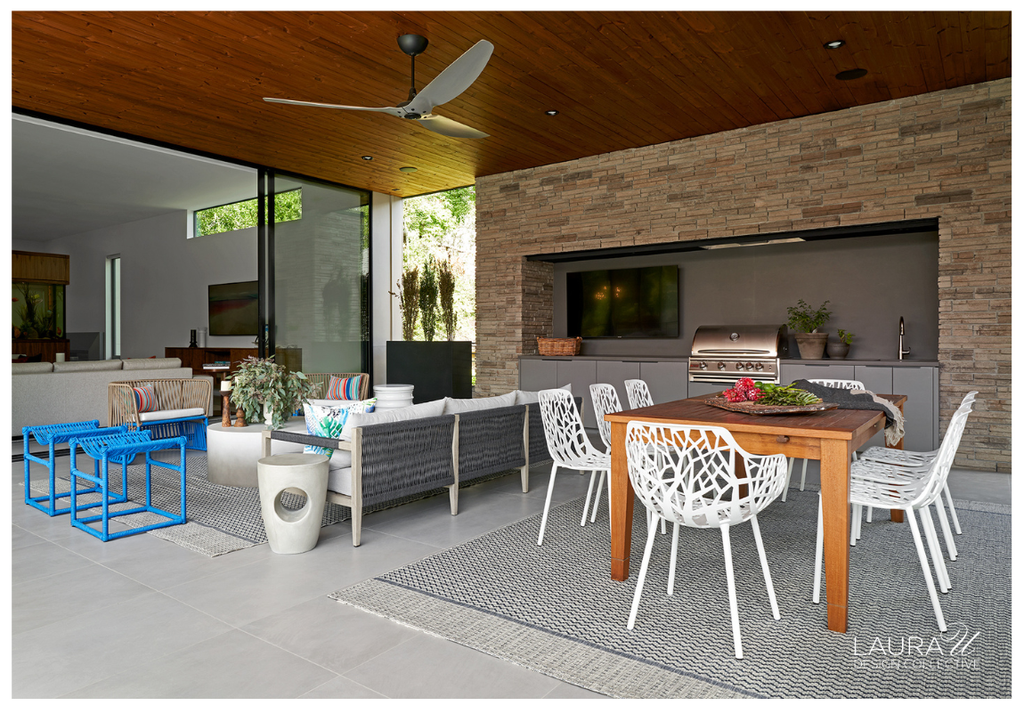
As noted earlier in this post, the covered patio and pool house at Braeswood Place were planned as part of a larger outdoor entertaining area. The patio accommodates dining, watching television, supervising children in the pool, hosting large fundraisers, and spending long stretches of time outdoors. Across the pool, the enclosed pool house gives guests another place to gather with more traditional upholstered furnishings.
At Huntwick Forest, the loggia, summer kitchen, pool bath, and pool are closely connected. Someone using the pool can walk directly to the grill area or covered seating without returning to the main house. Exterior-rated upholstery makes particular sense here because wet swimmers and regular pool traffic are part of everyday use. This home was designed precisely for a multigenerational family with a focus on holidays and other important shared traditions.
We approached each in a slightly different way given that the clients had slightly different goals.
Decide How Much Maintenance You’re Comfortable With
To that last point, every outdoor furnishing requires some maintenance, including pieces designed specifically for exterior use, but the amount varies according to material. Teak changes color over time, metals might need cleaning and periodic inspection of their protective coatings, upholstered cushions need to dry thoroughly after exposure to water, and removable covers can make cleaning easier.
Before purchasing furniture, consider how you will protect it during severe weather. Where will loose cushions go? Do you have a pool house, garage, storage room, or deck box nearby? Can smaller tables and accessories be brought indoors without creating a major project every time you see rain in the forecast?
This is, of course, particularly relevant in Houston. A covered patio might provide plenty of protection during an ordinary rain shower, while a hurricane or severe thunderstorm presents a whole host of additional challenges. Wind-driven rain can reach far beneath a roof, and lightweight pieces might need to be relocated or secured. Both situations should be considered if you live in an area with real weather.
In an article for Architectural Digest about protecting outdoor furniture, Perri Ormont Blumberg discusses furniture covers, cushion storage, architectural shade, and material-specific care as ways to extend the lifespan of exterior furnishings. The appropriate maintenance varies considerably among teak, wicker, aluminum, steel, plastic, and mesh, so do your research (or let your design team do so) before selecting the material.
So, Can You Use Indoor Furniture on a Covered Patio or Loggia?
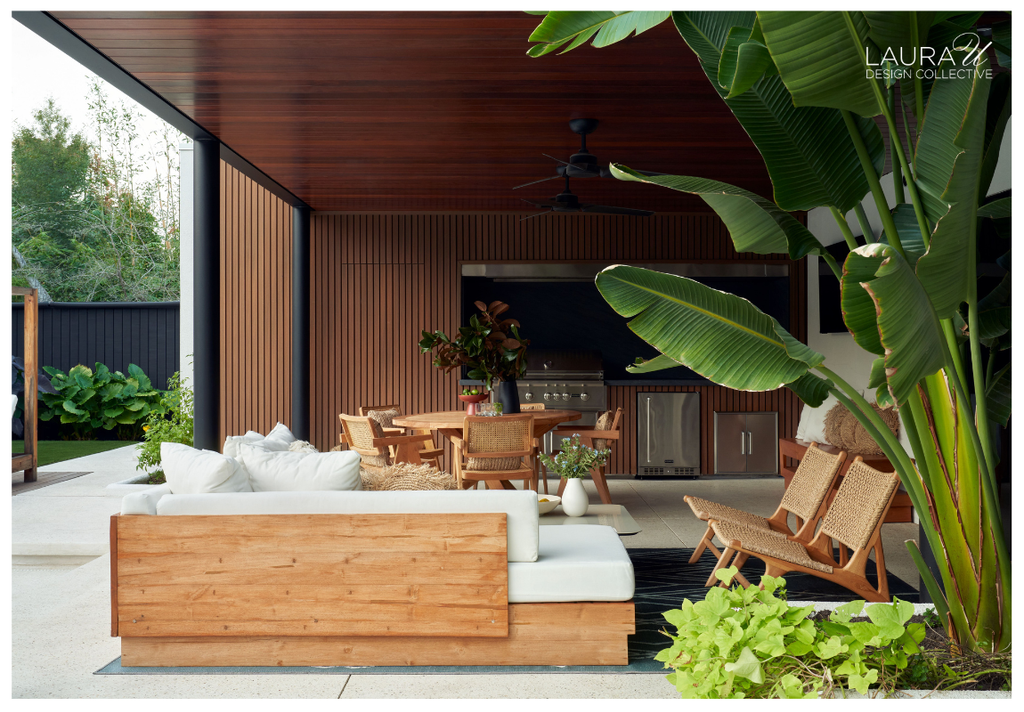
Yes, in certain spaces. We would be most comfortable using conventional indoor furniture in an enclosed pool house, a highly protected porch, or another area where direct exposure is minimal. Even there, we would consider humidity, sunlight, manufacturer recommendations, and the way the family intends to use the space.
An open loggia or covered patio typically calls for furniture designed specifically for exterior use, particularly when the room is close to a pool or open on several sides. The options were limited just a few decades ago, but now you can find tailored upholstery, sculptural frames, woven materials, generous lounge seating, and sophisticated textiles in a broad range of colors and patterns.
Before selecting furniture for your own outdoor space, consider how much protection the architecture provides and what the environment will expose each piece to over time. Humidity, sunlight, wind, pool water, storage, and maintenance are all factors. Once you understand those conditions, you can decide where an indoor piece might make sense and where an outdoor-rated alternative will better suit the way you live.
Thank you for reading!