A kitchen can be beautiful and still feel frustrating to use. Usually, the issue isn’t style or square footage but the fact that too many functions are competing for the same exact space. One person is trying to cook, someone else is looking for a snack, a guest is hovering near the island… Suddenly, the room feels crowded and chaotic.
But zoning can make all the difference. A well-zoned kitchen gives cooking, prep, gathering, serving, and storage their own places so the room can transition more easily between daily life and entertaining. The seven ideas below show how we think about that balance in our own projects and how to achieve it on your own.
How to Zone Your Kitchen for Entertaining and Workflow in 7 Simple Steps
#1 Design the kitchen as a series of experiences instead of as a single space
A well-zoned kitchen will support more than one kind of use without forcing everything into the same limited footprint. The room might need to handle breakfast for two, after-school snacks, weeknight cooking, and a house full of guests in the span of a few days. Good zoning makes those shifts possible by giving each activity a proper place. Instead of treating the kitchen as one continuous work surface, it helps to think in smaller zones: a place to cook, a place to prep, a place to sit, a place to serve, and a place to store the overflow.
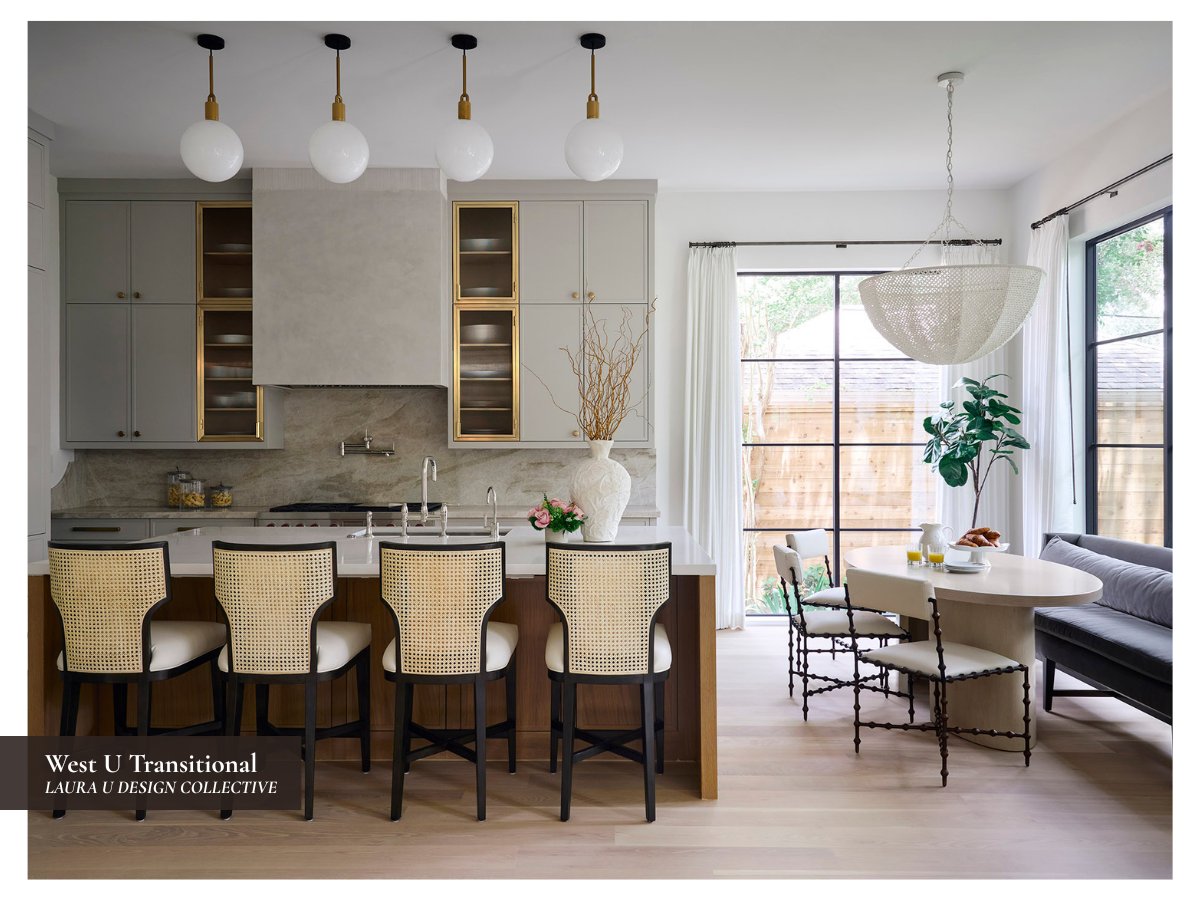
In our West U Transitional kitchen, that layering is exactly what makes the room work so well. The island supports conversation, casual meals, and day-to-day gathering. The breakfast nook gives the family a second, more intimate place to sit, which prevents every interaction from occurring right at the counter’s edge. Just beyond the main space, the butler’s pantry takes on the appliances, cold storage, and cleanup support that would otherwise crowd the kitchen itself.

Each area has a distinct, individual role, but none of them feels cut off from the next. Flexibility is the key to true functionality, and our West U Transitional kitchen captures that. It can handle ordinary family routines and support effortless entertaining without looking overfilled, overworked, or too utilitarian.
#2 Make the island the room’s social threshold
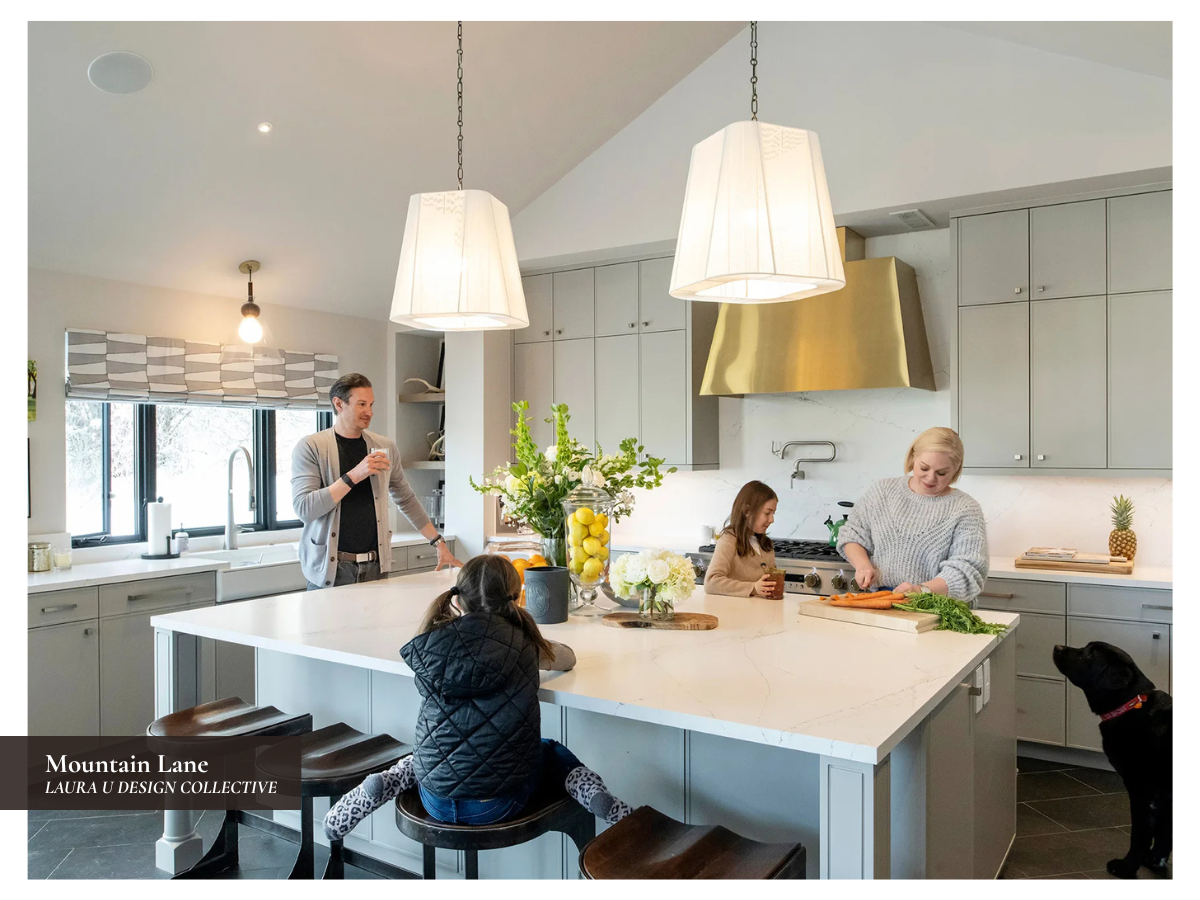
A well-proportioned island does a lot more than add extra prep space. It creates an in-between zone that belongs neither entirely to the cook nor entirely to the rest of the room. The island is where someone can sit with coffee in the morning, where children can gather after school, and where a guest can lean in to chat with the cook (cocktail in hand) without stepping directly into the path of dinner prep.
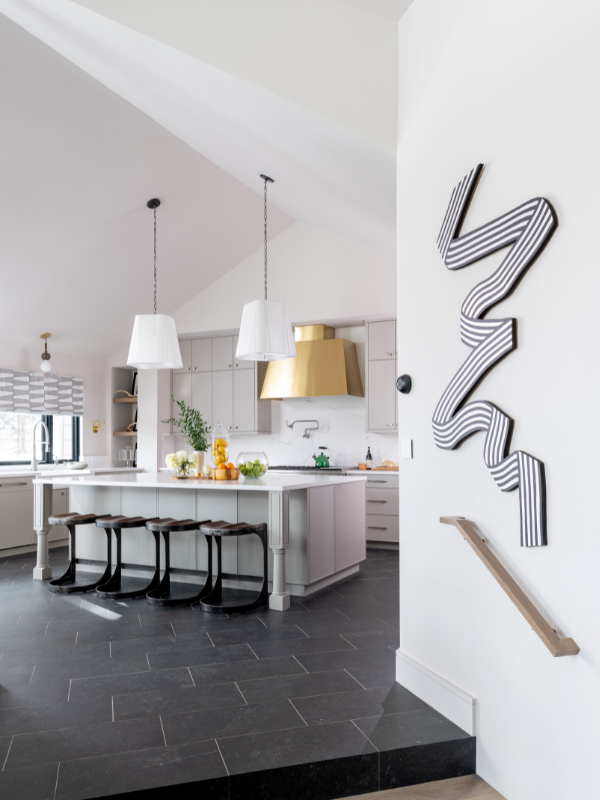
In our Mountain Lane Show House kitchen, the island works perfectly for Laura’s family because its placement supports socializing while preserving the actual point of the kitchen: cooking. Seating lines one edge to give the family a natural place to pause, snack, or talk, while the surrounding kitchen remains open enough for chopping, plating, and movement behind it. Nothing feels congested, but no one feels far away either. The island supports conversation without interrupting function, and it gives the room a point of connection that feels just as natural during a solo breakfast as it does when several people are gathered there together.
When an island is scaled well and positioned properly, it gives the kitchen a social center without turning the entire room into one large work zone. Add a few outlets as we did to the side of the island, and you’ve created the ideal everyday and entertaining hub!

#3 Pull high-heat cooking away from where people naturally gather
One of the easiest ways to make a kitchen feel calmer is to pull the highest-heat cooking zones away from the places where people instinctively congregate. If the range, cooktop, and primary prep surfaces all compete with seating, conversation, and passing traffic, the room will feel hot and crowded very quickly. Separate those functions a bit, and the kitchen immediately becomes easier and more enjoyable to use. It feels safer for children, more comfortable for guests, and far less chaotic when entertaining.
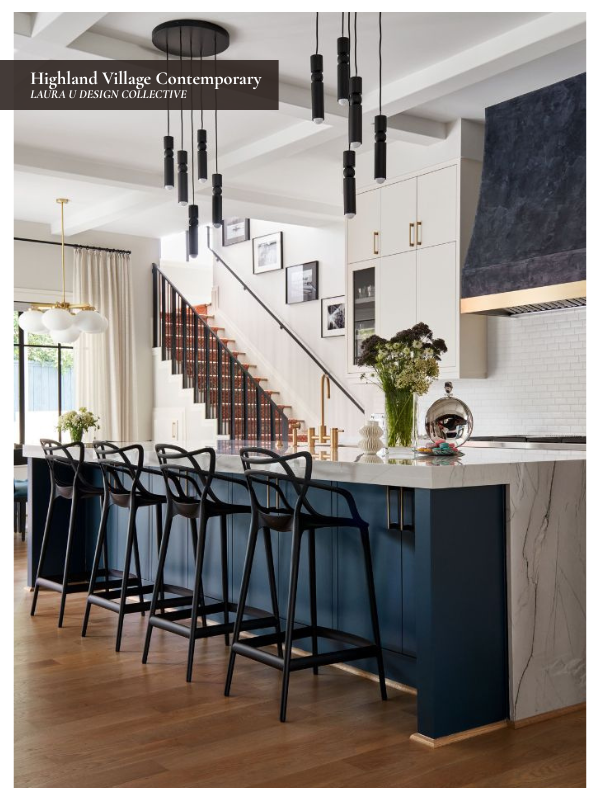
In our Highland Village Contemporary kitchen, the island clearly belongs to gathering, while the range wall sits just beyond it as a distinct working zone. That separation is key. Someone can sit at the island, pour a drink, or carry on a conversation without hovering directly beside the hottest and busiest part of the kitchen. The room still feels connected, but the cooking infrastructure doesn’t dominate it. This is especially important in open-concept homes, where the kitchen has to participate in the social life of the house without overwhelming anyone with intense smells, uncomfortable temperature changes, or sauces spitting from the stove.
#4 Treat the butler’s pantry as the kitchen’s back-of-house
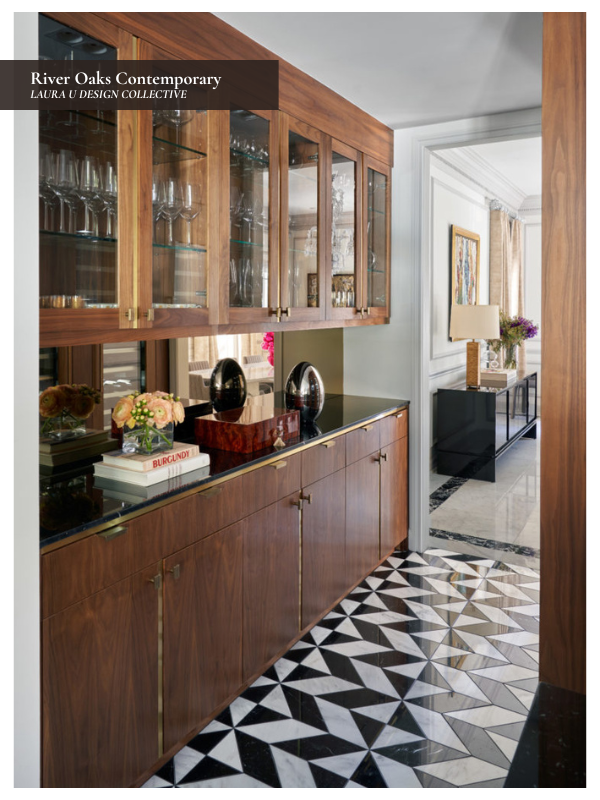
Never treat a butler’s pantry like an afterthought; it’s essential if you have the space. When planned well, it functions as the kitchen’s back-of-house: the place where appliances, overflow storage, beverage service, catering prep, dish staging, and cleanup can all happen without overtaking the main room where you’re entertaining guests. The kitchen itself can stay beautifully composed and guest-ready, while the less glamorous work of hosting occurs just out of sight.
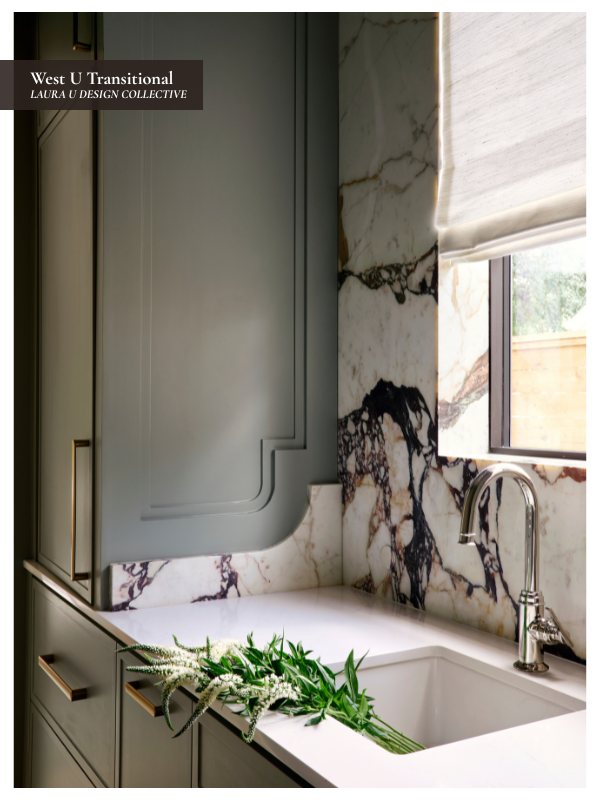
In our West U Transitional kitchen, the butler’s pantry takes on refrigeration, freezer storage, produce drawers, small appliances, and cleanup support that would otherwise crowd the main space. That arrangement allows the kitchen to stay open and livable no matter how many guests are in the home.
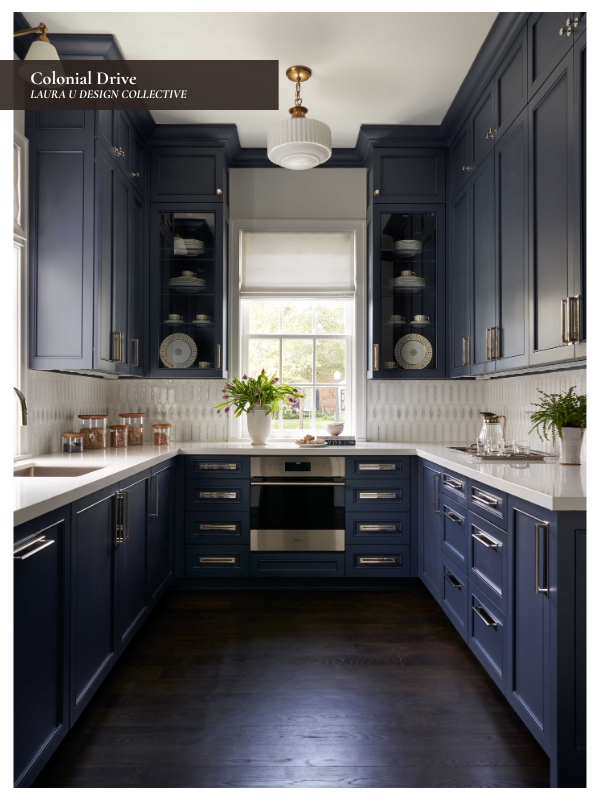
In River Oaks Contemporary, the butler’s pantry supports entertaining through an aesthetic extension of the kitchen and bar: warm wood cabinetry, glass-front storage, and a darker stone surface that make it feel more like a polished serving zone than a purely utilitarian one. Colonial Drive might be the hardest working butler’s pantry of the three. Compact but effective, it boasts saturated cabinetry, generous drawers, and enough counter space to absorb all the visual noise that can so quickly make a kitchen feel cramped and overwhelming.
A butler’s pantry can be the difference between a kitchen that merely looks beautiful and one that actually performs beautifully.
#5 Find ways to conceal the functional load so you can actually enjoy the space
A kitchen can only do so much if every appliance, dish, spice jar, and prep tool is constantly on display. Concealing the functional load might feel purely aesthetic, but it’s actually one of the easiest ways to make a kitchen feel calmer, cleaner, and more hospitable. Hidden refrigeration, paneled dishwashers, pull-out pantry storage, appliance garages, and dedicated prep zones all help the room shift more easily between everyday use and entertaining.
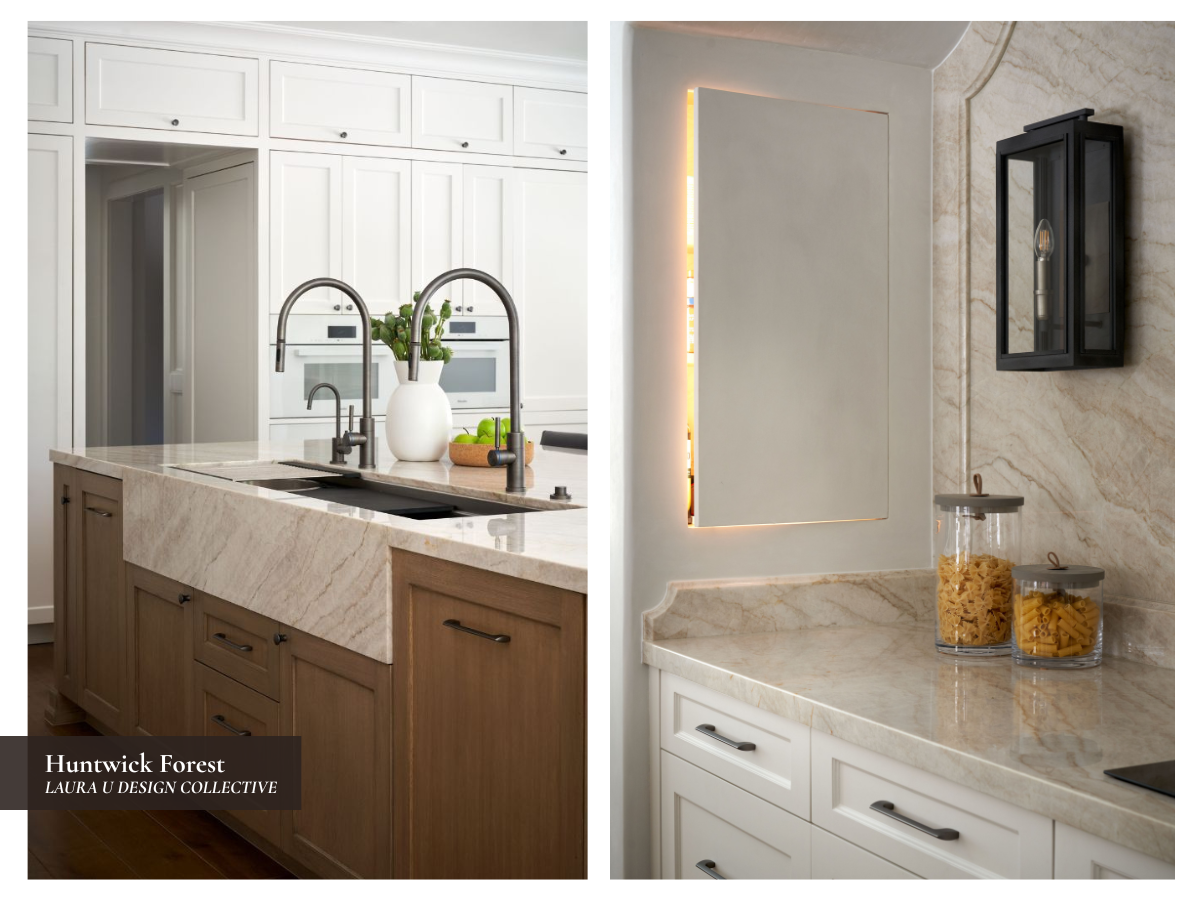
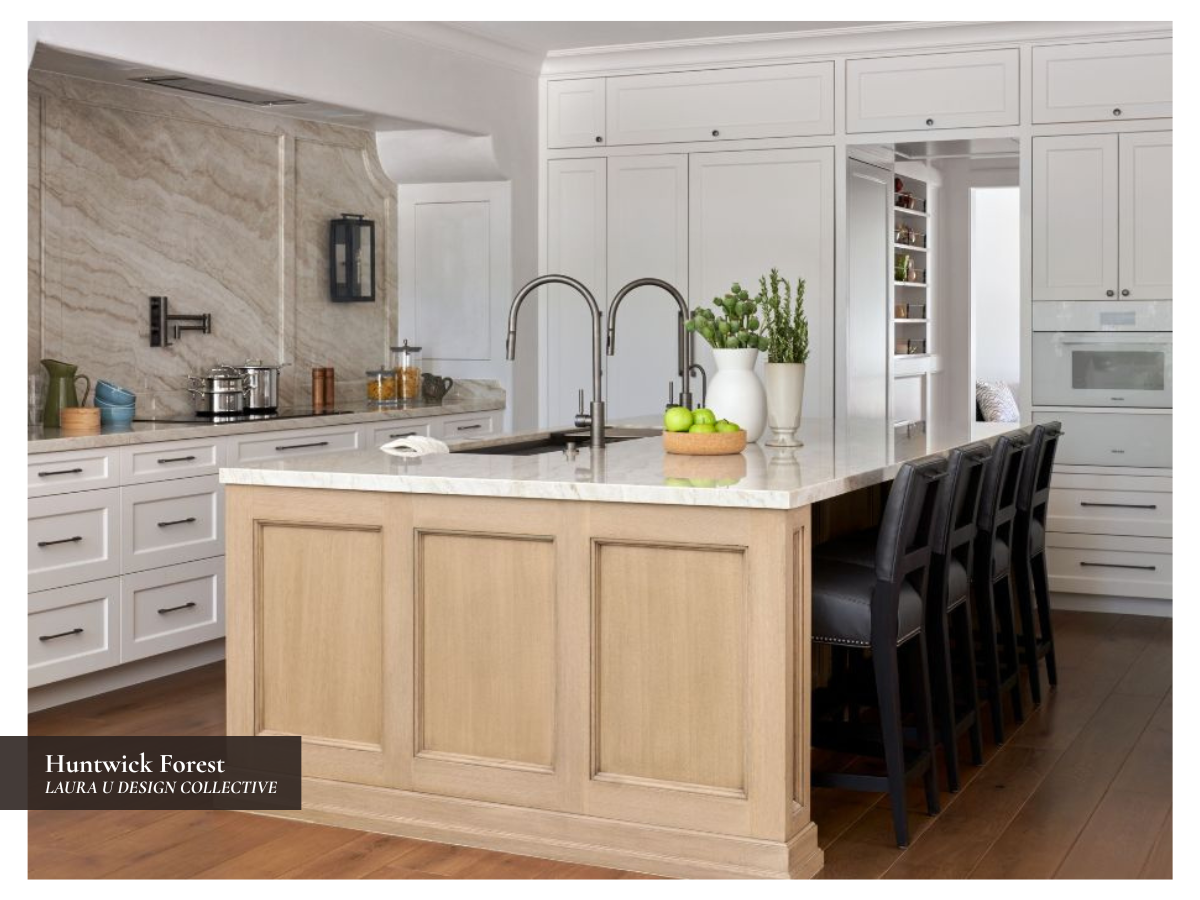
Our Huntwick Forest kitchen captures this especially well. Concealed spice niches, a pull-out paper towel holder, and a day pantry tucked behind a pocket door keep the kitchen’s working elements close at hand without allowing them to overtake the room. The main kitchen can stay beautifully composed, while the less attractive but entirely necessary parts of cooking are hidden away but always available. Even with multiple appliances, a statement backsplash, Segreto plaster, and expansive marble surfaces, the room doesn’t feel task-heavy or visually crowded.
That same logic extends into the home’s prep kitchen and coffee niche. Baking, overflow storage, and major pantry items move into a secondary space designed around the clients’ actual routines, while the coffee bar keeps machines, mugs, and specialty outlets organized in one dedicated zone. The kitchen is a gathering place and you want it to feel more like a part of your home than a workshop. Concealing appliances and other elements helps our clients achieve that.
#6 Let circulation and self-service help you host
A well-designed kitchen should allow people to move through it easily and participate without needing constant direction. When circulation is clear and key functions like beverage service or casual plating are appropriately placed, guests can help themselves, find what they need, and settle in without stepping into the cook’s path. This is what keeps a kitchen feeling comfortable at any scale, whether it’s two people sharing the space or a bunch of guests.
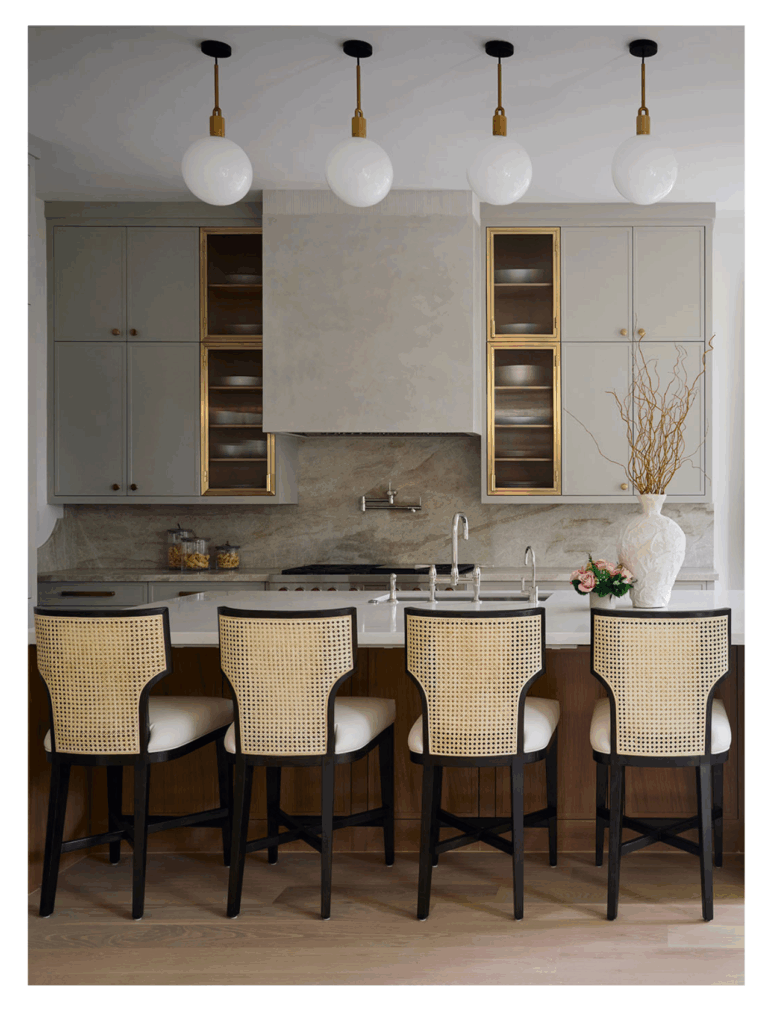

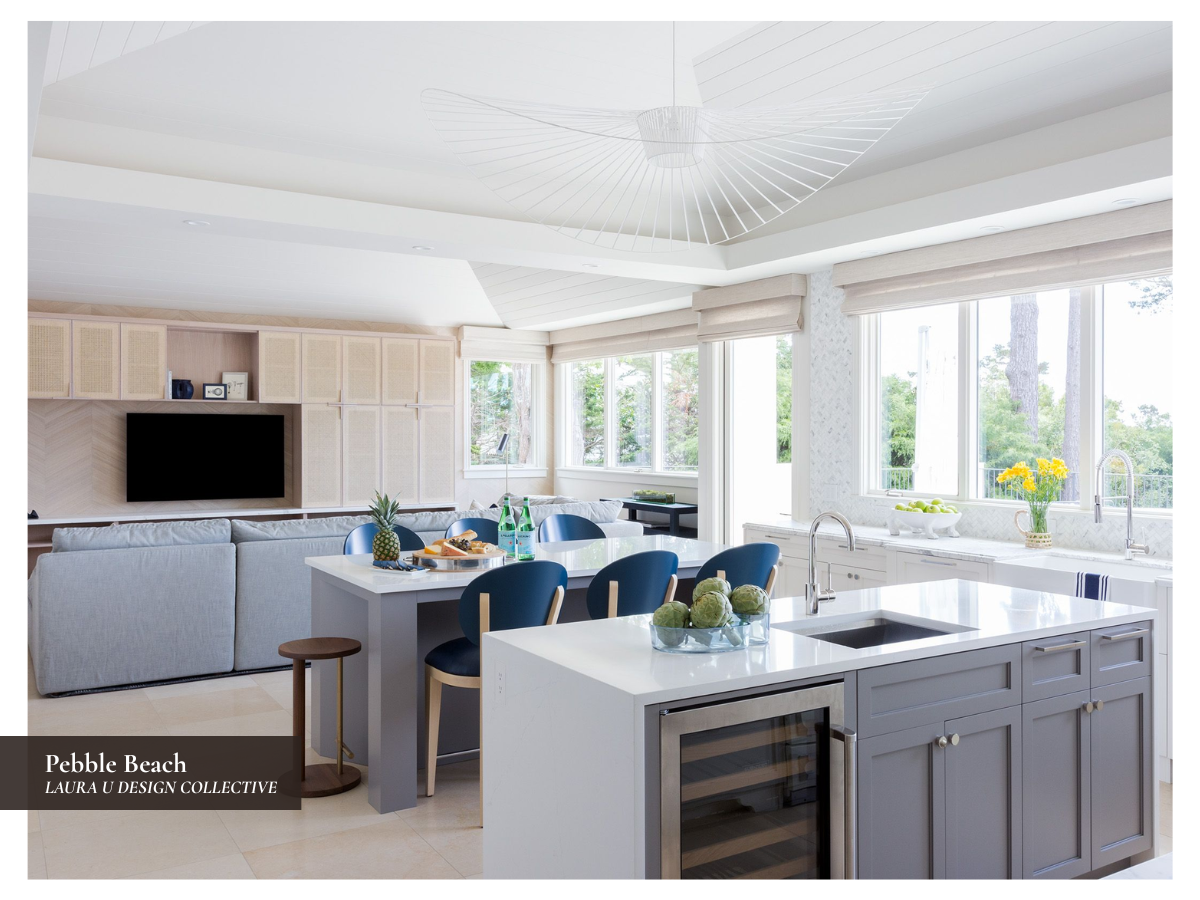
In our Pebble Beach kitchen, we achieved that balance through a double-island layout and a seamless connection to the adjacent living area. One island supports prep and cleanup, while the second is a natural place for seating, serving, and gathering. This separation allows multiple people to use the kitchen at once without congestion. Someone can pour a drink, set out food, or sit and talk without interrupting the host’s cooking process happening just a few feet away.
Circulation around both islands is generous, which makes movement feel intuitive rather than negotiated. Guests can pass through, linger, or move toward the living space without creating bottlenecks, and the kitchen never feels like a crowded work zone. When circulation and self-service are considered together, the kitchen can actually host on its own, supporting both the people cooking and the people simply enjoying being there.
#7 Extend the kitchen beyond itself
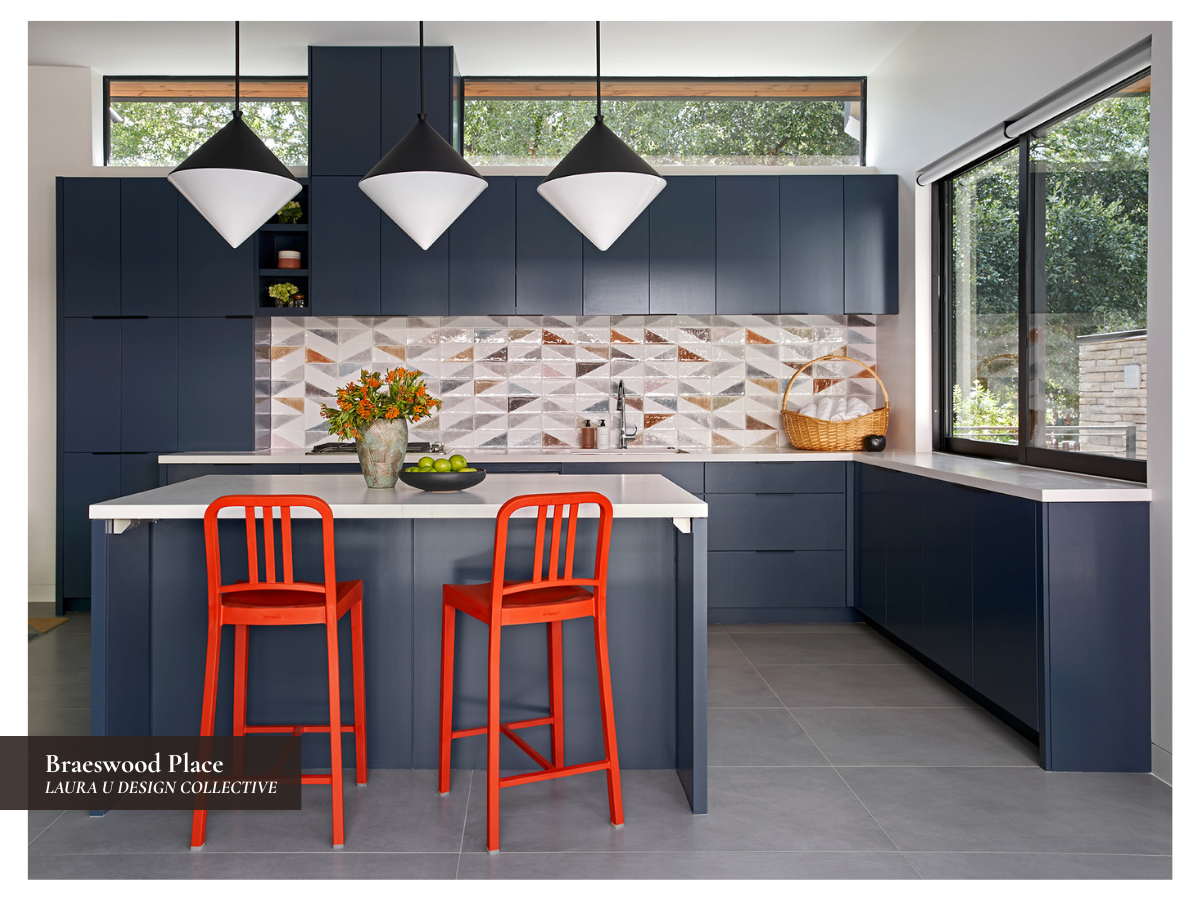
The best entertaining kitchens aren’t self-contained. They borrow from nearby spaces and soften the thresholds to dining areas, patios, bars, and lounges so the room can expand naturally when more people arrive. When the room can spill outward, it’s comfortable at everyday scale but still has the capacity to support a larger gathering.
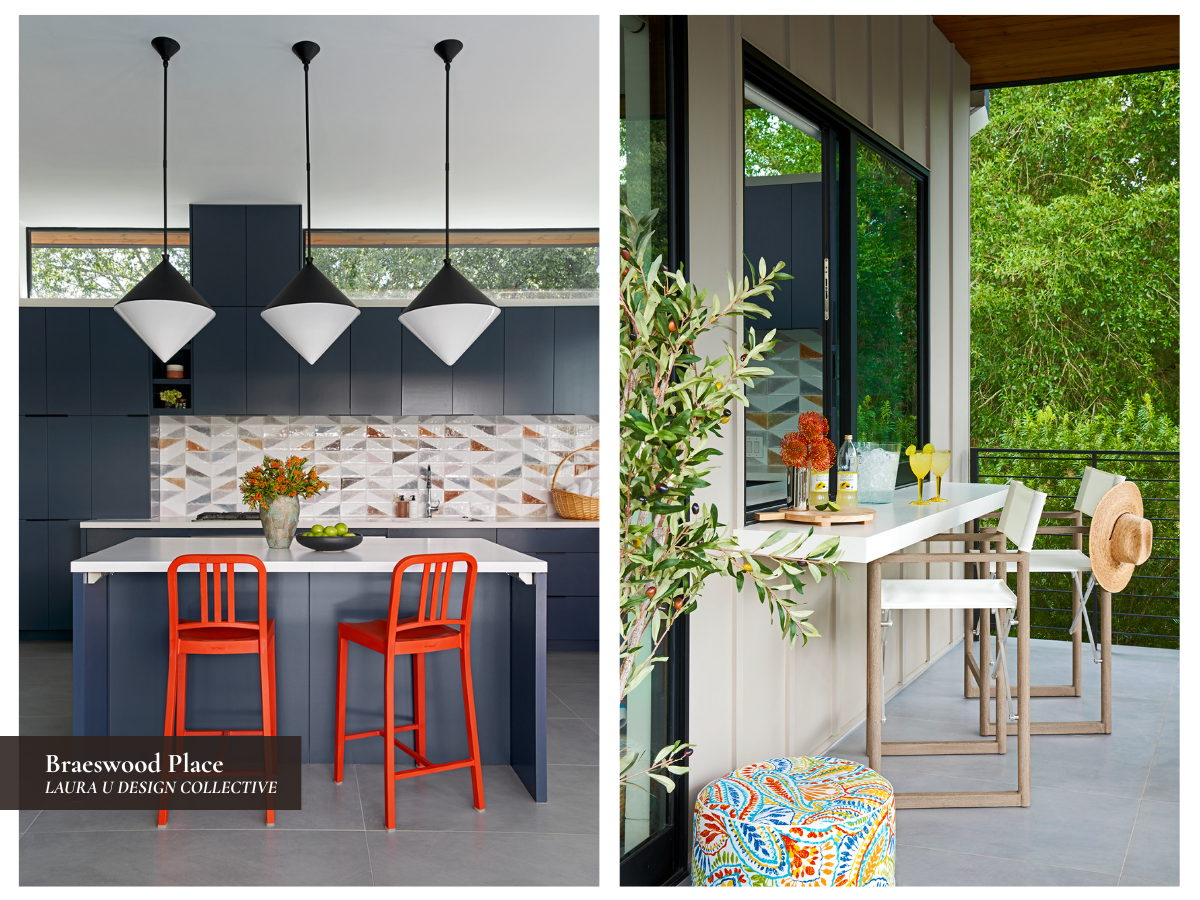
Our Braeswood Place pool house kitchen captures this especially well. Inside, the kitchen is compact, colorful, and highly functional. Just beyond it, a cocktail station built into the pass-through window connects directly to the patio outside. That move does more than add charm. It gives guests a place to gather, pour a drink, or settle into conversation without clustering inside the kitchen itself. The room still feels connected to the action, but the entertaining footprint expands beyond the walls.
That kind of extension is especially useful when the same home needs to support both family downtime and frequent entertaining. A pass-through bar, an adjacent patio, or even a nearby dining nook gives the kitchen another arm. Instead of forcing every meal, drink, and conversation into one room, the house can distribute those moments more naturally.
Create Your Dream Kitchen with Laura U Design Collective
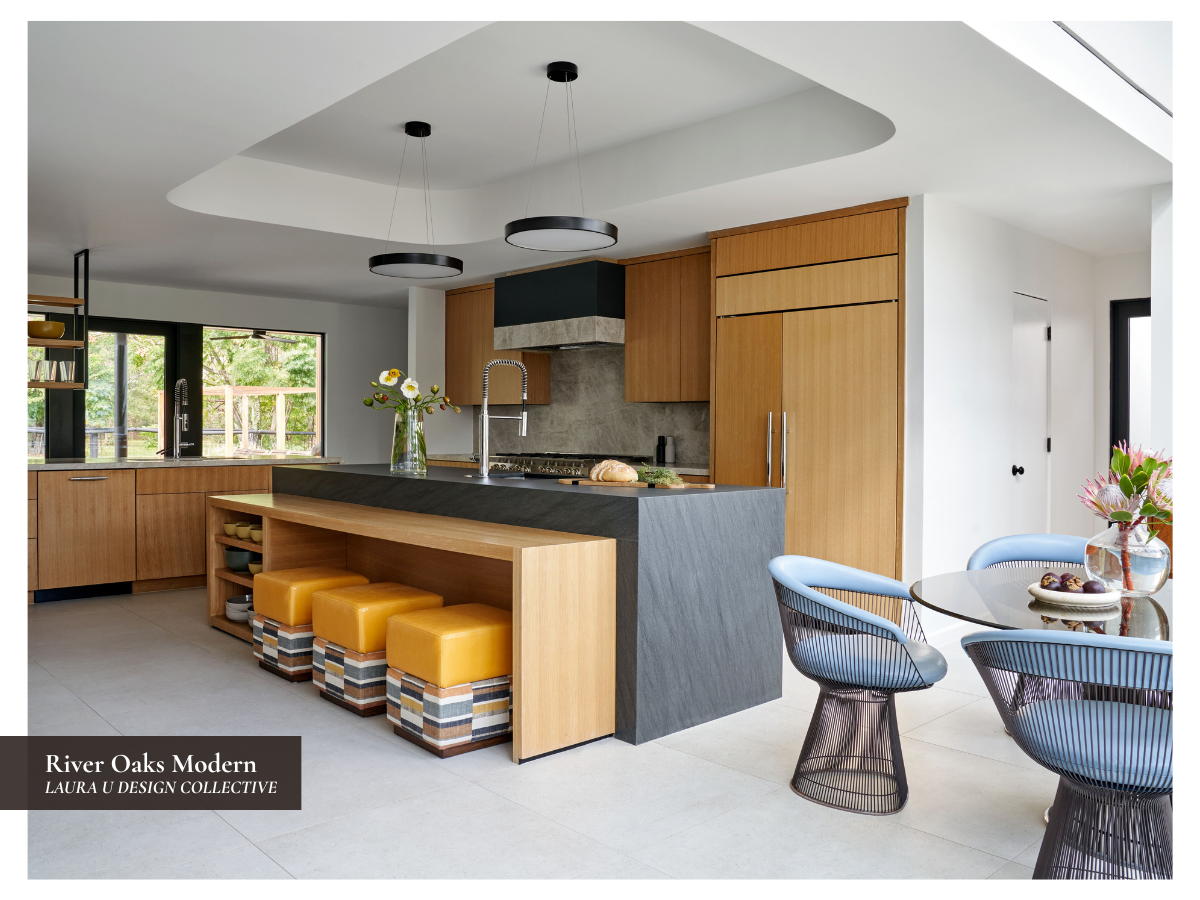
The most effective kitchen zoning won’t make the space feel rigid or overplanned. Instead, it will simply provide the structure needed to support real life, whether that’s everyday or while entertaining. When cooking, gathering, serving, storage, and circulation are all considered from the start, a kitchen is so much easier and more enjoyable to use every single day in every single way.
If your current kitchen looks stunning but never quite functions the way you need it to, Laura U Design Collective can help. Our team designs kitchens that are beautiful, highly personal, and deeply functional, with layouts that support the way our clients actually live, cook, gather, and entertain.