

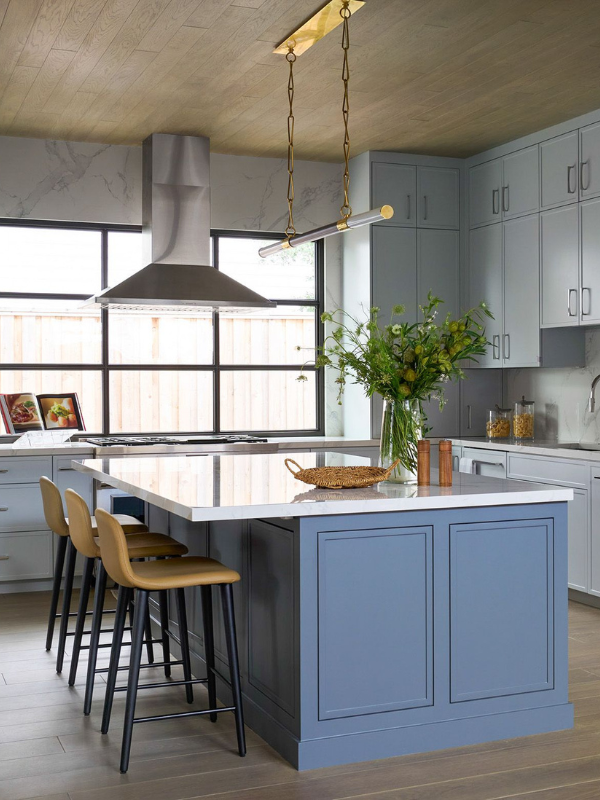
The cost of a luxury kitchen remodel can vary widely from one firm to the next and one project to the next. This is because one client might focus heavily on custom cabinetry and a fully reworked layout while another focuses on chef-level appliances and imported stone countertops. A contractor’s guide may discuss construction costs, while a design article turns toward custom finishes, procurement, and installation. By the time a homeowner has read a few of these estimates, they may be completely confused.
Part of that confusion comes from the way kitchen remodeling is discussed online. Clients want a “price per square foot,” but when kitchen remodels can include everything from knocking down walls and extending the space to commissioning custom features, distilling the cost down to square footage is almost never how a budget is determined. Instead, the estimated cost develops through a long chain of decisions tied to layout, construction scope, customization, sourcing, and coordination.
This is why two kitchens with similar dimensions can end up in very different places financially. One may need new appliances and surface-level finish work. Another may require plumbing relocation, ventilation upgrades, structural revisions, custom cabinetry, and detailed coordination across architects, contractors, and vendors. At Laura U Design Collective, those layers are studied and structured from beginning to end so clients experience absolutely as few surprises as possible. Discovery, Schematic Design, Design Development, Procurement, and Implementation are all part of our process. To understand what a luxury kitchen remodel costs, it helps to look at the project the same way we do: as a series of interlocking decisions rather than a flat price attached to a single room.
What Goes Into the Cost of a Luxury Kitchen Remodel?
Scope is One of the Biggest Cost Drivers
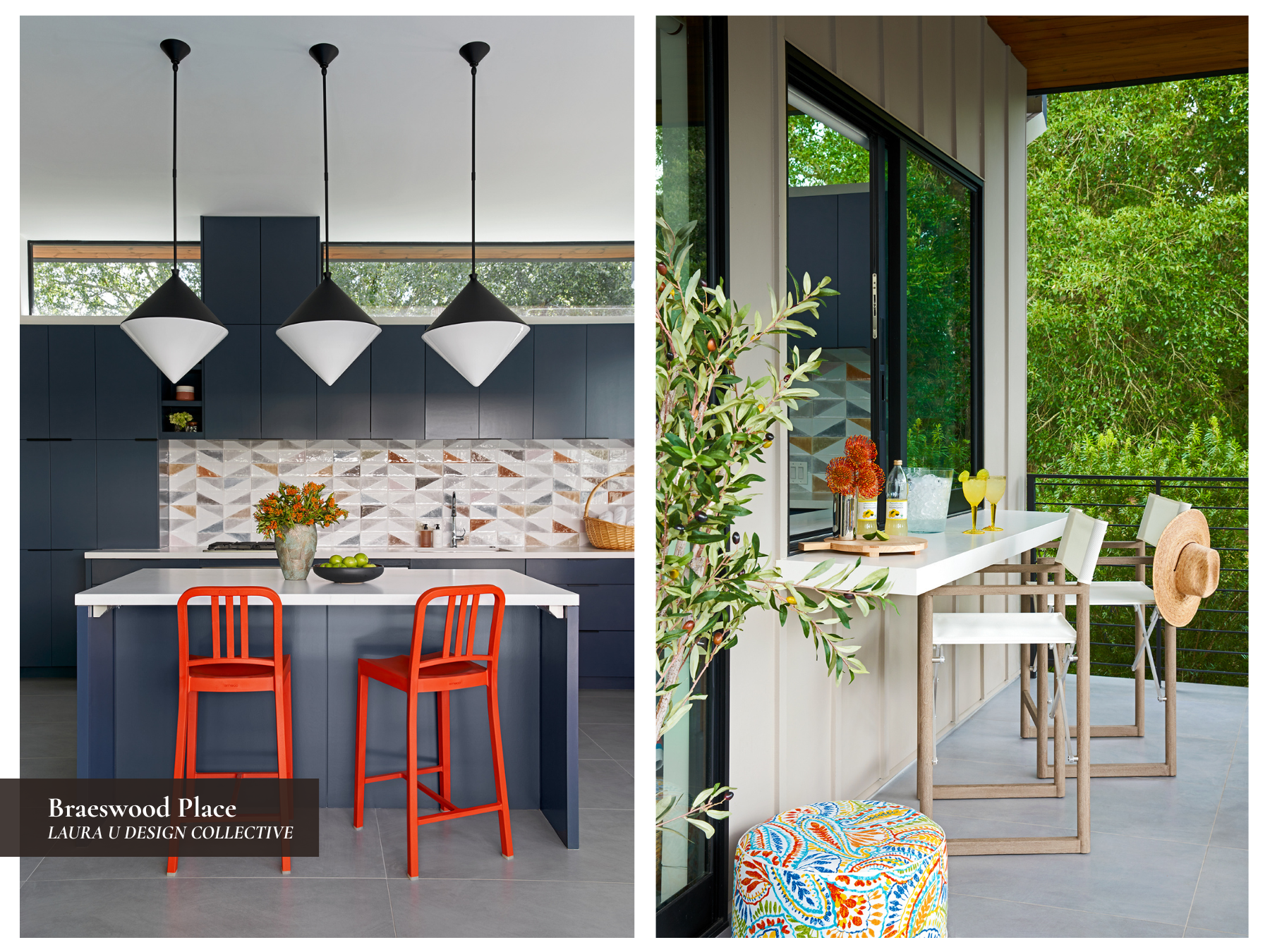
Scope is a significant cost driver. Before materials are selected or appliances are specified, the project team has to understand what kind of intervention the home actually needs to function well for its owners. A kitchen that stays within the existing footprint will be approached very differently from one that changes circulation, opens into adjacent rooms, or requires major mechanical updates behind the walls.
In a luxury remodel, scope is rarely limited to replacing visible surfaces. Cabinetry may need to be redesigned around the way a family cooks, entertains, or stores daily items. Appliances may require new electrical capacity, ventilation planning, or cabinetry integration. Flooring may need to continue into nearby rooms so the renovated kitchen does not feel disconnected from the rest of the home. Even a decision that seems relatively contained can affect several other trades once drawings are developed and construction begins.
This is one reason early planning matters so much. During Discovery and Schematic Design, our team studies how the kitchen must function before design development begins. That includes circulation, storage, appliance placement, lighting, adjacent spaces, and the client’s daily routines. Once those priorities are established, the scope can be structured with more clarity.
The broader the scope, the more coordination the project requires. A kitchen involving structural revisions, plumbing relocation, custom cabinetry, specialty finishes, and architectural lighting will require more documentation and more collaboration than one focused on finishes alone. That added complexity influences the investment, but it also allows the finished kitchen to function as part of the larger home rather than as a single updated space.
Design Is a Meaningful Part of the Investment
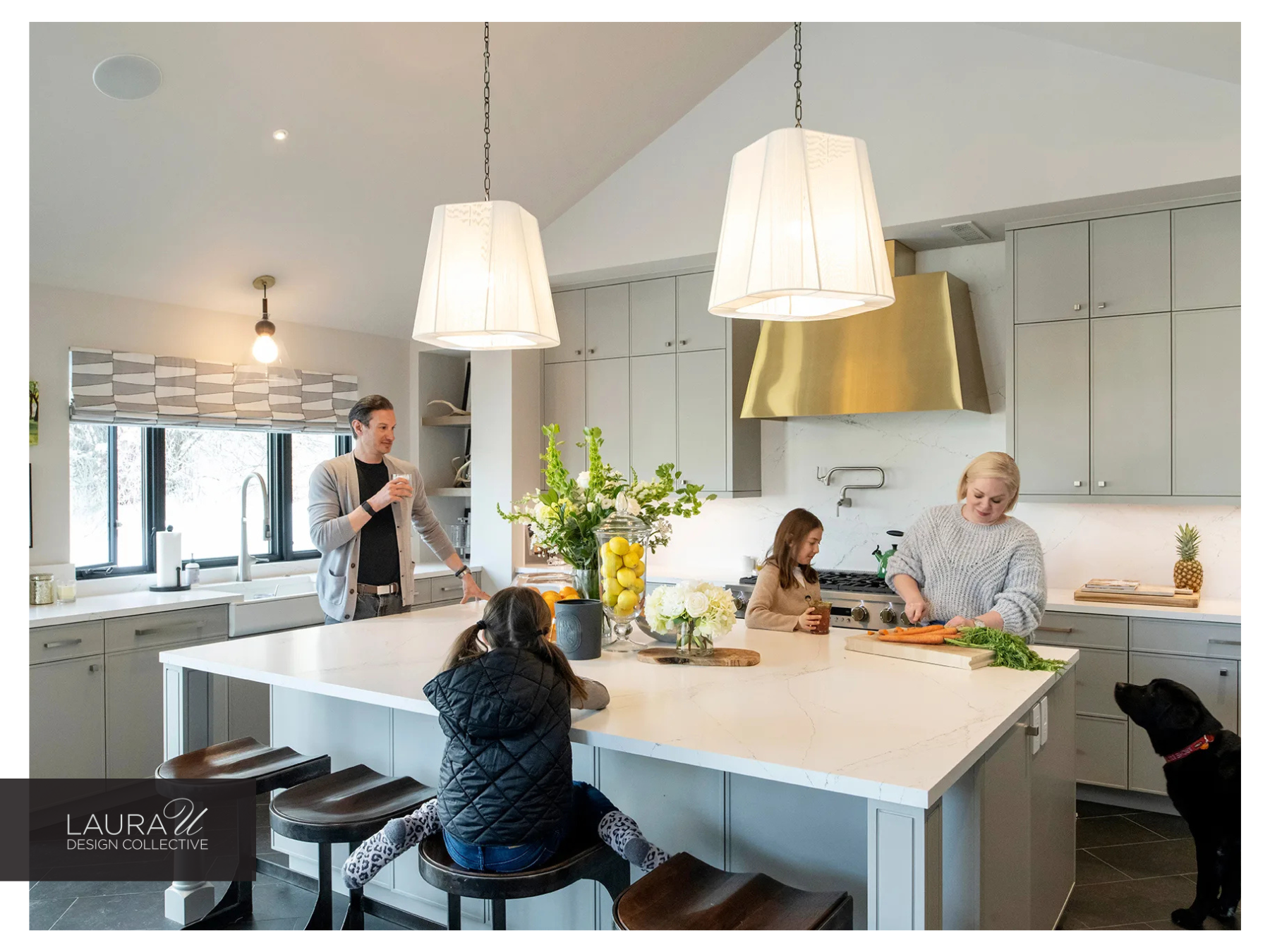
The residential and interior design phase is one of the first real investments in a luxury kitchen remodel because it determines what the project will require before construction begins. In an existing kitchen, that may include studying why the current layout no longer works, whether the island allows enough space for cooking and gathering, how the sink, stove, and refrigerator relate to one another, and where the space needs better lighting or more kitchen storage. These decisions come before marble countertops, backsplash tile, cabinet hardware, or new appliances are selected.
At Laura U Design Collective, this work begins in Discovery and continues through Schematic Design and Design Development. The process is detailed because a luxury kitchen involves so many more decisions than just selecting beautiful materials. Floor plans, elevations, custom cabinetry drawings, appliance specifications, lighting fixtures, accent lighting, task lighting, and cabinetry details all need to be studied together. A paneled refrigerator, hidden pantry, coffee station, or integrated pot filler may seem like a single design element, but each one affects plumbing, electrical planning, cabinetry, drawers, countertops, and installation.


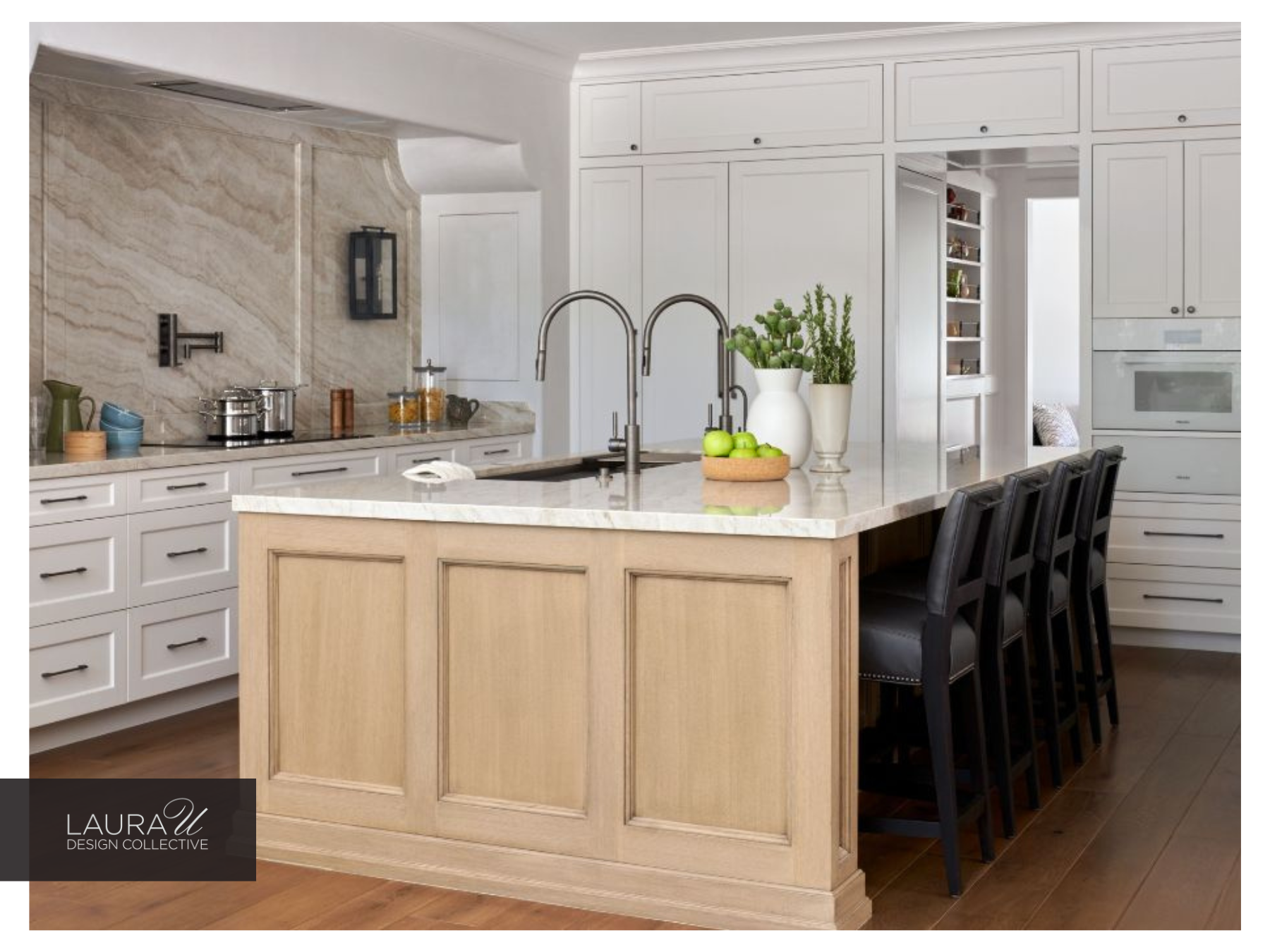
This all underscores the fact that a remodeled kitchen absolutely must reflect and support the client’s daily life. Some clients want a cooking space built around meals with family. Others need a kitchen island that allows them to entertain guests comfortably, with bar stools, durable kitchen counters, and enough storage for serving pieces. The design team may develop new custom cabinets, adjust the work triangle, design an accompanying butler’s pantry, recommend different flooring, or create a stronger focal point.
Because these decisions are connected, design time helps reduce confusion later. It allows the entire kitchen to be considered before materials are ordered or trades begin their work. In a luxury remodel, that planning protects both the budget and the final result, whether the goal is a high end kitchen with white cabinets and stainless steel appliances, a warm beach home kitchen with hardwood floors and a connection to the outdoors, or a beautiful kitchen that feels completely personal to the family who lives there.
Space Planning and Layout Changes
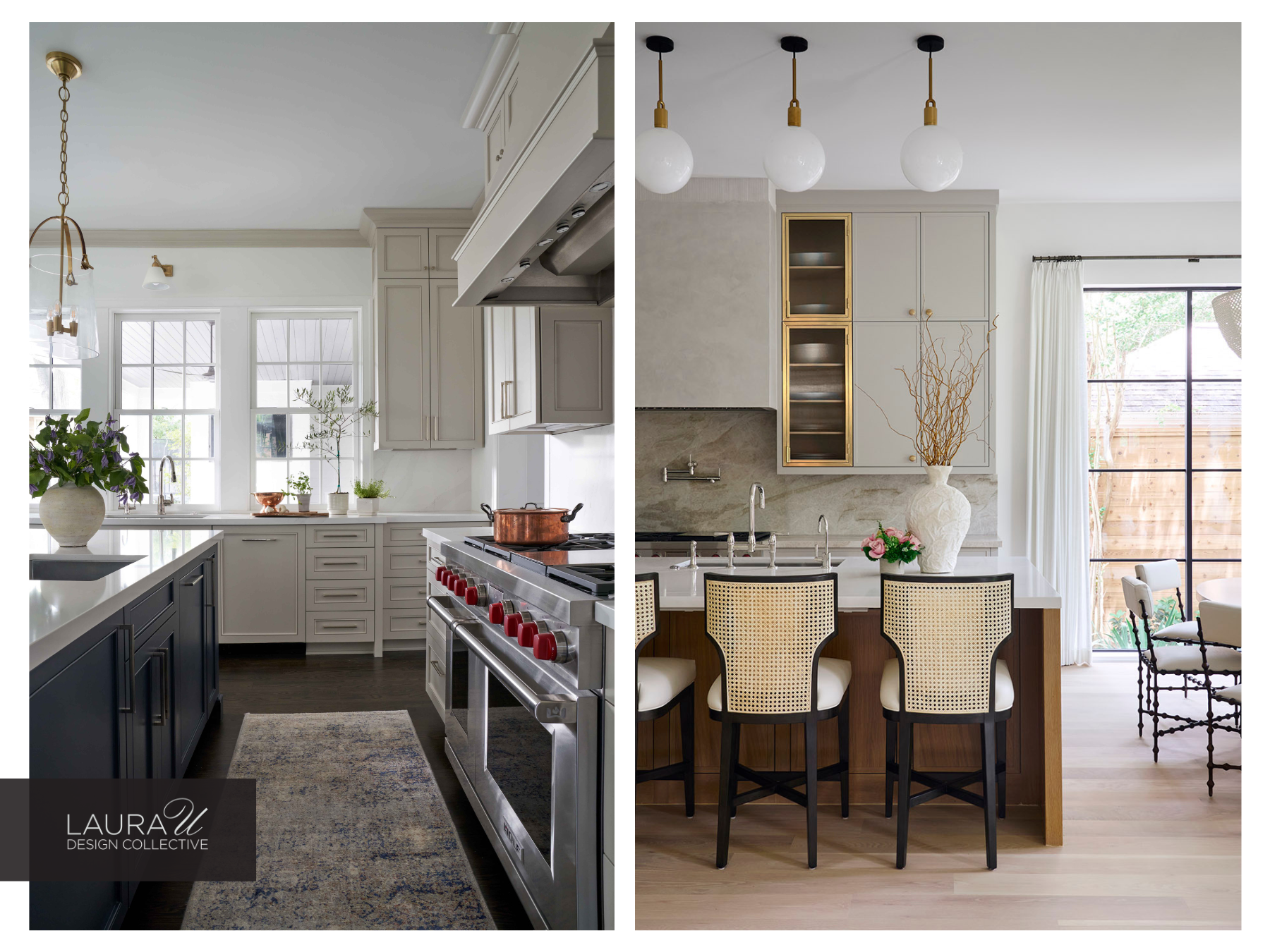
Space planning determines how much the existing kitchen needs to change before the design team begins refining cabinetry, lighting, and finishes. Some kitchens have enough square footage but poor circulation. Others have an island that interrupts cooking, a refrigerator too far from the prep area, or a wall that separates the kitchen from the rooms where the family spends most of its time.
In a luxury kitchen remodel, layout decisions often involve several disciplines at the same time. Removing a wall may require structural review. Moving the sink can change plumbing requirements. Relocating the range may affect ventilation, electrical planning, and cabinetry dimensions. Even enlarging an island can alter the lighting plan, seating clearances, appliance placement, and the amount of storage available below the counter.
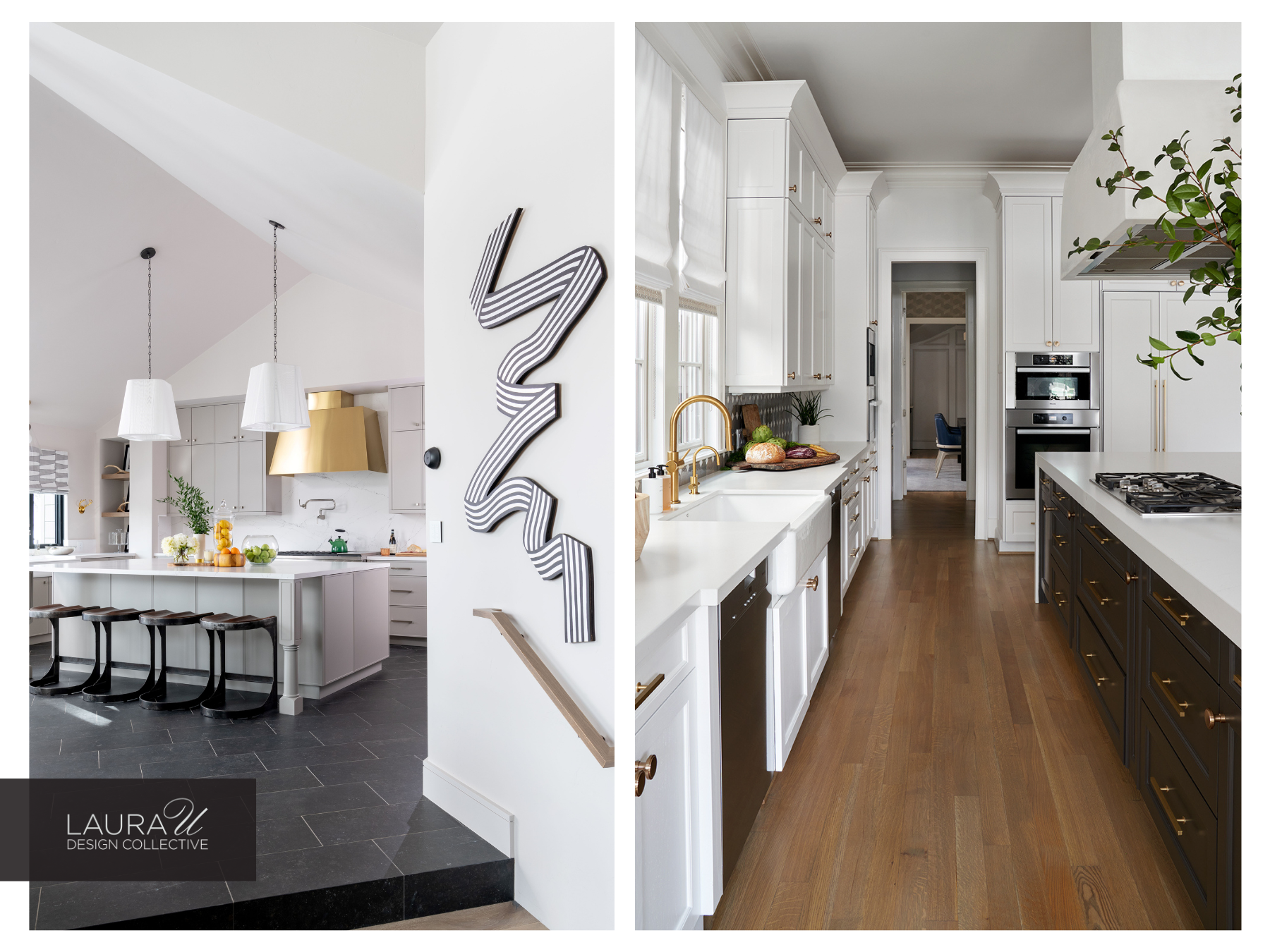
A well-planned kitchen also has to account for the way clients actually cook, gather, and entertain. A family that prepares meals together may need wider pathways and more prep space. A client who hosts often may want the island, bar area, or adjacent dining space arranged so guests can be included without interrupting the cooking area.
These early layout decisions influence the rest of the project. Cabinetry, flooring transitions, lighting, appliances, countertops, and construction documentation all depend on the approved plan. When the layout is planned carefully, the finished kitchen can support daily routines without unnecessary congestion or compromise.
Custom Cabinetry and Millwork
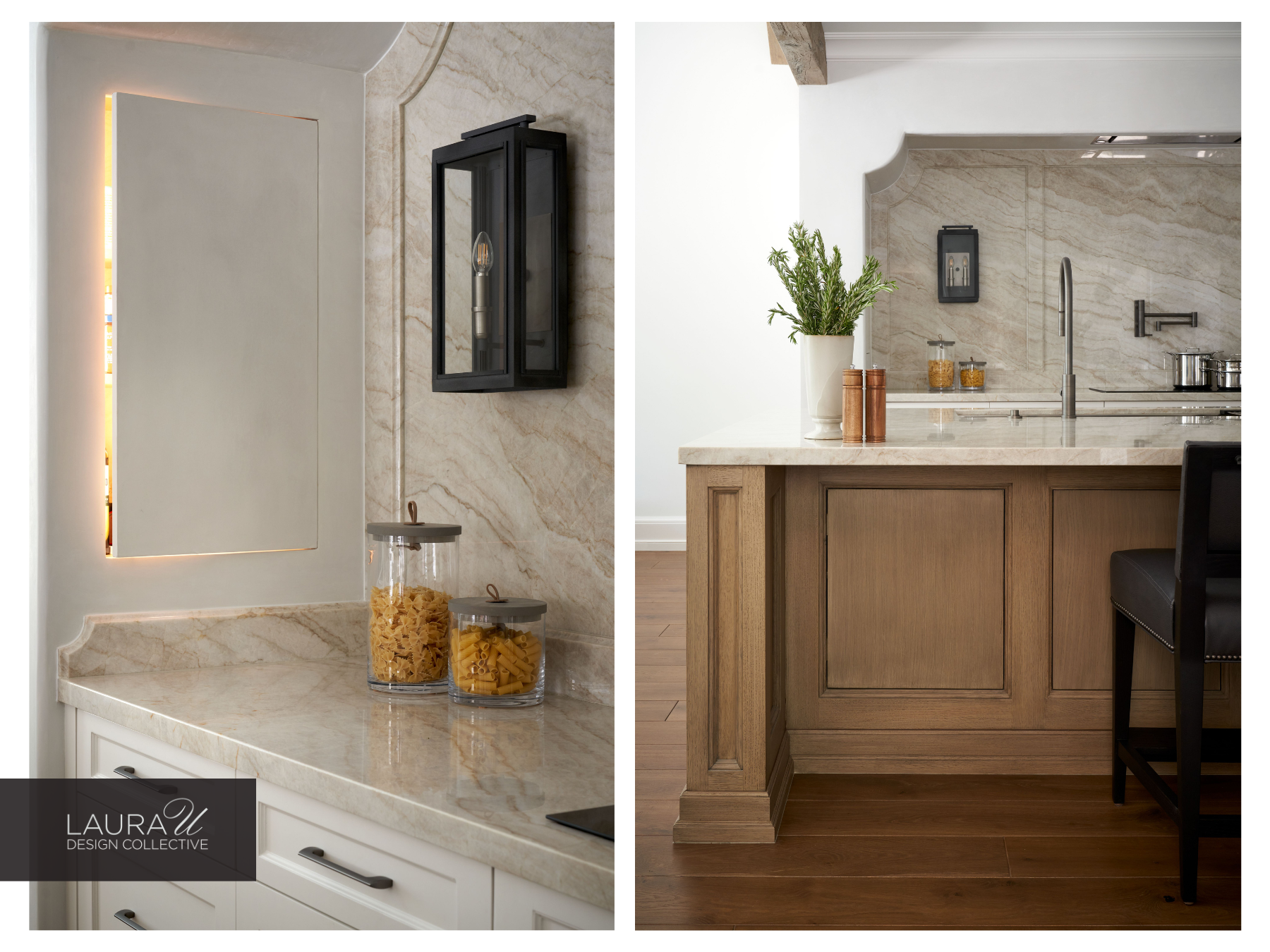
Custom cabinetry is often one of the largest parts of a luxury kitchen remodel because it affects storage, layout, appliance integration, and the overall character of the room. In a standard kitchen remodel, cabinets may be selected to fit an existing plan. In a luxury kitchen, the cabinetry is usually designed around the client’s routines, the architecture of the home, and the way the entire kitchen should function.
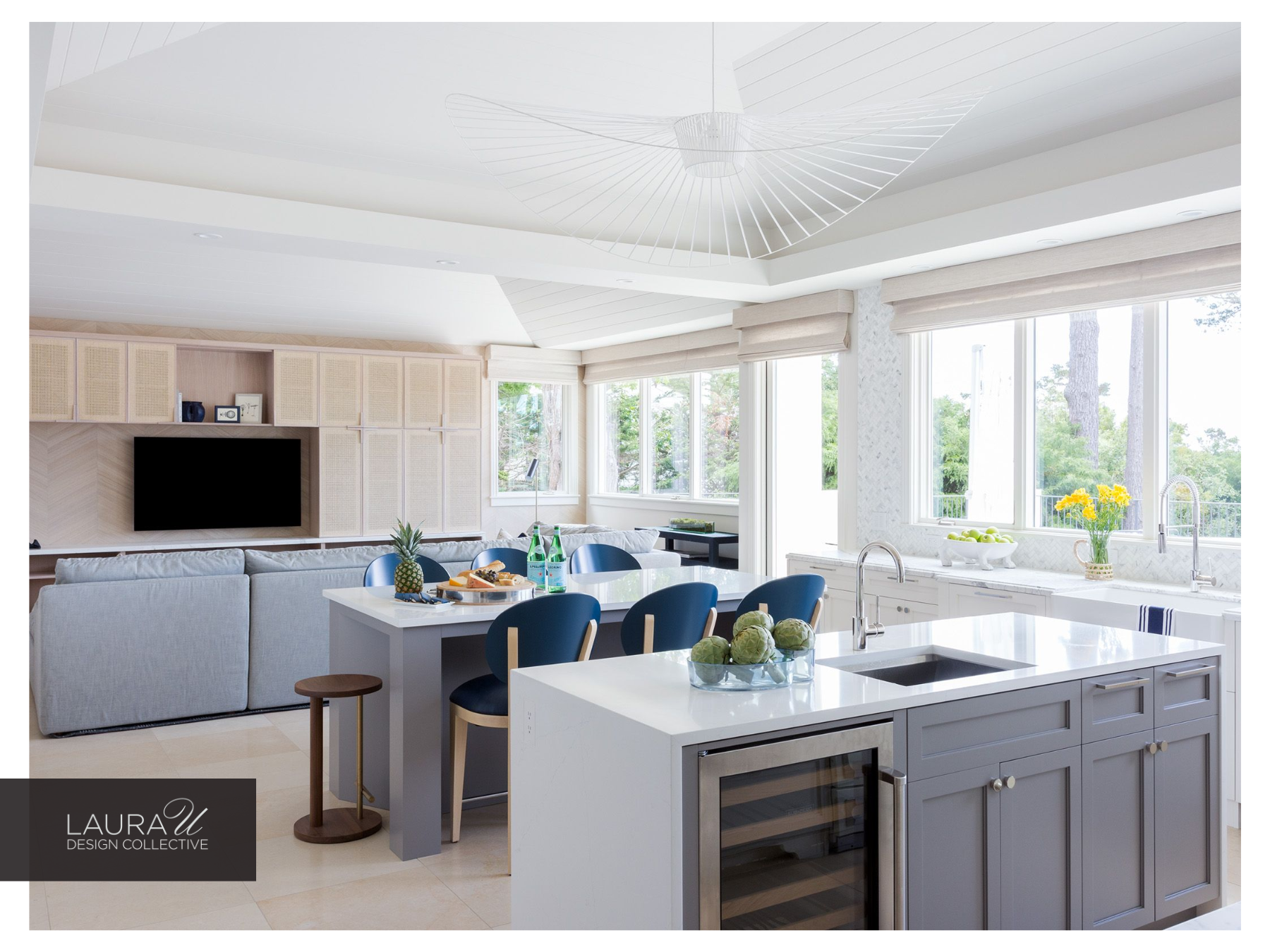
That level of customization can include new cabinets, specialty drawers, appliance panels, a hidden pantry, a coffee station, or custom cabinets designed to frame a kitchen island. It may also include millwork that connects the kitchen to nearby rooms, especially in open layouts where cabinetry, flooring, and architectural details need to work together. In the Rice Residence kitchen, for example, the team used custom millwork to create a coffered ceiling that related back to the cabinetry and vent hood. In the North Boulevard kitchen, custom-made cabinetry helped connect the remodeled kitchen to the character of the historic home.
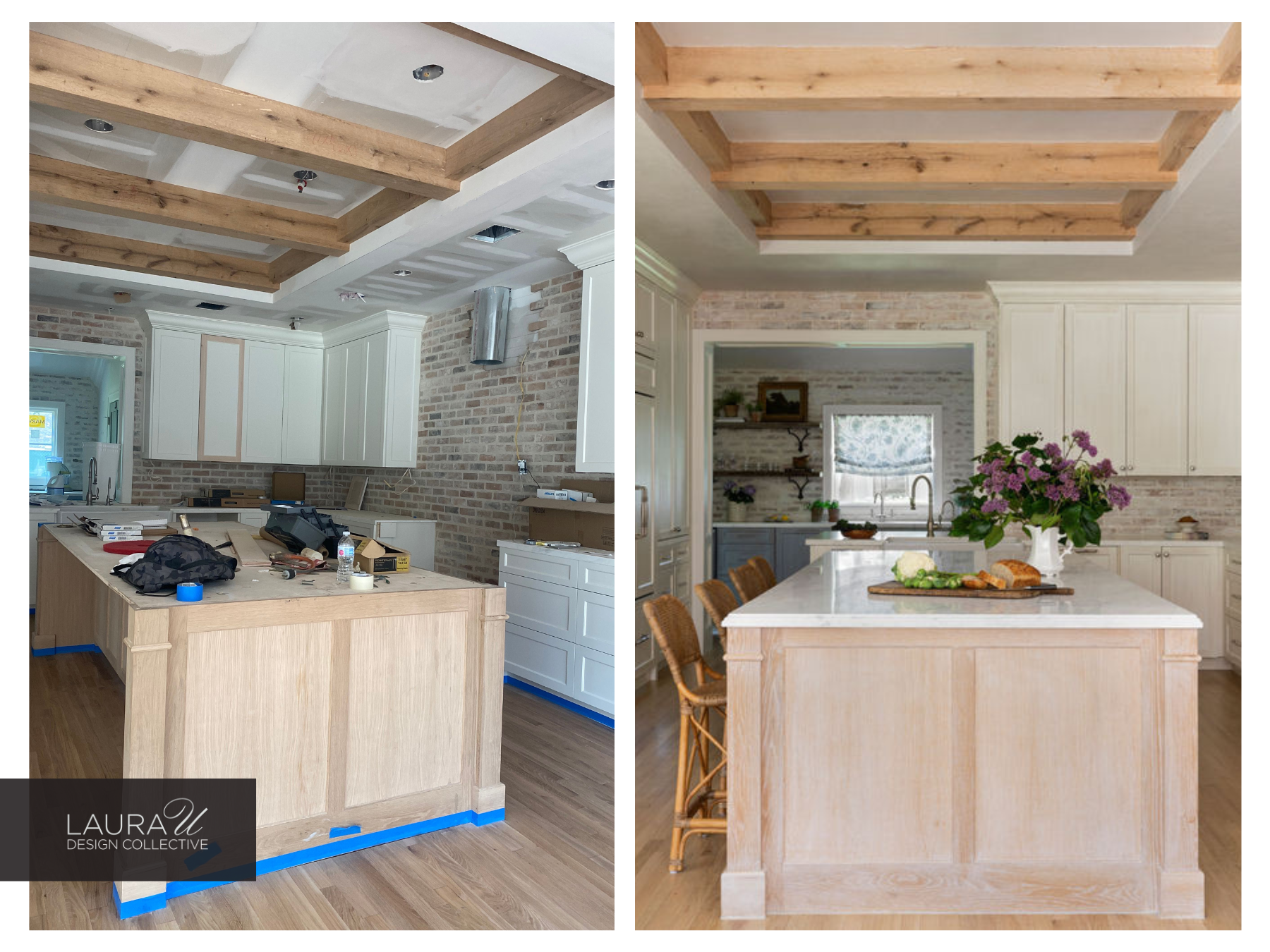
Cabinetry decisions also affect the less visible parts of the remodel. Paneled appliances require careful coordination between appliance specifications, cabinet dimensions, ventilation, and installation. A larger island may call for more storage below the counter, integrated outlets, decorative end panels, or seating that changes the surrounding clearances. Even cabinet hardware can influence the final look of the space, especially when it is paired with plumbing fixtures, lighting, and stone.
Because cabinetry touches so many other decisions, it should be developed carefully during the design process rather than treated as a late-stage selection.
Appliance Selection and Integration
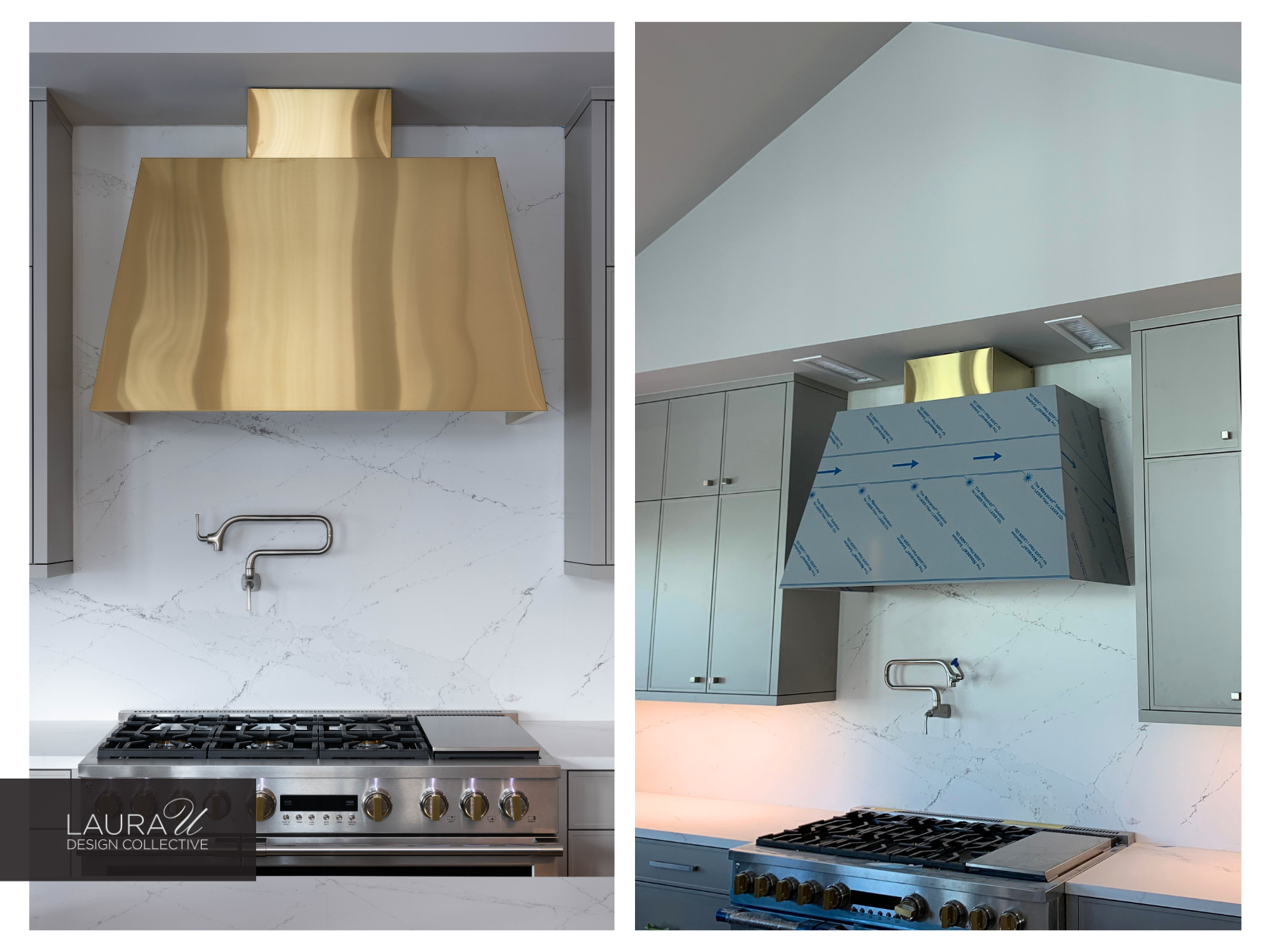
Appliances can influence the cost of a luxury kitchen remodel, too. Their dimensions, utility requirements, ventilation needs, and relationship to cabinetry all have to be accounted for during planning. A range may require a specific hood size or duct path. A refrigerator may need panels that match the surrounding millwork. A dishwasher, freezer drawer, warming drawer, or wine column may change the cabinet run around it. Even when an appliance is meant to disappear visually, the design team still has to plan for it with precision.
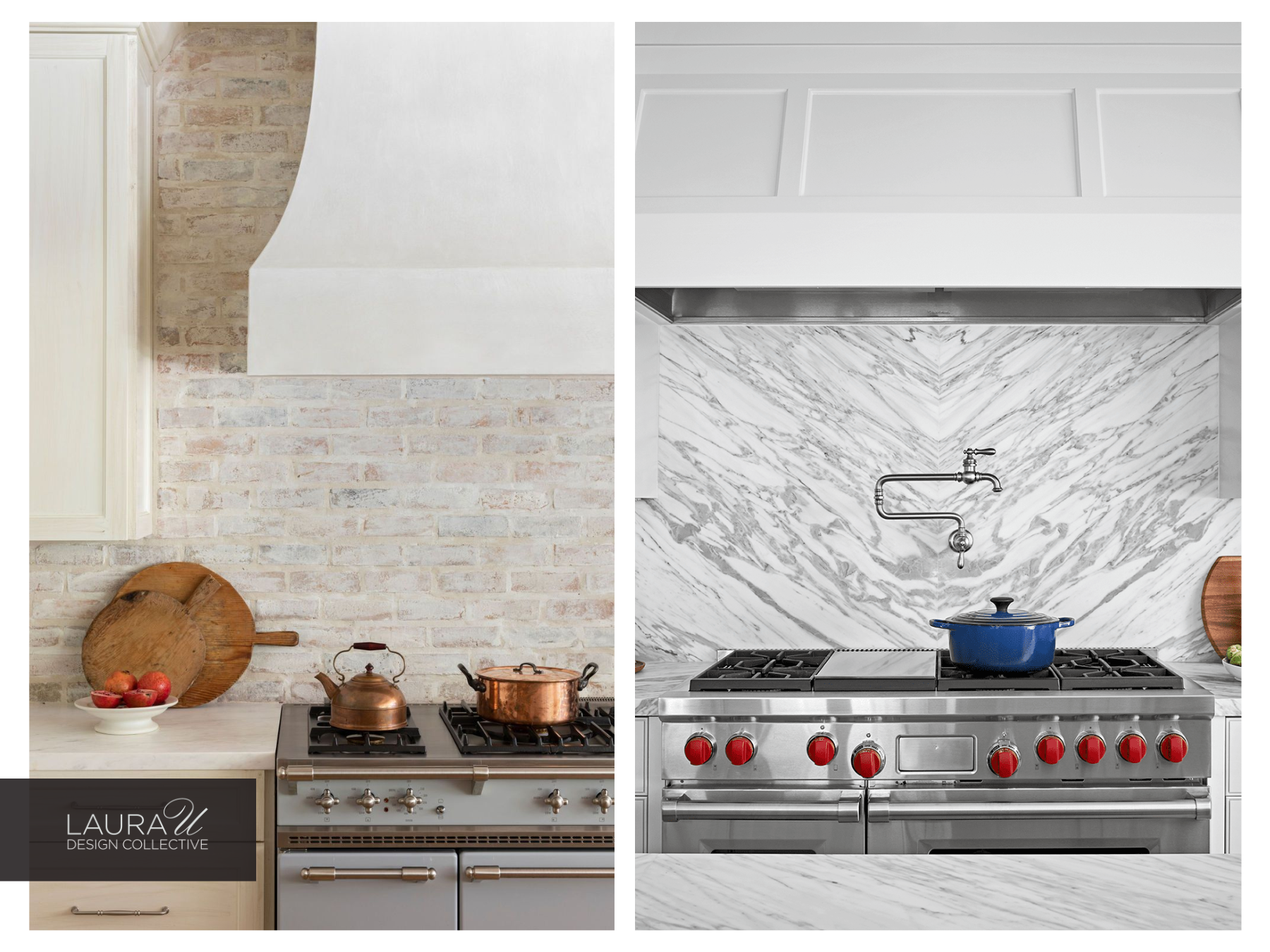
At Laura U Design Collective, we often hide appliances when doing so improves the overall design. Paneled refrigeration, concealed dishwashers, integrated freezer drawers, and appliance garages can help a kitchen look more composed and less cluttered, especially in open spaces where the kitchen connects directly to living or dining areas. And when appliances are visible, they still need to contribute to the design. That level of integration requires coordination between the designer, appliance vendor, cabinetmaker, builder, and installer. The appliance itself is only one piece of the investment.
Appliance selections also affect timing. Specialty pieces may have longer lead times, and final specifications are needed before cabinetry drawings, electrical plans, and plumbing locations can be completed. A successful luxury kitchen depends heavily on that sequencing. If the appliances change late in the process, the cabinetry, countertops, ventilation, and installation details may need to be reviewed again. This is one reason appliance integration is treated as part of the design process rather than a separate purchase.
Materials and Finishes
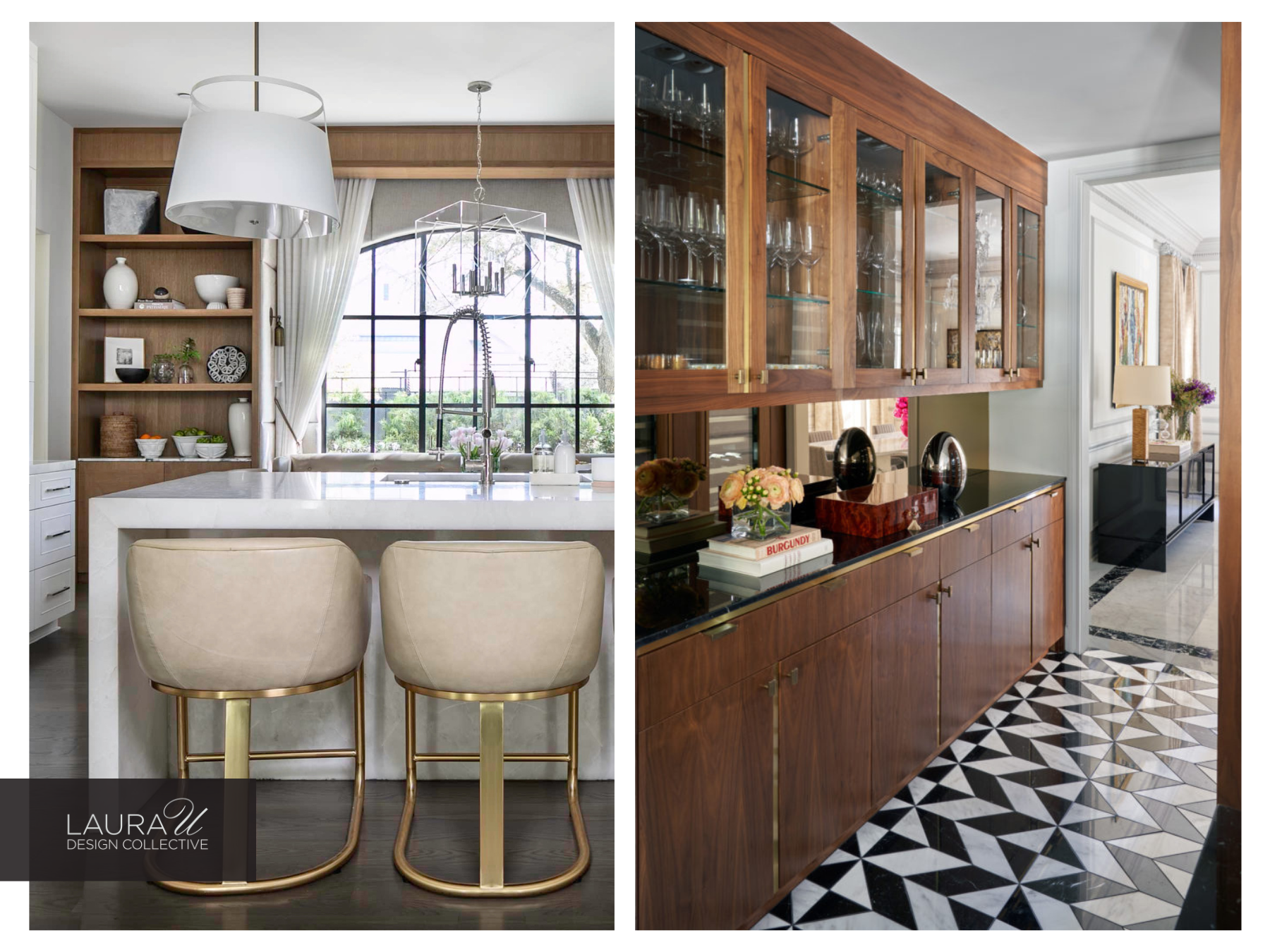
Materials and finishes are usually the most visible part of this process and what many clients believe should be the biggest bulk of their remodeling budget, but their cost is tied to a lot more than appearance. Countertops, backsplash materials, hardware, flooring, paint, and specialty finishes all involve sourcing, fabrication, installation, and coordination with the rest of the design. A marble slab used for countertops and a backsplash, for example, will be priced differently from backsplash tile because the fabrication process, installation requirements, and waste factors are different.
Stone may need to be inspected in person before it is approved. Slab layouts may need to be reviewed so veining aligns correctly across the kitchen counters, backsplash, and island. Flooring transitions have to be planned so the kitchen connects cleanly to adjacent rooms.
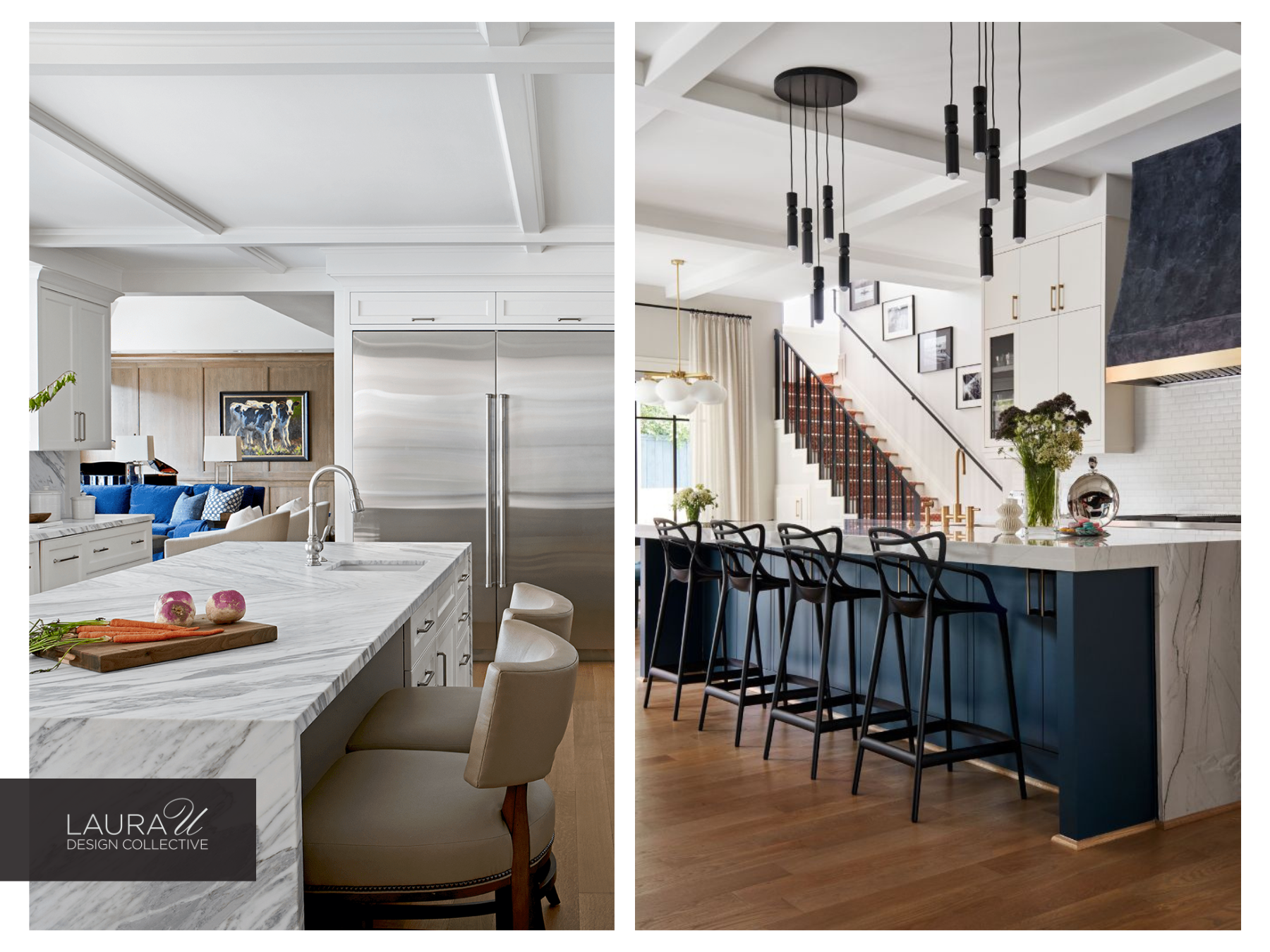
Pricing can also change as materials are sourced. Imported stone, specialty tile, decorative lighting, and custom finishes may be affected by freight, availability, fabrication schedules, or vendor pricing updates. For that reason, material selections are never isolated design choices. They influence the remodel schedule, the trades involved, and the level of oversight required before installation.
Labor and Skilled Trades
A luxury remodel depends on highly skilled trades. Electricians, plumbers, cabinet installers, tile setters, stone fabricators, finish carpenters, and painters all contribute to the final result. Their work must align with the drawings, specifications, and design intent, especially when the kitchen includes custom cabinetry, slab backsplashes, integrated lighting, or paneled appliances.
This level of labor is different from general installation. A stone fabricator may need to align veining across a waterfall island. A cabinet installer may need to fit custom cabinets around appliances, outlets, and uneven walls. A tile setter may need to lay handmade backsplash tile with enough care to account for variation from piece to piece. A finish carpenter may need to integrate trim, paneling, or millwork so the kitchen feels connected to the architecture of the home.
Labor availability also affects renovation budgets. Skilled trades remain in high demand, and experienced crews are often scheduled well in advance. When a project requires specialized work, the timeline may need to accommodate the right trade rather than simply the next available one. That planning affects both cost and schedule, but it is also one of the reasons a luxury kitchen can be executed at the level clients expect.
Infrastructure Alterations Behind the Walls
Some of the most important expenses in a kitchen remodel aren’t immediately visible. Electrical upgrades, plumbing relocation, ventilation requirements, HVAC coordination, and code-related updates can all affect the budget before finishes are installed. A new range may require additional ventilation. A larger refrigerator may require electrical adjustments. Moving the sink or adding a pot filler can introduce plumbing work that extends beyond the kitchen itself.

Older homes typically require even more attention. Existing wiring, plumbing, framing, or ventilation may not support the new design without modification. In some cases, the project team may discover conditions during demolition that were not visible during early planning. Those discoveries can affect the scope, especially when the goal is to preserve the character of the home while improving performance.
This behind-the-scenes work is not as exciting as selecting marble countertops or cabinet hardware, but it is essential to the final kitchen. A beautiful kitchen still has to function safely and comfortably. The lighting has to be properly placed, the appliances need the right support, the ventilation must work, and the cabinetry has to be installed against walls and floors that can support the design.
Procurement, Timeline, and Project Coordination
Product cost is only one part of your investment. Once materials, appliances, lighting fixtures, hardware, and furnishings are selected, those items still have to be ordered, tracked, received, inspected, stored, and delivered. Freight, warehousing, receiving, and installation coordination can all affect the final cost of a luxury kitchen remodel, especially when pieces are sourced from multiple vendors or shipped internationally.
Lead times also impact the project schedule. Custom cabinetry, specialty appliances, imported stone, handmade tile, and decorative lighting may all come in on different timelines. A delay in one category can affect several others. Cabinetry may depend on appliance specifications. Countertops cannot be templated until cabinets are installed. Lighting placement may depend on the final island dimensions. Each decision connects to the next.
This is why procurement and coordination are treated as part of the design process rather than administrative follow-up. Designers, contractors, vendors, fabricators, and installers all need current information at the right time.
Why Working with a Design Team Matters
A luxury kitchen remodel has too many connected parts to be managed through aesthetics alone. Planning, documentation, procurement, construction coordination, and installation all influence the final investment. The design may begin with a beautiful vision for the kitchen, but that vision has to be translated into drawings, specifications, purchase orders, site coordination, and installation details before the room is complete.
A full-service design firm can help clients understand where their budget is going and why certain decisions affect the overall scope. At Laura U Design Collective, our process begins with Discovery and continues through Schematic Design, Design Development, Procurement, Implementation, Installation, and Reveal. Each phase adds a different layer of clarity. Early planning defines the goals. Design development refines the details. Procurement manages the products. Implementation and installation connect the design to the rest of the home.
When the process is managed from beginning to end, clients are better prepared for the many decisions that shape a luxury kitchen remodel. Costs are not reduced to a single number or a simple square-foot calculation. They are understood through the cabinetry, appliances, materials, labor, infrastructure, sourcing, and coordination required to create a kitchen that works beautifully for the home and the people who live there.
At Laura U Design Collective, we approach luxury kitchen remodels with that level of care because the finished space should support daily routines, gatherings, cooking, and the unique way each family lives.
