

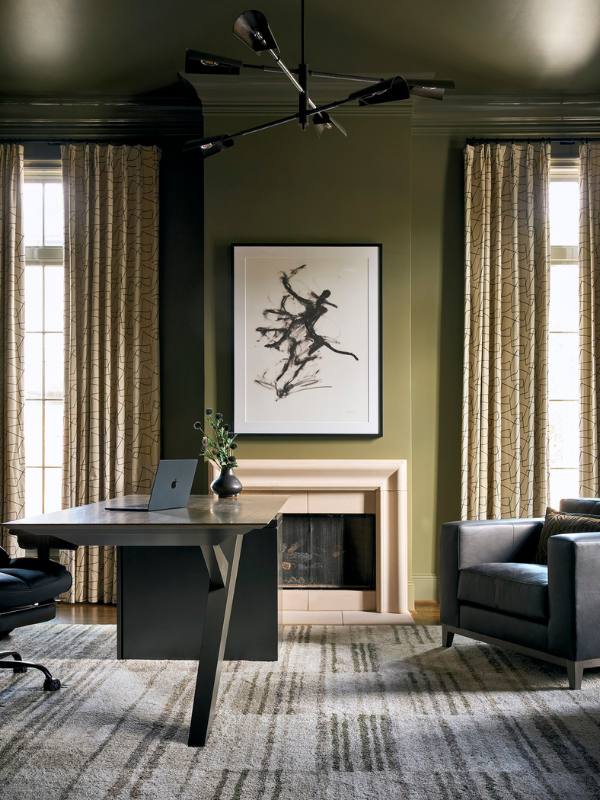
Between lighting, finishes, textures, and colors, a space in your home can look completely different at night than it does during the day. The wall color you love in the afternoon might look darker and flatter when viewed under light from a table lamp. A large window that frames stunning views during the day can turn into a black reflective surface once the sun goes down. And if your only source of light is an overhead fixture, you might find yourself choosing between a room that’s too bright and one where you can barely see your guests’ faces.
When we design a home, we consider how each space will be used in every context, season, and time of day. Kitchens need lots of light for cooking, while bedrooms benefit from softer lighting in the evening. Living rooms and dining rooms usually need multiple options because families use them for a variety of activities. The materials and finishes are important, too, since glass, polished stone, lacquer, velvet, and wood all respond differently to light.
Below are five ways to design an interior that works as well in the evening as it does during the day, with examples from our projects in Houston, Aspen, and Pebble Beach.
Five Ways to Design a Room for Day and Night
First, Test Your Paint Colors and Finishes Under Different Lighting
You probably wouldn’t choose a paint color without seeing it in your home first, but it’s easy to forget to check how it looks after dark. A color that’s so beautiful in natural daylight might look quite different under the warm glow of your living room floor lamp. The finish makes a difference, too. A matte wall absorbs more light, while a glossy or lacquered surface reflects the windows and fixtures around it.
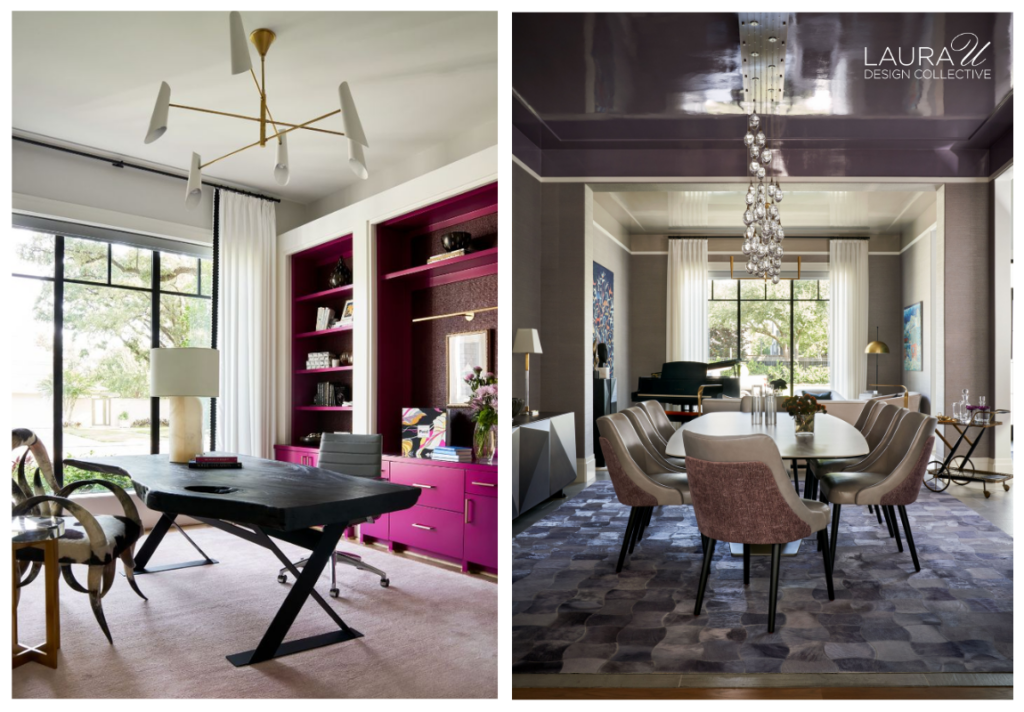
Our Highland Village Contemporary project in Houston gave us plenty of opportunities to explore color and finish, which we did whole-heartedly! We designed fuchsia built-ins for the study, introduced a lacquered ceiling in the dining room, and selected a softer palette for the primary suite. The homeowner loves fashion, travel, and art, and she wanted each space to reflect her personality. With so many different materials and colors throughout the house, we had to consider how they would work together under different lighting conditions.
A lacquered ceiling (our selection for the dining room) is an especially interesting choice because it reflects light from the fixtures below. The color and finish might look quite different at night when the chandelier is illuminated than they do in the afternoon. This is something to think about if you’re considering a glossy finish for your ceiling, cabinetry, or walls.
Lighting designer Nathan Orsman addressed this issue in a 2019 article for Architectural Digest. As he explained, “Lighting changes the color of the room, which a lot of people don’t even think about.” He recommends considering lighting early in the design process rather than selecting beautiful fixtures and worrying about their actual illumination later.
When testing your own paint samples, try them on more than one wall and check them throughout the day. You might love a particular shade in the morning but prefer something slightly warmer once your evening lights are on. If you’re planning a renovation, talk through the lighting and finish selections together. It can save you from discovering that your favorite wall color looks completely different once the room is finished.
Next, Use Several Types of Lighting Instead of Relying on One Fixture
A chandelier can be beautiful, but you probably don’t want it to be your only source of light. You might need brighter lighting when you’re cleaning or entertaining and softer light when you’re reading or watching television. Table lamps, wall sconces, floor lamps, and overhead fixtures give you more choices throughout the day.
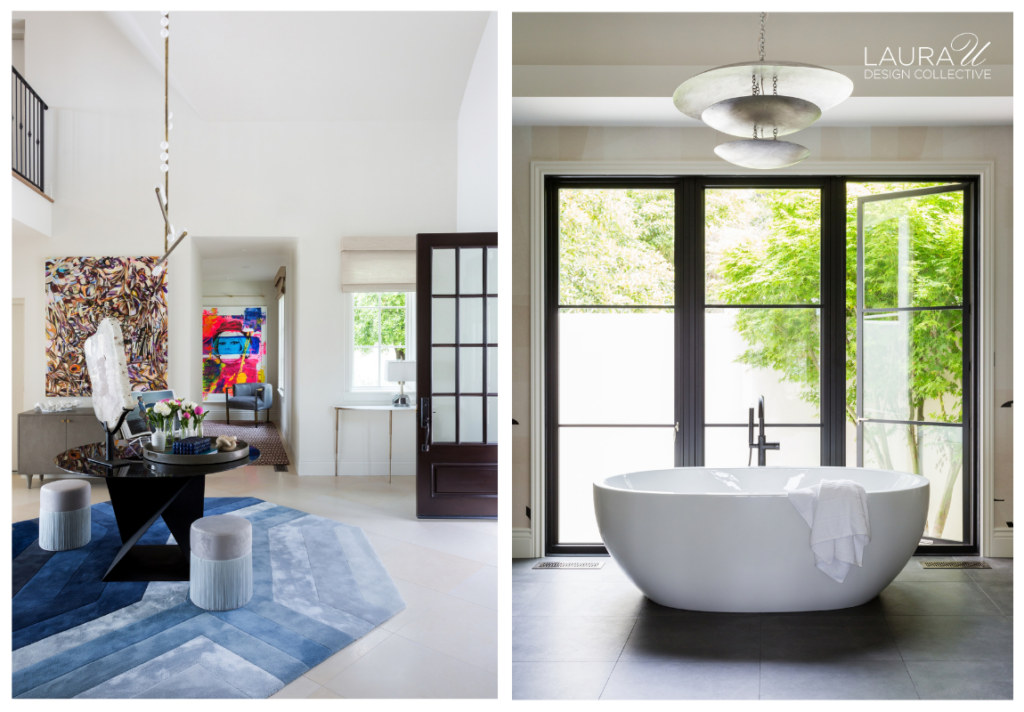
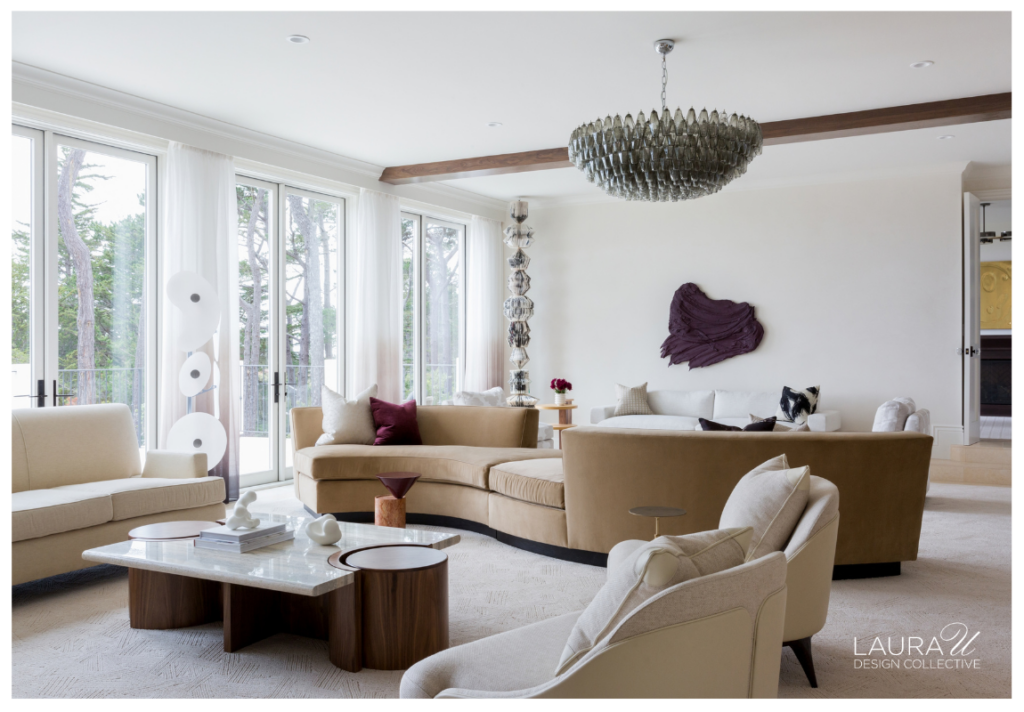
At our Pebble Beach project, we selected very different fixtures for different areas of the home. A Lindsey Adelman chandelier hangs in the double-height entry, while a vintage Murano glass chandelier is centered above the custom serpentine sofa in the formal living room. In the main powder bathroom, Apparatus sconces with black leather details flank a brass mirror against a deep marine-blue mural. The fixtures introduce different materials and shapes, and each one suits the room’s architecture and decorative scheme.
The formal living room is particularly interesting because of its size and furniture arrangement. The serpentine sofa accommodates separate conversation areas, so a single ceiling fixture wouldn’t necessarily provide all the light someone might want while using the room. Additional lamps would allow for smaller areas of illumination when the homeowners aren’t entertaining a large group.
Benjamin Reynaert explored several approaches to living room lighting in a July 2025 article for ELLE Decor. Among the projects he featured was Ford Huniford’s Sag Harbor sitting room, which has a series of geometric flush mounts rather than a single chandelier. The arrangement provides overhead lighting without obstructing the view across the room. Reynaert also included projects with antique lamps, sculptural floor lights, and fixtures that contribute just as much to the decoration as the furniture.
Think about where you and your family spend time in each room. A floor lamp beside a chair might be perfect for reading, while a pair of table lamps can provide softer light when you have friends over. You can still select a spectacular chandelier, of course. Just make sure you have other lighting options for the hours when you don’t need the entire room illuminated.

Third, Install Dimmers and Consider Different Lighting Settings
If your living room doubles as a place to entertain, watch movies, and spend time with your family, you probably won’t want the same lighting for every activity. Dimmers make it much easier to adjust a room throughout the evening. They’re also worth considering in dining rooms, bedrooms, and kitchens, where the amount of light you need can change quite a bit from one activity to the next.
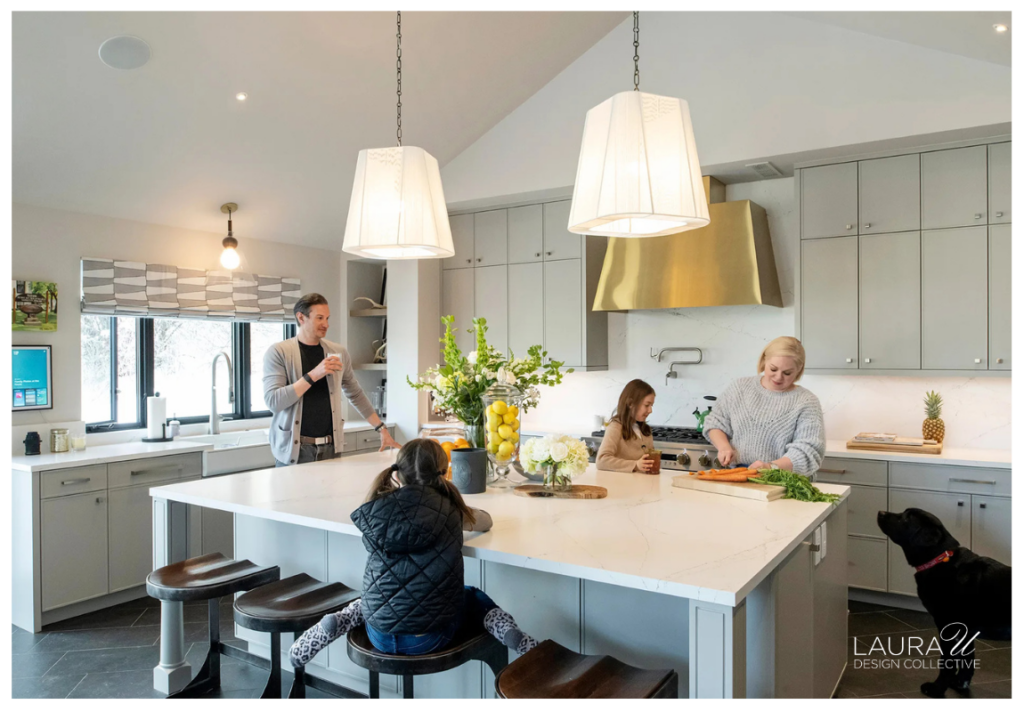
During the renovation of our Mountain Lane Show House in Aspen, we worked with Hudson Valley Lighting Group and Paragon Systems Integration on dimmable lighting that also complied with the community’s HOA requirements. The home has several very different interiors, from the bright kitchen and great room to the darker primary suite. We wanted the lighting to accommodate Laura and her family’s daily activities and give them plenty of flexibility when entertaining guests.
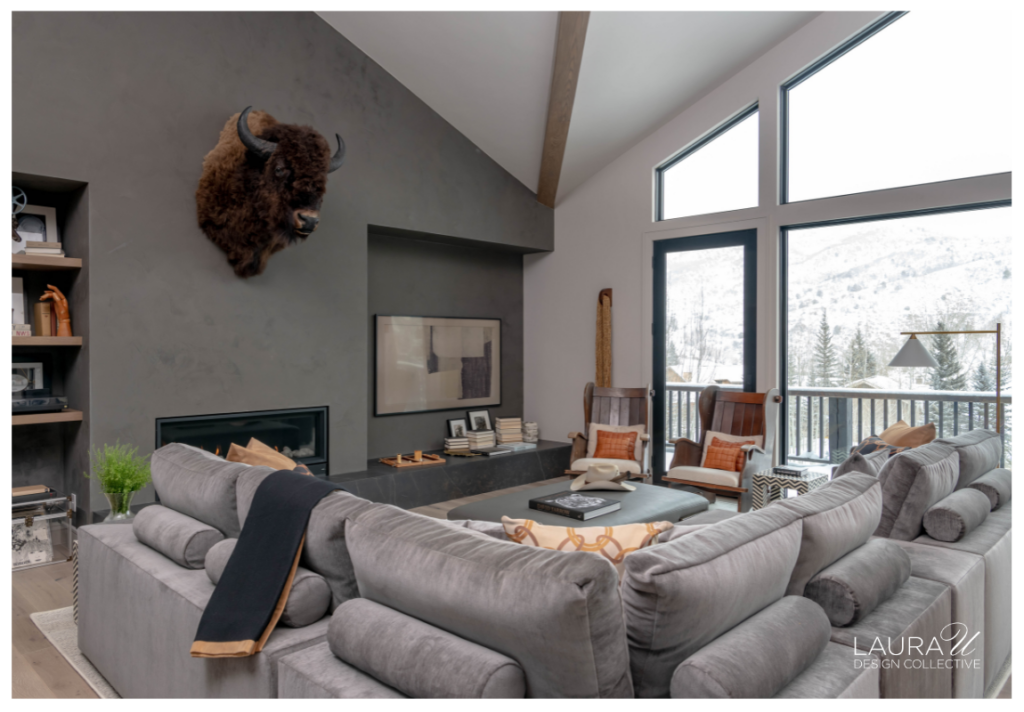
We also made substantial changes to the architecture at Mountain Lane. In the great room, we replaced the original windows with a large steel-and-glass system and altered their shape to relate to the pitched roofline. The new windows brought in expansive views of the surrounding landscape and considerably more natural light. After sunset, however, the family still needs artificial lighting for watching television, playing games, and spending time together. A dimmable system allows them to adjust the room according to what they’re doing.
In a 2014 article for ELLE Decor, architect and designer David Rockwell discussed the importance of dimmers in multipurpose rooms. “They allow for flexibility depending on the time of day, event, or mood, and they’re a great energy saver,” he explained. Rockwell also recommended using multiple light sources and paying attention to lampshades, which affect how light spreads throughout a room.
If you’re building or renovating, consider your lighting controls before the electrical work begins. You might want separate settings for overhead fixtures, sconces, and accent lighting, especially in larger rooms. It’s also worth thinking about where the switches will go. Having several lighting options is wonderful, but you’ll want to be able to control them conveniently once all the furniture is installed.
Fourth, Don’t Be Afraid to Use Darker Colors
A dark interior can be particularly beautiful at night, especially when the room has interesting materials, decorative lighting, and richly colored upholstery. During the day, however, you still want enough light to appreciate those details. Consider how much natural light enters the room before committing to a darker palette, and think about where you’ll need lamps or other fixtures once the sun goes down.
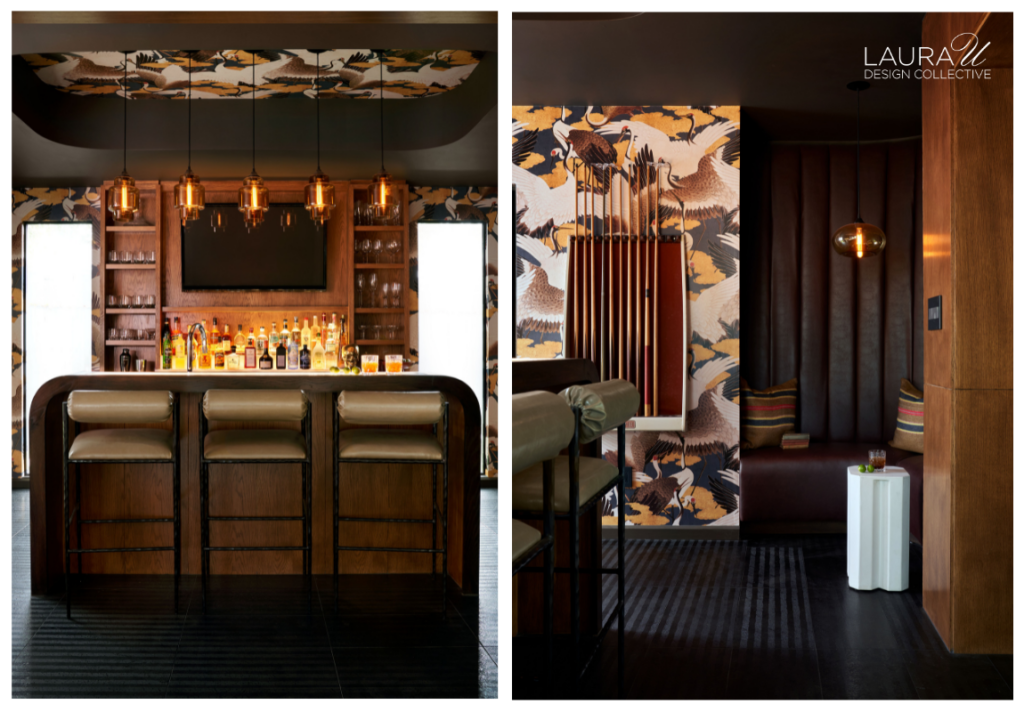
Our River Oaks Modern project in Houston has a home bar with dark wood shelving, Milton & King’s Cranes wallpaper, brass accents, and amber glass pendants. The wallpaper has white birds and touches of gold against a black background, while the pendants introduce another warm color above the counter. We designed the bar as part of a larger entertaining area that also includes a game room with a pool table and seating for watching television.
The combination of dark finishes and warm lighting is particularly appropriate for a bar, but you can take a similar approach in a study, dining room, or living room. If you’re considering dark paint or wallpaper, pay attention to the other materials in the space. Brass, glass, polished stone, and lighter upholstery can provide contrast, while carefully positioned lamps will help you see the details after dark.
In a December 2025 article for Architectural Digest, designers discussed the importance of combining ambient, task, and accent lighting. They also recommended warmer light, generally below 3000 Kelvin, when creating a comfortable atmosphere at home. Rather than relying on one bright overhead fixture, you can use smaller lamps, sconces, and accent lights throughout a dark room. This gives you more control over the lighting and allows you to illuminate particular areas without brightening everything at once.
Last But Not Least, Consider Your Windows After Sunset
Large windows can completely change your experience of a room during the day. They let in natural light, provide views of the garden or surrounding landscape, and make adjoining spaces seem more open. Once the sun goes down, though, those windows can turn into reflective surfaces. Depending on your home’s location, you might also discover that your neighbors have a much clearer view inside than you’d anticipated.
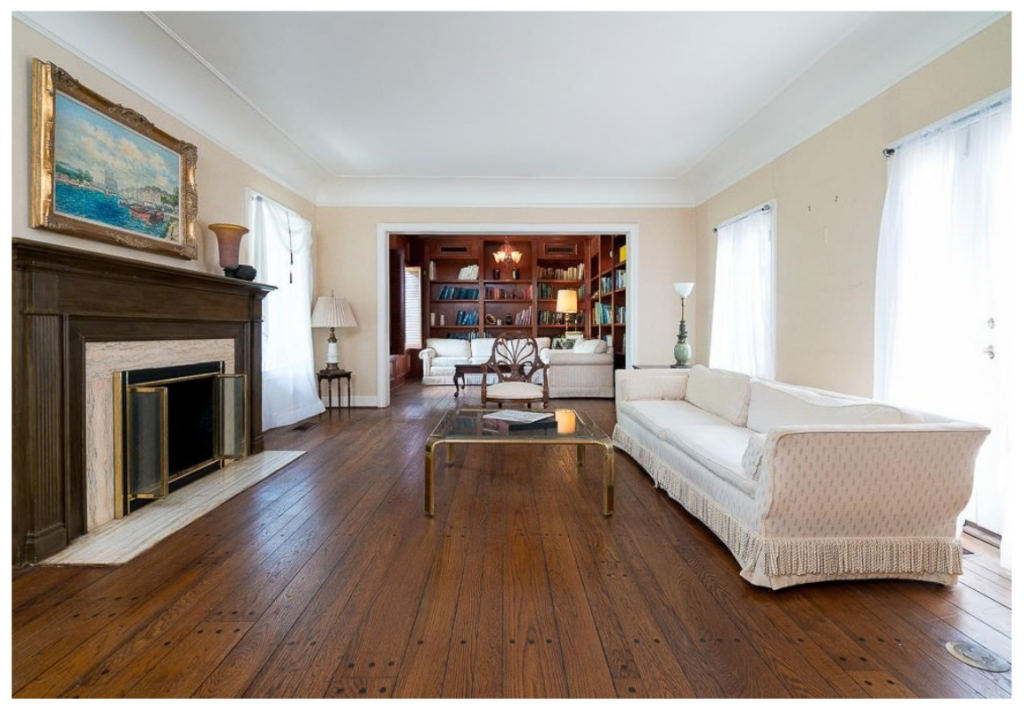
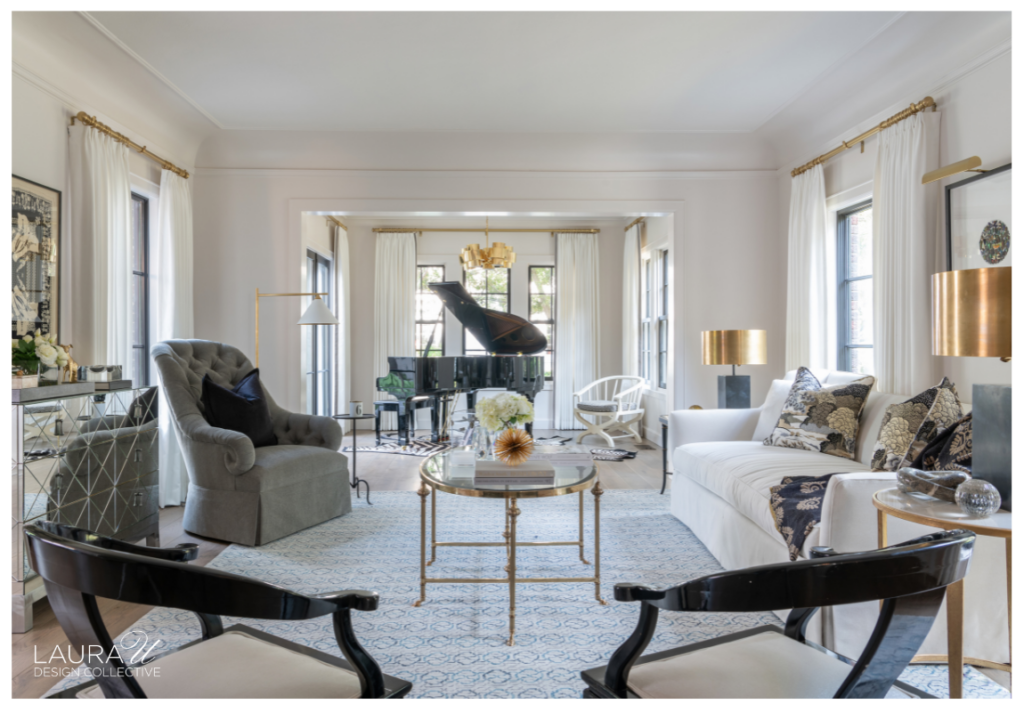
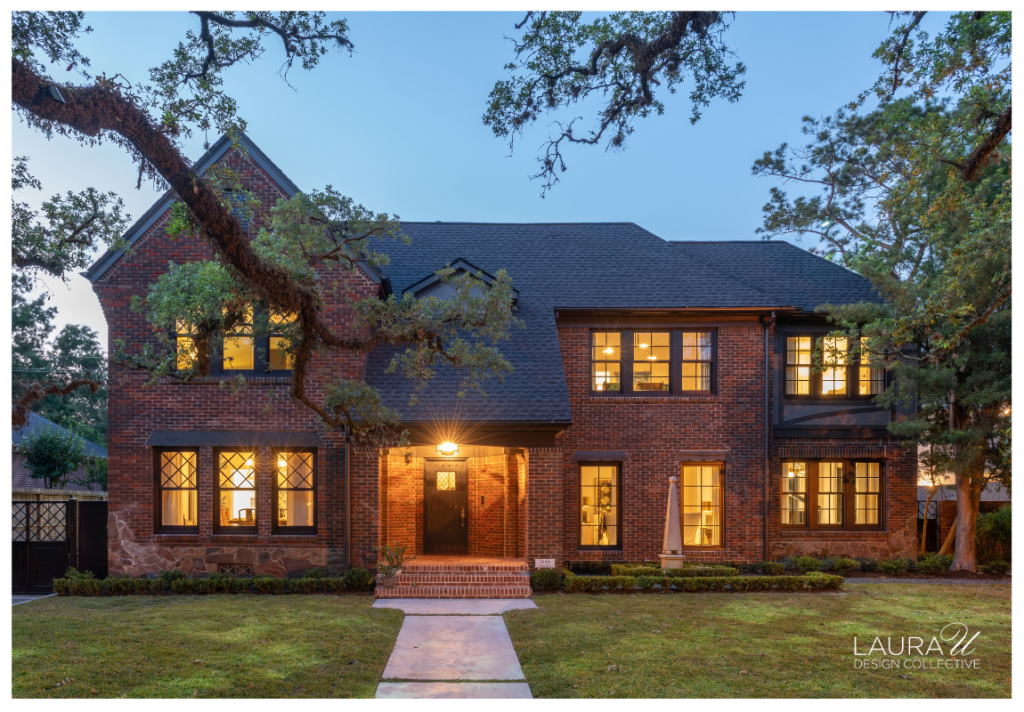
Our North Boulevard Show House in Houston is a particularly interesting example of how much difference windows can make. During the renovation of the 1925 Tudor Revival, we uncovered several windows that had been covered during earlier alterations. In the dining room, nearly half the original windows had been concealed behind drywall. We restored them and introduced custom drapery alongside hand-painted blue-and-white wallpaper and a crystal chandelier. The additional windows brought considerably more daylight into the room, while the curtains provide privacy when the homeowners want to close them. We also altered the windows in Huntwick Forest.
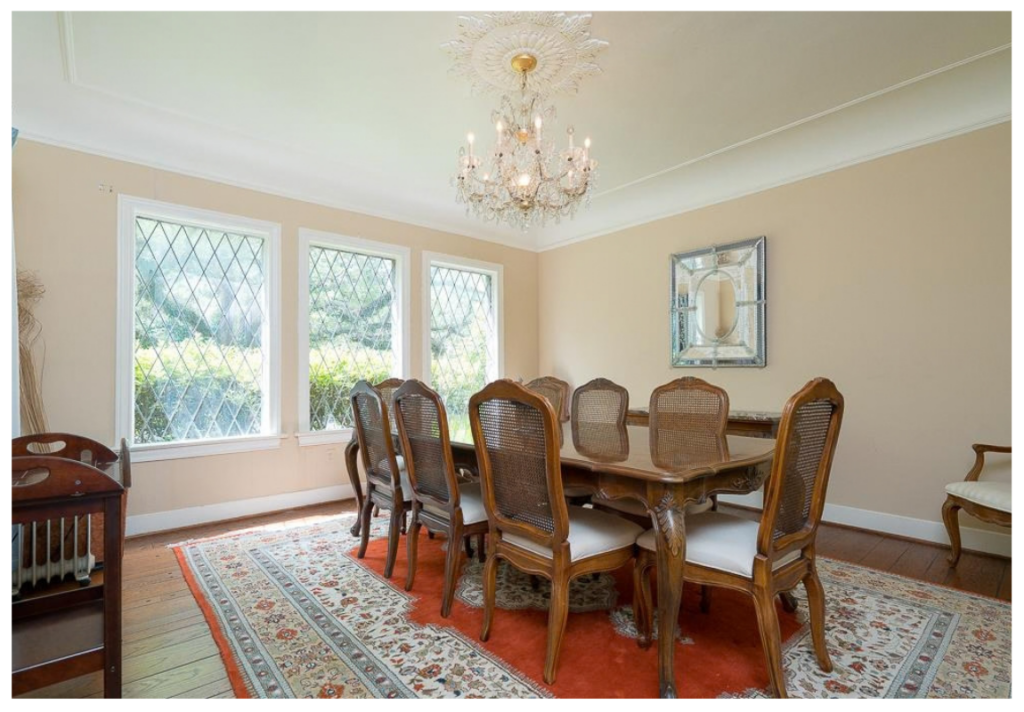
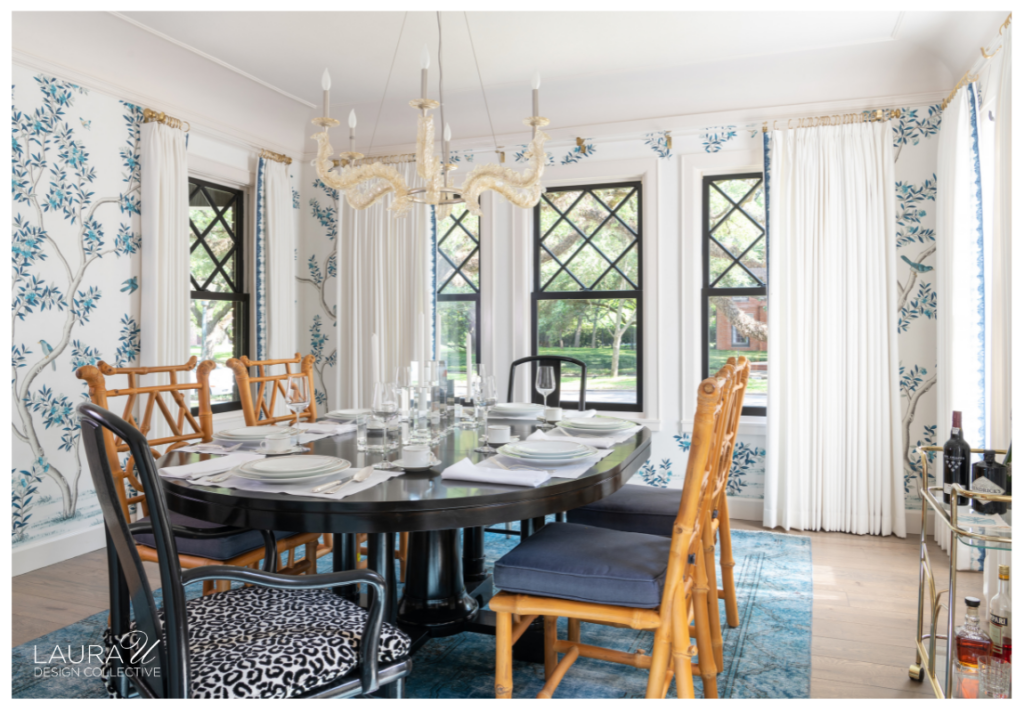
In a July 2026 article for Architectural Digest, Kate McGregor explored the benefits of combining curtains with sheers, blinds, or shades. Haley Weidenbaum, cofounder of Everhem, recommended placing sheers closest to the glass so homeowners can enjoy filtered daylight without completely exposing the interior. Heavier drapery provides another level of privacy and light control in the evening.
If you’re planning window treatments for a living room or bedroom, consider what you’ll want from them at different times of day. Sheers might be perfectly adequate when you’re enjoying the afternoon sunlight, while lined curtains could be preferable when you’re watching television or getting ready for bed. You should also consider the fabric’s color, texture, and opacity under artificial light. After all, your curtains will occupy a lot of wall space when they’re closed.
Designing a Home for Daytime and Evening with LUDC
Our projects in Houston, Aspen, and Pebble Beach gave us unique opportunities to work with different lighting conditions and materials. At Highland Village, lacquered finishes and saturated colors were important parts of the design. Pebble Beach features several distinctive decorative fixtures, while Mountain Lane combines substantial natural light with dimmable lighting throughout its renovated interiors. At River Oaks Modern, we used dark materials and warm fixtures in the bar, and the renovation at North Boulevard restored windows that previous owners had covered up.

When making decisions for your own home, try to spend some time in each room during the day and after sunset. Look at your paint samples under artificial light, consider where you might place a table lamp or sconce, and think about your window treatments in a variety of contexts. You might find that a space you absolutely adore in the afternoon needs a few adjustments to look equally beautiful when you’re entertaining friends that evening.