Open shelving is wonderful when you have beautiful books, ceramics, artwork, or other objects you want to display. But what about the things you don’t particularly want to look at every day? Most of us also have paperwork, extra dishes, chargers, children’s toys, and all sorts of household items that need somewhere to go. You probably don’t want every one of those things on display in your living room.
When designing a home, we consider what our clients want to display and what they’d prefer to store out of sight. We also look at how often they’ll need to access those belongings, since a shelf that’s perfect for decorative objects might be a terrible place to store something you use multiple times a day. Kitchens, home offices, bedrooms, and living rooms all have different storage requirements, and there’s no reason to approach them in exactly the same way.
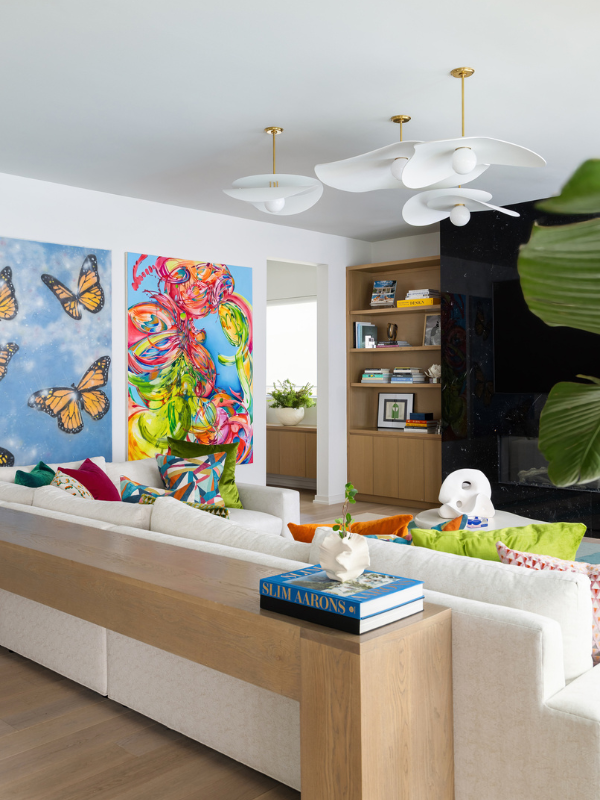
At our Mountain Lane Show House, we incorporated built-ins into the great room’s new feature wall (complete with a gorgeous fireplace perpendicular to the floor-to-ceiling windows). At Garnet Residence, we installed open wooden shelving in the kitchen and designed a custom piece to conceal the television in the primary bedroom. These projects demonstrate how differently we approach storage depending on the room and the people who use it, but how functionality can coexist with beauty no matter the space.
Below are five things to consider when making the choice between open shelving and closed storage for your home.
Five Ways to Decide Between Open Shelving and Closed Storage
First, Start With the Things You Need to Store
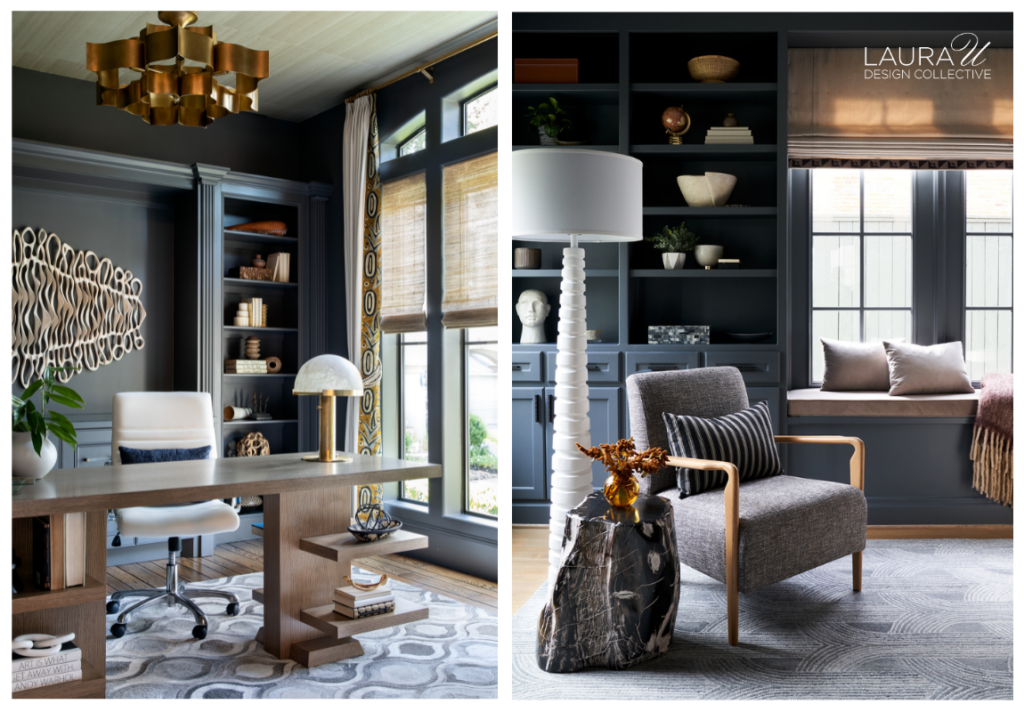
Before deciding how many cabinets or shelves you need, take inventory of what you already own. You might have an extensive book collection, a set of dishes you inherited from your grandparents, or artwork you’ve acquired over several years of travel. Those are things you’d enjoy seeing every single day. Your collection of spare charging cables and old paperwork is probably another story!
We recommend working through these decisions before finalizing your cabinetry plans. Think about which objects you use regularly, which ones you want to display, and how much additional storage you’ll need in the coming years. If you’re planning a home office, for example, you may want shelves for books and collected objects alongside drawers or cabinets for documents, equipment, and other work-related belongings.
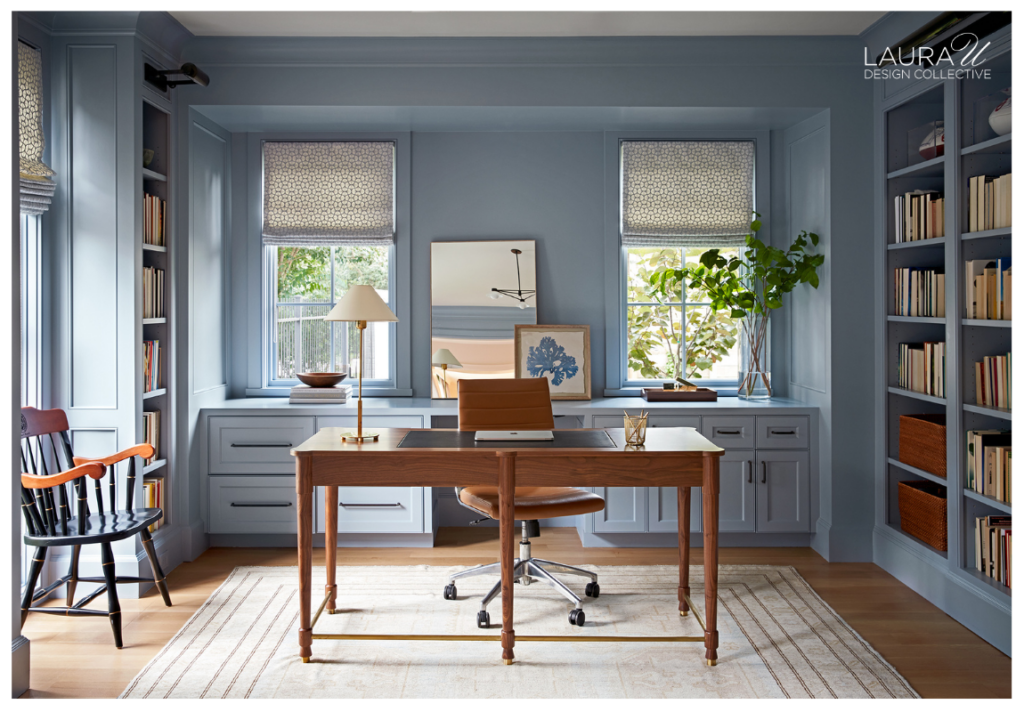
Our Rice Residence project is a lovely example of cabinetry designed around an existing collection. In the home office, we paired a natural walnut Lawson-Fenning desk with blue walls inspired by Rice University and built-ins designed to accommodate the family’s books. The collection was an important consideration in the room’s design, rather than something we needed to find space for after the furniture was installed. You can see the finished study in our Houzz portfolio.
In an article for ELLE Decor, Monique C. Valeris and Kelsey Kloss interviewed designer Katharine Pooley about organizing closets. Pooley recommends reviewing your collection before deciding which pieces to display and which to store behind doors. Although she was discussing clothing and accessories, this is a perfectly sensible approach to cabinetry throughout the home.

Next, Be Selective About Open Shelving in the Kitchen
How you design kitchen shelving is a personal decision. Some homeowners love having their favorite dishes, glassware, and cookbooks within easy reach. Others would much rather close the cabinet doors at the end of a busy day without worrying about how everything looks. You’ll also need to think about dust and cooking grease, particularly if the shelves are close to the range and you do indeed cook often.
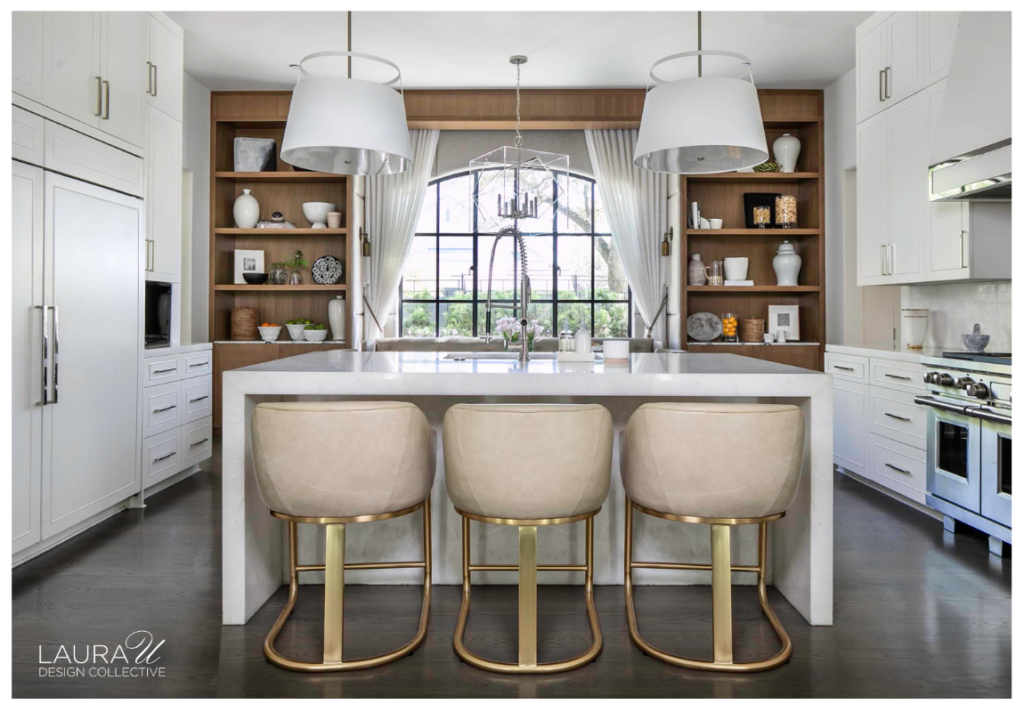
At Garnet Residence, we renovated a previously all-white kitchen with warmer woods, metals, and upholstery. El Dorado Woodworks fabricated the custom wooden cabinetry, and we introduced open, unglazed shelving opposite the bar and island. The shelves provide a decorative alternative to another wall of upper cabinets, while the enclosed cabinetry accommodates the kitchen’s other storage requirements.
In an October 2017 article for Architectural Digest, designer Kate Arends weighed practical considerations of installing open kitchen shelves. She had used them in her own kitchen and in two studio kitchens, so her advice comes from actually living with this arrangement. She encouraged homeowners to look at their existing dishes and glassware, consider how much they’d need to organize, and think about the maintenance involved.
A combination of open and closed cabinetry might make the most sense. You could display the dishes and glasses you use regularly while storing appliances, mismatched containers, and extra supplies behind doors. In a May 2026 Architectural Digest article about small-kitchen storage, designer Daniel Ian Smith described using open shelving to display ingredients and containers in a kitchen by Village West Design. His article also recommended retaining some enclosed storage so everything doesn’t need to be on display all the time.
Third, Combine Display Shelves and Cabinets in Your Living Room
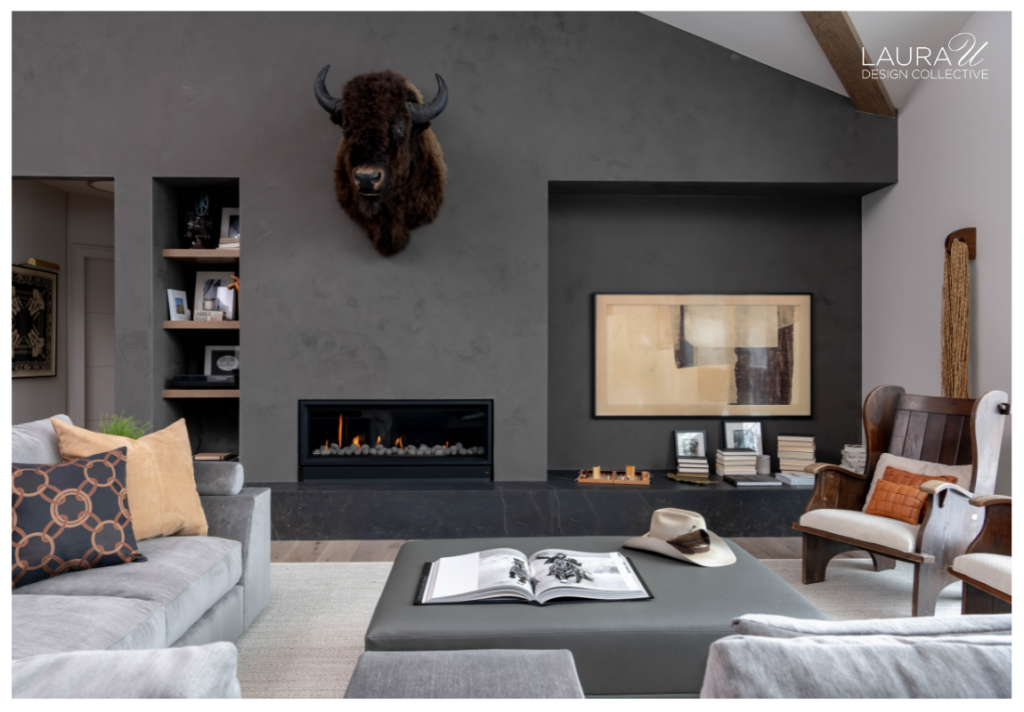
Living rooms usually need several different types of storage. You might want to display books, photographs, and artwork while concealing board games, electronic equipment, and extra accessories. If you’re designing a large built-in unit, consider how much space each category of belongings actually requires before deciding how many shelves to leave open.
At our Mountain Lane Show House in Aspen, we completely renovated the great room. We exposed the ceiling beams, replaced the original windows with a larger steel-and-glass system, and introduced a new fireplace and feature wall. The feature wall incorporates built-ins for storage and display, which allowed us to accommodate both functions within the redesigned architecture for Laura’s family home.
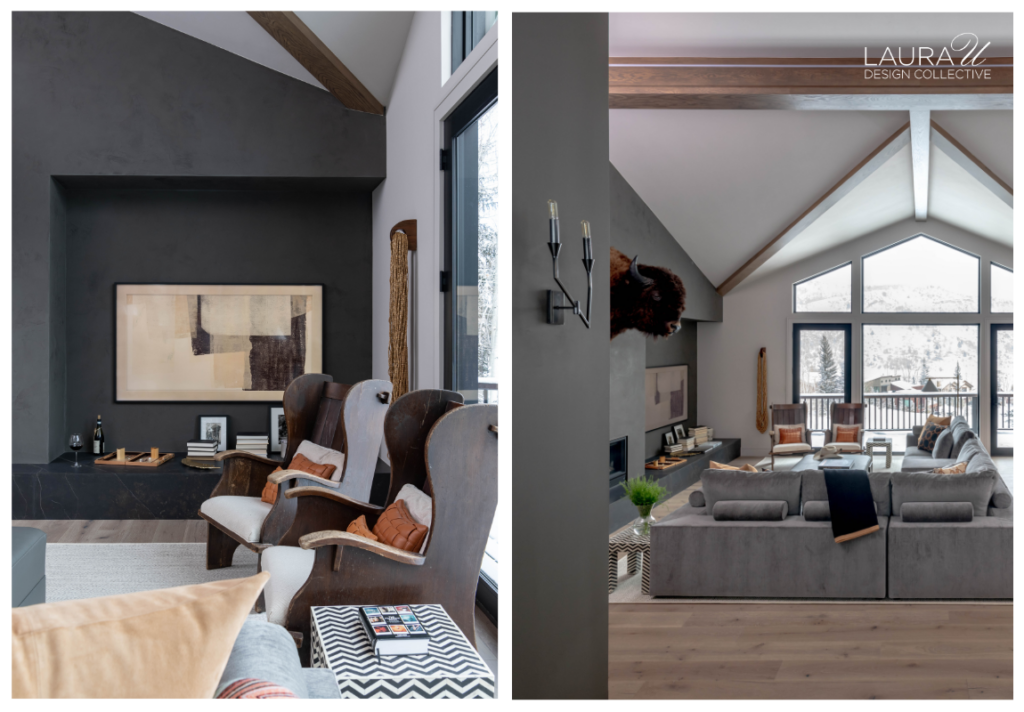
When planning a similar arrangement, think about where the furniture will go and which shelves you’ll actually be able to reach. If a sofa is positioned directly in front of the cabinetry, you probably won’t want to store frequently used belongings in the cabinets behind it. Higher shelves might be appropriate for decorative objects, while lower cabinets can accommodate larger household items. Consider as well how children will access different shelves.
Fourth, Use Closed Storage to Conceal Your Television and Other Electronics
Televisions and electronic equipment can complicate the design of a living room or bedroom. You might use your television every evening but prefer not to make it the main decorative feature of the space instead of a black reflective surface that readily shows every fingerprint. But even if you’re perfectly happy to have the screen visible, you’ll still need somewhere for remote controls, cables, gaming equipment, and other accessories.
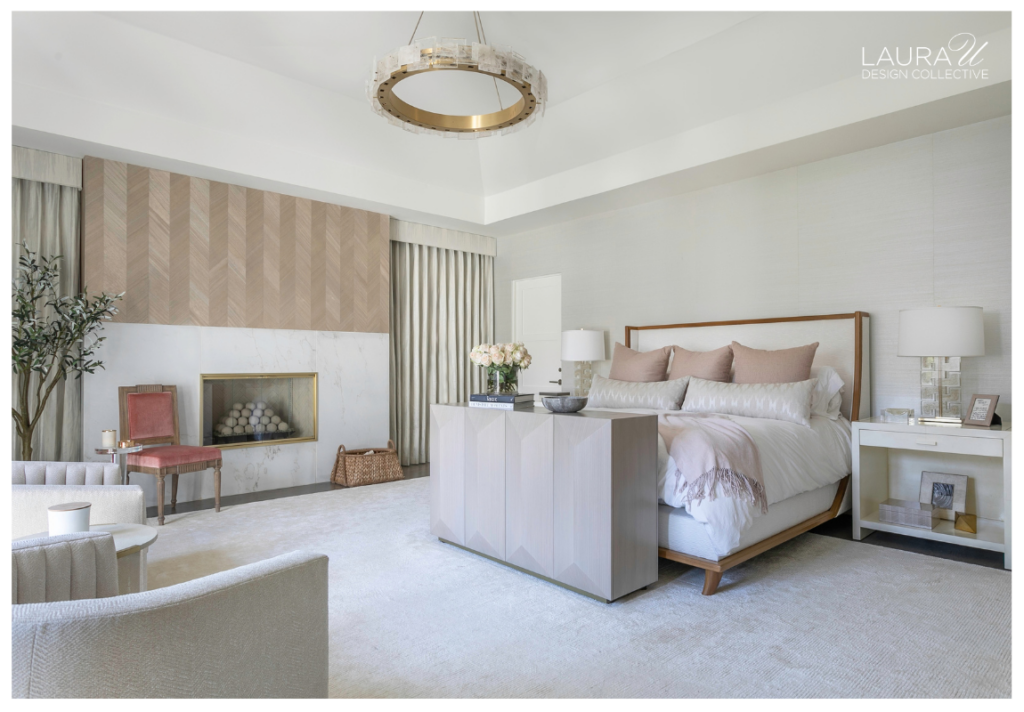
At Garnet Residence, we designed a custom console with El Dorado Woodworks for the primary bedroom. Positioned at the foot of the bed, the piece conceals the television when it isn’t in use. This was particularly appropriate for the room, which also includes a fireplace, patterned wood paneling, and a combination of vintage and custom furniture. Rather than mounting the screen above the fireplace or dedicating an entire wall to it, we incorporated the television into a piece of furniture.
Before commissioning a similar piece, you’ll need to work out the television’s dimensions, viewing height, ventilation requirements, and how you’ll access the equipment for maintenance. The same considerations apply to media cabinets in living rooms.
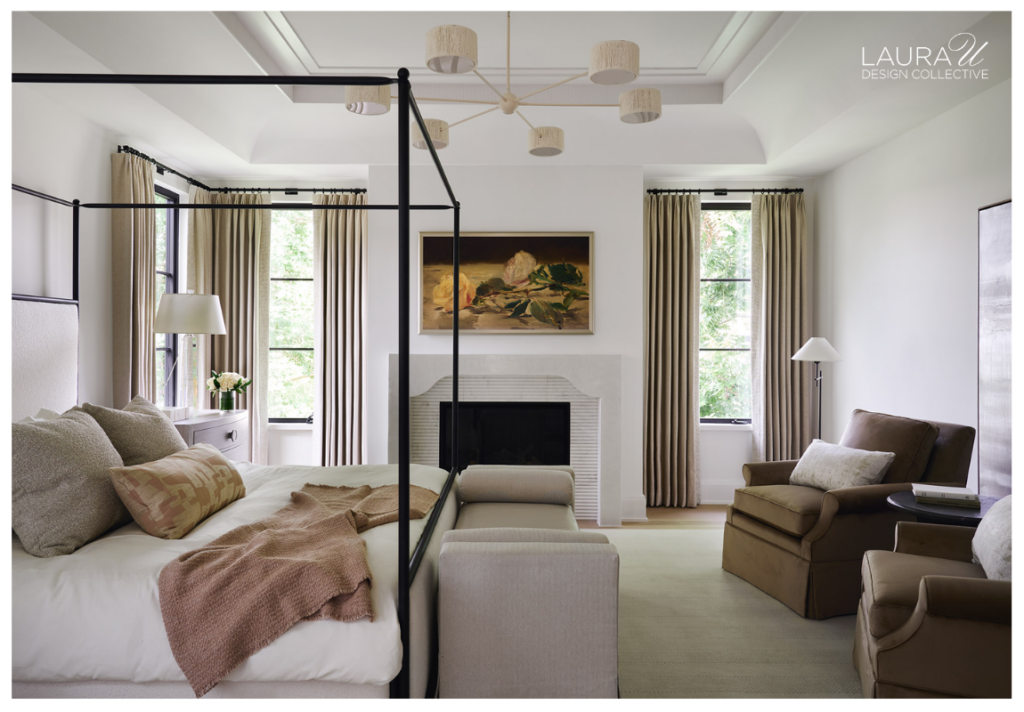
In other projects, like the primary bedroom of our West U Transitional project, we also hide the TV behind tasteful artwork that meshes with the atmosphere of the space itself. There’s no need for technology to dominate a space when it could simply add to the mood you’re hoping to evoke.
Last But Not Least, Plan Your Open Shelves Around What You Want to Display
Once you’ve decided where to install open shelving, think about how you’ll arrange the objects you want to display. Books, framed photographs, ceramics, and sculptures have different dimensions, so an arrangement of identical shelves won’t necessarily accommodate every piece. A particularly tall vase or large art book might need its own space.
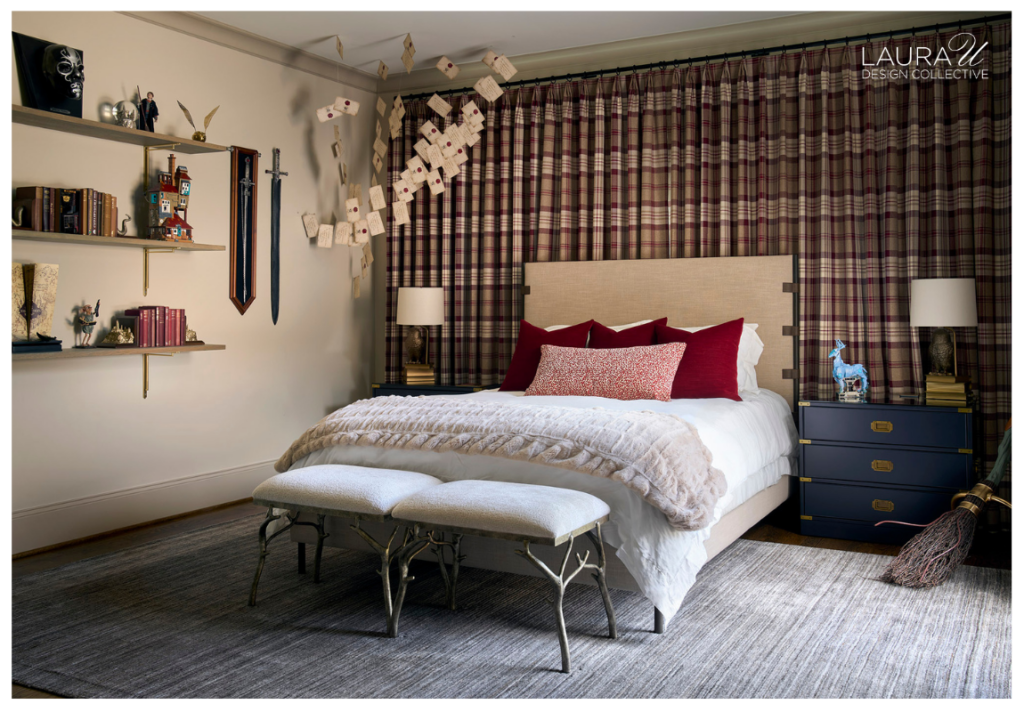
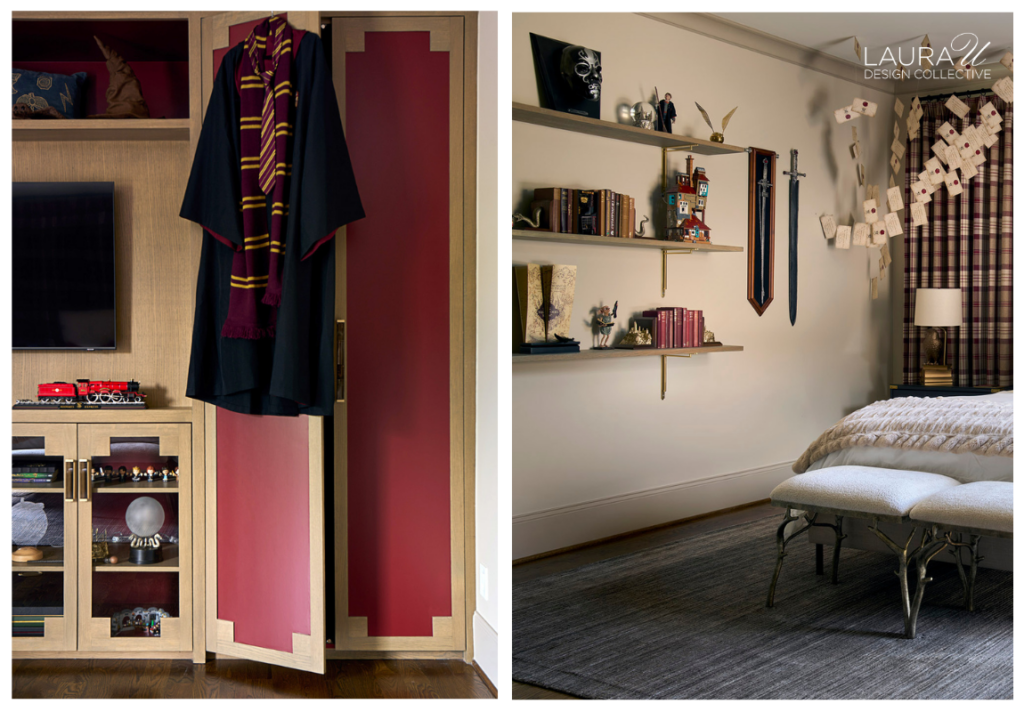
We’ve approached this differently across our projects, depending on the clients’ collections. At Hunter’s Creek, we designed custom display areas for the owners’ Harry Potter memorabilia in a guest bedroom. Their books, wands, and other collectibles were an important part of the design, and we incorporated both visible displays and concealed storage into the room’s millwork. The collection influenced the cabinetry from the beginning, so we could give specific objects appropriate places rather than arranging everything on generic shelves after installation. See the Hunter’s Creek project tour.
In a March 2026 article for House Beautiful, Wendy Rose Gould spoke with designers about arranging open shelves. Leslie Kramer of Lighthouse Home & Design recommends varying the heights and sizes of decorative objects, while Regan Baker discusses incorporating personal collections into the design. Baker’s team also uses different shelving materials and background colors to establish a relationship between the shelves and the surrounding room.
You don’t need to fill every inch of shelving as soon as it’s installed. We like to leave space for objects our clients might acquire later, especially when they have an ongoing interest in collecting art, books, or antiques. An April 2026 ELLE Decor article on bookshelf styling touches on this. Designer Alissa Johnson recommends mixing objects of different heights and depths rather than filling every available space with smaller accessories.
Finding the Right Balance Between Open and Closed Storage
Our projects demonstrate how many different purposes cabinetry can serve throughout a home. At Mountain Lane, the great room’s built-ins combine storage with display as part of a larger architectural renovation. Garnet Residence includes open shelving in the kitchen and a custom television cabinet in the primary bedroom. At Rice Residence and Hunter’s Creek, our clients’ existing collections influenced the shelving and cabinetry we designed for them.
If you’re renovating or planning new built-ins, start by deciding what you need to store away. You might discover that your kitchen needs considerably more enclosed cabinetry than you originally planned, while your living room could accommodate additional shelves for artwork and books. You can also combine both approaches within the same installation, which gives you considerably more flexibility as your family’s needs change.
For more tips, explore our journal post from 2023: Here’s How to Style Shelves Like a Designer. And for additional inspiration, take a look at our Hedwig Village kitchen renovation, University Place living room, River Oaks Contemporary bar on the portfolio.